


For homeowners and business owners here in the Chattanooga area, keeping a lid on indoor temperatures—and energy costs—is a year-round battle. That intense Tennessee sun can quickly turn a living room or office into a sweltering, expensive-to-cool space. But as we head into the winter months, those same windows let the chill seep right in, forcing your heating system to work overtime.
The best solution isn't just about blocking summer heat. It's about creating a smarter, more efficient thermal barrier that works for you in every season. That's where modern window films for residential and commercial properties come in.
The Best Choice for Year-Round Comfort and Savings
Hands down, the best window film for reducing heat for both homes and commercial buildings is advanced nano-ceramic window film. Unlike the films of yesteryear, this technology is a game-changer. It excels at rejecting infrared heat—the kind you feel—without making your windows dark. You get to keep your natural light and those gorgeous Chattanooga views while reaping the benefits of maximum energy savings, even in winter.
More Than Just Summer Heat Reduction
Most people start looking for the "best window film to reduce heat" when summer is in full swing, but the best films deliver huge benefits in the winter, too. Think of it as insulation for your glass. High-quality films help retain the heat your furnace generates, reflecting it back into the room instead of letting it escape outside. This is a critical benefit for property owners in the Chattanooga area as the seasons change.
This dual-action performance is what leads to real, year-round savings:
- Lower Cooling Costs: By rejecting a huge percentage of solar heat, you dramatically reduce the strain on your air conditioner.
- Reduced Heating Bills: In the winter, the film's insulating properties help keep warm air inside, cutting down on heating expenses.
- Serious Comfort: You can finally say goodbye to those annoying hot spots near windows in the summer and chilly drafts in the winter. The result is a much more consistent and comfortable indoor environment.
According to the U.S. Department of Energy, a staggering 76% of sunlight that hits a standard double-pane window becomes heat inside your home. High-performance films can completely flip that script. It’s no surprise the global window film market is now valued at USD 11.4 billion, with sun control films leading the charge.
Understanding Your Options at a Glance
Trying to figure out the different types of window film can feel a bit overwhelming, but each technology is really designed with a specific job in mind. Let’s break down the main options you’ll find for residential and commercial properties. For a deeper dive, you can learn more about how these solutions translate into real window film energy savings in our detailed guide.
To help you get started, here is a quick look at the most common film technologies and what they do best.
Quick Comparison of Heat Reduction Film Technologies
| Film Technology | Primary Heat Reduction Method | Best For | Appearance |
|---|---|---|---|
| Nano-Ceramic | Absorbs and rejects infrared (IR) heat | Maximum heat rejection with clear views | Virtually invisible; no metallic sheen |
| Metallic | Reflects solar energy away from glass | High heat rejection in commercial settings | Can have a reflective, mirror-like finish |
| Dyed | Absorbs solar energy (less effective) | Glare reduction and privacy on a budget | Often darker; can fade over time |
| Hybrid | Combines dye and metallic layers | Balanced performance and aesthetics | Less reflective than pure metallic films |
As you can see, while options like dyed and metallic films have their place, nano-ceramic technology truly stands apart for homeowners and businesses who refuse to compromise on performance, clarity, or aesthetics.
Let's be honest, your windows are the weak link in your home's defense against the wild Chattanooga weather. In the summer, all that beautiful glass acts like a giant magnifying glass, pouring solar heat inside and forcing your air conditioner to work overtime. Come winter, that same glass lets all the expensive warm air you're paying for sneak right outside.
This constant battle doesn't just make your rooms feel drafty or stuffy; it's a direct hit to your wallet, month after month. Heat always moves from hot to cold. So, during a scorching Tennessee summer, the heat is desperate to get in. In the winter, your cozy indoor warmth is trying its best to escape. Your windows are the easiest way for it to happen.
This is exactly why that one room with the big, beautiful window is always ten degrees hotter or colder than the rest of the house. You can literally feel the temperature change as you walk across the floor. Fixing this problem is the first step toward finding the best window film to reduce heat and finally getting some stability back in your home's environment.
The Numbers Behind the Problem: Heat Gain and Loss
To really get why window film is so effective, you need to know about two key performance ratings that tell the whole story of your energy bills: the Solar Heat Gain Coefficient (SHGC) and the U-Factor.
-
Solar Heat Gain Coefficient (SHGC): This is a fancy term for how much solar heat your window lets in. It’s measured on a scale from 0 to 1. The lower the number, the less heat gets through. Your standard double-pane windows? They often have an SHGC of 0.70 or more, meaning they let a whopping 70% of the sun's heat pour right into your living room.
-
U-Factor: This number tells you how well your window insulates against non-solar heat transfer. A lower U-Factor means better insulation, which is crucial for keeping your heated air inside during the winter.
Here in Chattanooga, we get the worst of both worlds—brutal summer heat and chilly winters. That means you need a solution that tackles both a high SHGC in the summer and a poor U-Factor in the winter.
Window Film: The Smart Alternative to a Total Replacement
Thinking about replacing every window in your house? That's a massive, messy, and incredibly expensive project. High-performance window film gives you a much smarter, more practical path to the same—or even better—energy-saving results, all at a fraction of the cost.
By having a specialized film applied directly to your existing glass, you can slash your windows' SHGC and seriously boost their insulating power. This isn't just about lowering your energy bills, either. Untreated windows let a constant stream of damaging ultraviolet (UV) rays inside, which is why your hardwood floors, favorite sofa, and family photos slowly fade over time.
A professional window film installation isn't a temporary fix; it's a strategic upgrade that transforms your existing windows from an energy liability into an energy-saving asset. It protects your property and makes your home more comfortable 365 days a year.
When you understand how much your windows are costing you, the decision becomes much clearer. By recognizing them as the main source of your home's energy problems, you can see why installing the right window film is one of the smartest investments a Chattanooga property owner can make.
Comparing The Top Window Film Technologies For Heat Control
When you start looking for the best window film to knock down the heat, you'll find out pretty quickly that they aren't all the same. The technology behind each film is what really determines how well it performs, how it looks, and how long it lasts. For homeowners and business owners here in Chattanooga, making the right call means getting past the sales pitches and understanding the actual science of heat rejection.
We're going to break down the three main technologies you'll encounter for homes and commercial buildings: dyed, metallic, and the undisputed champ, nano-ceramic films. Each one tackles solar energy differently, and that's where you see a huge gap in performance.
This diagram shows exactly what's happening with an untreated window. It's an open door for solar heat, which drives up your energy costs and makes your space uncomfortable.
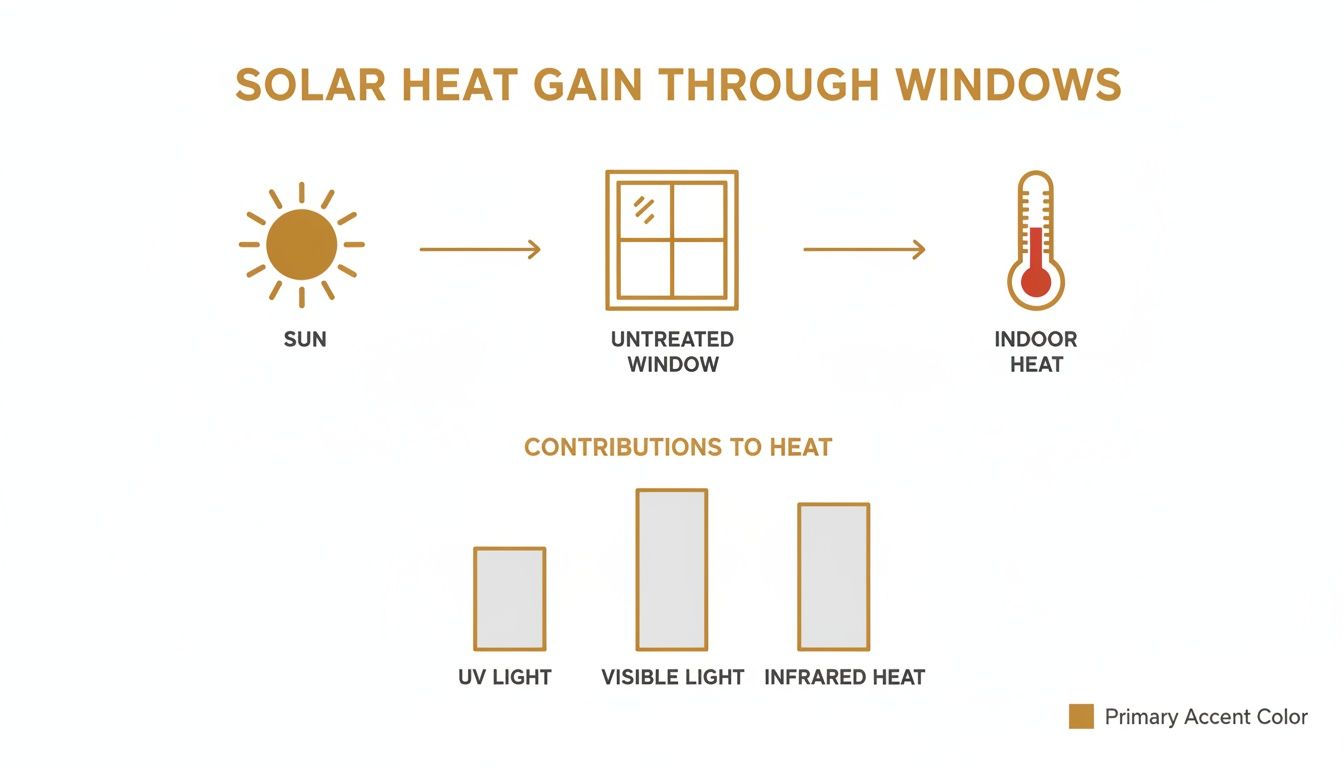
As you can see, the heat pouring in is a mix of UV rays, visible light, and infrared (IR) light. The best films go after the invisible culprits—UV and IR—to stop the heat without killing your natural light.
Dyed Window Film: The Budget-Friendly Option
Dyed film is the entry-level choice. It's layers of dye that absorb solar energy, much like a black t-shirt does on a sunny day. It soaks up the heat at the glass, which then radiates outward.
While it offers some relief from heat and glare, it comes with some serious trade-offs. To get any meaningful heat rejection, you have to go dark, which means sacrificing a lot of the natural light you love. Plus, over time, those dyes break down, fade, and often turn an ugly purple color, making them look as bad as they perform.
Metallic Window Film: Reflective and Powerful
Metallic films are a definite step up. They're made with tiny, micro-thin layers of metal that work like a mirror, bouncing solar energy away before it ever hits the glass. This makes them really effective at rejecting heat.
The problem? That mirror effect. Metallic films give buildings a shiny, highly reflective look that doesn't always fit the aesthetic of a classic Chattanooga home or a sleek storefront. Even worse, those metal particles are notorious for interfering with cell phone signals and Wi-Fi, which is a dealbreaker for most homes and offices today.
Nano-Ceramic Window Film: The Clear Winner for Performance
That brings us to the most advanced technology on the market: nano-ceramic window film. This is the stuff we trust and install for our clients all over the Chattanooga area, and for very good reason. Instead of using dyes or metals, these films are infused with microscopic ceramic nanoparticles that are spectrally selective.
In simple terms, they're engineered to hunt down and block the specific wavelengths of light that create the most heat—infrared (IR) and ultraviolet (UV) rays—while letting all the good visible light stream right through.
The result is a film that can be almost perfectly clear but still outperform a dark, reflective metallic film. You get maximum heat rejection without sacrificing your view, changing the look of your home, or messing with your electronics. It's the undisputed best window film to reduce heat for nearly every situation.
Ceramic films are the fastest-growing part of the window film market for a reason. The heat-control film industry alone is projected to hit $3,390.4 million. While cheap dyed films still have a piece of the market, ceramics are leading the charge in durability and raw performance, making them the smartest long-term investment for hot climates like ours in Chattanooga.
Performance Metrics: A Head-to-Head Comparison
To really see the difference, you have to look at the numbers. The industry-standard metrics tell a clear story about why nano-ceramic film is the superior choice for both keeping summer heat out and holding winter warmth in. For a closer look, you can dive into the benefits of ceramic window tint in our other guide.
Here’s a quick look at how the technologies perform side-by-side.
Window Film Performance Metrics Compared
This table breaks down how the three main types of window film stack up across the most important performance categories. Notice the clear advantages of nano-ceramic technology, especially in the areas that matter most for comfort and energy savings.
| Feature | Nano-Ceramic Film | Metallic Film | Dyed Film |
|---|---|---|---|
| Heat Rejection (TSER) | Excellent (up to 93%) | Good to Excellent | Fair to Good |
| Infrared (IR) Rejection | Superior (targets IR rays) | Good | Poor |
| Clarity / VLT | Crystal clear options | Can be highly reflective | Often dark, reduces light |
| Signal Interference | None | High Potential | None |
| Durability & Lifespan | Exceptional (no fading) | Good (can corrode) | Poor (fades, turns purple) |
| Winter Insulation | Excellent (Low-E properties) | Moderate | Minimal |
As the chart makes clear, nano-ceramic film is the top performer in every critical category. It delivers incredible Total Solar Energy Rejection (TSER) by zeroing in on infrared heat, which is the biggest source of solar heat gain. And it does all this while staying optically clear, keeping your home bright and your views pristine. Best of all, its advanced construction means it won't fade, peel, or bubble, giving you a reliable solution for comfort and energy savings that lasts for decades.
The Overlooked Winter Benefits of Insulating Window Film
When folks in Chattanooga start looking for the "best window film to reduce heat," their minds are usually on one thing: surviving our long, humid summers. While modern films are absolute beasts at rejecting solar heat, their job isn't done when the leaves start to fall. High-performance window film is a year-round powerhouse, delivering some serious benefits during the colder months, too.
This dual-season performance turns a simple sun blocker into a smart insulating barrier. The same tech that kicks summer heat to the curb works in reverse during winter, helping you keep your home or office comfortable and efficient, no matter what the thermometer says.
How Insulating Film Keeps Your Home Warmer
The magic behind the winter performance is a property called Low Emissivity, or Low-E. Think of it as a one-way mirror for heat. In summer, it bounces solar heat away from your windows. But in winter, it reflects the radiant heat from your furnace, fireplace—even your own body heat—back into the room, stopping it from leaking out through the glass.
This insulating effect is a game-changer for a few key reasons:
- Reduced Heat Loss: Your windows are the weakest link in your home's thermal shield. Low-E films drastically slow down heat loss, keeping that expensive warm air right where you want it—inside.
- Lower Heating Bills: By holding onto more heat, the film eases the burden on your HVAC system. Your furnace won't have to kick on as often to keep the temperature steady, which means direct savings on your monthly energy bills.
- Eliminates Cold Spots: Ever avoid that chair by the window in January because of the draft? Low-E film helps stabilize the surface temperature of the glass, getting rid of those chilly zones and making every square foot of your room comfortable and usable again.
The Science of Low Emissivity Films
Every surface has an "emissivity" value, which is just a fancy way of measuring how well it radiates energy. Standard, untreated glass has high emissivity, meaning it's great at letting heat escape. Low-E films, on the other hand, are engineered with a microscopic, transparent layer that has very low emissivity.
This specialized coating is "spectrally selective." It's smart enough to reflect long-wave infrared energy (the heat from your furnace) while letting short-wave visible light (daylight) stream through. You get a warm, bright home all winter long, no compromises.
This technology is a huge deal. The global demand for energy-saving films, including Low-E options, is expected to jump from a USD 1,533.9 million market to USD 2,768.2 million. With windows being responsible for up to 60% of a building's energy loss, these films are a critical efficiency upgrade. You can dig deeper into how these films are shaping the future of energy savings on Fortune Business Insights.
A Year-Round Solution for Chattanooga Properties
For property owners here in the Chattanooga area, we know the weather doesn't mess around. We get intense summer heat and chilly winter snaps. A one-season solution just doesn't cut it. The best window film to reduce heat is one that also gives you top-tier winter insulation.
Investing in a high-quality nano-ceramic film with Low-E properties is a comprehensive, 365-day upgrade. It ensures your home or business stays comfortable and energy-efficient through every season, delivering a clear and substantial return on your investment month after month. It's simply the smartest choice for anyone looking to improve their property and cut down on long-term running costs.
Why Professional Installation is as Critical as the Film Itself
You can invest in the most advanced nano-ceramic film on the market, but here’s the hard truth: without a flawless installation, you’ve wasted your money. The person installing your film is just as important—if not more so—than the film itself.
A perfect installation is invisible. You shouldn’t see anything but a crystal-clear view, and all you should feel is the cool comfort and the relief of a lower energy bill. A bad installation, on the other hand, is impossible to ignore. It screams its presence with ugly, frustrating defects that completely undermine your investment.
This is especially true as Chattanooga heads into winter. A professional, airtight seal ensures the film’s insulating properties work at 100% efficiency, keeping your expensive furnace heat right where it belongs—inside.
The Dangers of Amateur Installation
The internet is flooded with DIY kits and low-ball offers from unqualified installers. But this is one area where cutting corners will cost you dearly down the road. An amateur job is a magnet for common issues that completely cancel out the film’s benefits.
You'll quickly spot problems like:
- Bubbling and Blistering: These are pockets of trapped air and moisture. They don’t just look awful; they create weak spots where the film is guaranteed to fail.
- Peeling and Lifting Edges: If the glass isn’t perfectly prepped or the edges aren't cut with precision, the film will start peeling away, breaking the thermal seal.
- Dirt and Debris Contamination: Even a single speck of dust or a stray hair trapped underneath becomes a permanent, glaring blemish on your window.
Choosing a professional installer isn't just about labor; it's about protecting your investment. A flawless application ensures you get every ounce of heat rejection, UV protection, and winter insulation you paid for, all backed by a real warranty that no DIY project can ever offer.
What to Look for in a Professional Installer
Finding the right expert is the key to a successful project. A top-tier installer in the Chattanooga area doesn't just stick film on glass; they act as a consultant, guiding you to the perfect solution for your home or business. To learn more about what separates the pros from the amateurs, our guide on finding expert window film installation near me is a great resource.
A true professional will always bring the following to the table:
- Installer Certification: Technicians should be officially certified by the manufacturer (like XPEL). This is your proof that they’ve been trained to handle the product correctly.
- Proper Business Insurance: Don’t be afraid to ask for proof of full liability insurance. This protects your property from any accidental damage during the job.
- A Consultative Approach: A great installer asks questions. They want to understand your specific problems—like blinding glare in a home office or a west-facing living room that feels like an oven—before recommending the right film.
- Manufacturer-Backed Warranties: Only authorized dealers can offer comprehensive manufacturer warranties. For residential projects, these are often lifetime warranties that cover defects like discoloration, peeling, or bubbling.
At the end of the day, the best window film is the one that’s installed perfectly. When you partner with a certified, experienced local pro, you’re guaranteeing that your investment will deliver flawless performance and maximum energy savings for years to come.
Got Questions? We’ve Got Answers.
Even after seeing how different window films work, it’s natural for Chattanooga homeowners and business owners to have a few final questions. This is a big upgrade for your property, and you deserve to have all the facts straight. Here are some of the most common things we get asked.
Will Window Film Make My Home or Office Too Dark?
That’s a common myth, usually based on old, dark films from decades ago. Today’s nano-ceramic films are way more advanced. They are spectrally selective, which is a fancy way of saying they target the invisible infrared and UV light that actually creates heat.
This lets us install films that are practically clear. You keep the beautiful natural light and your outdoor views, but you get serious heat rejection. We’ll help you find the perfect balance between heat control and brightness for your space.
Can You Really Install Window Film in the Winter?
Absolutely. In fact, winter is a fantastic time to get it done. As things cool down here in Chattanooga, installing window film means you get to take advantage of its insulating properties right away.
The film works both ways—it reflects indoor heat back into your rooms. This lightens the load on your furnace and can help trim down your heating bills from day one. Our certified installers are trained for perfect installations in any season, so you’ll be ready long before the summer heat shows up again.
How Much Will I Actually Save on My Energy Bills?
While the exact savings depend on your specific situation—things like window size, how much sun you get, and your home’s insulation—the impact is definitely noticeable. Many of our clients in the Chattanooga area see their cooling costs drop by up to 40%.
The U.S. Department of Energy backs this up, stating that good window films can cut summer cooling expenses by 30-40%. By making your HVAC system work less hard all year, the film delivers a real, tangible return on your investment pretty quickly.
How Long Does Professional Window Film Last?
This is where professional quality really shines. Unlike the DIY film you might grab at a big-box store—which can start peeling or bubbling in a single year—high-quality films from top brands like XPEL are built to last for decades.
They come with serious manufacturer warranties, often a lifetime warranty for residential jobs, that protect against bubbling, peeling, and turning purple. We only use films designed for the long haul, ensuring your investment performs perfectly for years, not just a season. That long-term durability is what makes it the best window film to reduce heat and save money over time.
Ready to make your home or business a more comfortable, energy-efficient space? The team at Solar Sentinel Window Films & Tinting is here to walk you through your options and help you find the perfect XPEL window film for your needs. Contact us today for a free estimate!
