

When you're thinking about an upgrade for your home or business, the first question is always the same: "What's it going to cost me?" For a professional window tinting job in the Chattanooga area, you should plan for a range of $7 to $15 per square foot. Where you land in that range really boils down to the type of film you pick and how complex the installation is.
Your Guide to Residential & Commercial Window Tinting Costs in Chattanooga
Investing in high-quality window film is easily one of the smartest moves you can make to boost your property's comfort and slash those energy bills. And while the upfront cost is what everyone focuses on, it's better to think of it as a long-term investment that actually pays you back over time. This is especially true as we head into winter—a time when most property owners in our area don't realize how much good tint can do.
This guide is for property owners right here in our backyard, serving a 45- to 60-mile radius around Chattanooga, TN. We're talking strictly about home and commercial projects, not automotive tinting. Our goal is to break down what really drives the price and why a quality installation from a local, dedicated team is a no-brainer. We want our community to have all the information needed to make a confident choice for their property.
Before we dive into the nitty-gritty details, here's a quick look at what you can generally expect for different types of projects in our area.
Estimated Window Tinting Costs at a Glance
| Project Type | Average Cost Per Square Foot | Typical Price Range Per Standard Window |
|---|---|---|
| Residential Home | $8 – $12 | $100 – $250 |
| Commercial Office | $7 – $15 | $150 – $400+ |
Keep in mind, these are ballpark figures. The final quote will depend on the specific film you choose and the unique features of your windows.
Winter Benefits and Year-Round Value
Most people think of window tint as a summer thing for blocking that brutal Tennessee sun. But its power to insulate is just as critical when the temperature drops. The best films, especially the Low-E (low-emissivity) options we carry, basically act like a thermal blanket for your windows. They're designed to reflect the heat from your furnace right back into the room instead of letting it escape outside.
It’s a simple concept with a huge impact:
- Lower Heating Bills: When you’re not losing as much heat, your furnace doesn’t have to kick on nearly as often. That translates directly to real savings on your monthly energy costs.
- A Cozier Home or Office: Say goodbye to those chilly drafts and cold spots right next to the windows. The result is a much more consistent, comfortable temperature for your family or employees.
- Cutting Winter Glare: That low-angle winter sun can be blinding. Window film softens that harsh light, making it easier on your eyes and making every room more pleasant to be in.
Think of it this way: you wouldn't leave your front door wide open in the middle of December. Untreated windows are basically the same thing—a giant escape hatch for all that expensive heat you’re paying for. Professional window film seals that gap, making your property work smarter all year round.
What Goes Into a Professional Window Tinting Quote?
If you've ever gotten a few different quotes for the same tinting job, you might be left scratching your head. Why is one company's price so much higher than another's for what seems like the exact same work? The truth is, the final number on that quote is shaped by a lot of details that directly impact how well your window film performs and how long it lasts. Knowing what these factors are is the key to understanding what your project should cost.
Let's break down the key elements that influence the price, so you can feel confident evaluating any quote you get here in the Chattanooga area.
The cost is really just the starting point. As you can see below, that initial investment branches out into some serious long-term benefits for your property.
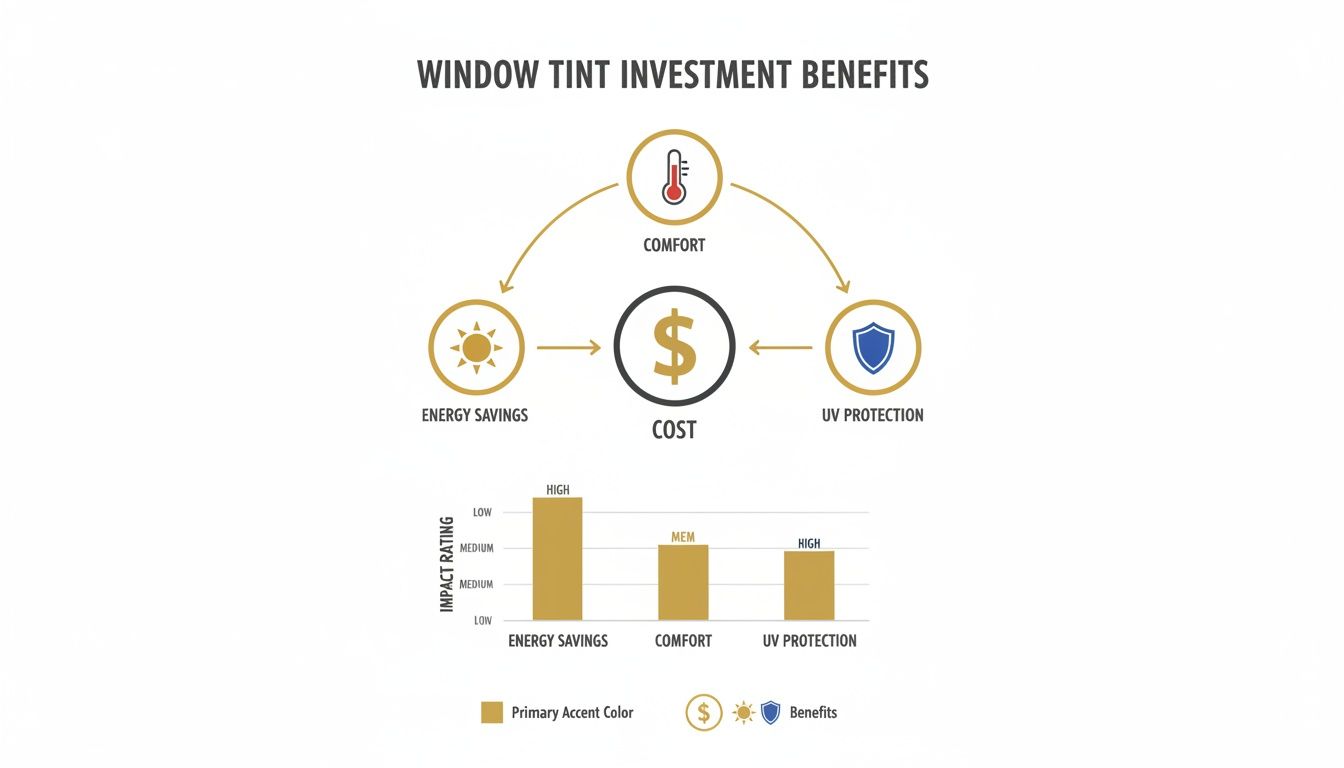
The price you pay is directly tied to real-world returns like lower energy bills, a more comfortable home, and crucial protection from UV rays.
Film Technology: The Single Biggest Price Factor
This is the big one. Not all window films are made the same, and the quality and technology baked into the film itself is the number one variable in your quote. A basic, dyed film will always be the cheaper option upfront, but it simply can’t deliver the performance or durability of a premium film.
At Solar Sentinel, for instance, we specialize in XPEL nano-ceramic films. This isn't your average tint. It uses cutting-edge microscopic ceramic particles to specifically target and block the heat-producing infrared rays from the sun, all without making your windows dark. The result? You get incredible heat rejection, perfectly clear views, and a tough finish that won’t fade or turn that ugly purple color over time.
Think of it this way: a standard dyed film might offer some relief, but a nano-ceramic film is like upgrading from a basic umbrella to a high-tech thermal shield. You're investing in a whole different level of performance that delivers real, measurable results—especially when it comes to saving on your energy bills.
Labor and Project Complexity
After the film itself, the next major factor is the labor required for your specific property. A simple job on a few ground-floor, standard-sized windows is naturally going to cost less than a more complex project.
Several things can add to the installation time and the skill needed from our team:
- Window Accessibility: Are we working on second or third-story windows? Getting to them safely with ladders or lifts takes more time and setup.
- Size and Shape: Huge panes of glass or funky architectural shapes like arches and triangles demand more material and a whole lot of meticulous, time-consuming work to get perfect.
- Condition of the Glass: For the film to adhere flawlessly, the glass has to be surgically clean. If your windows have paint overspray, years of grime, or old silicone that needs to be scraped off, that prep work adds to the labor time.
- Old Film Removal: If your windows already have old, failing tint that’s bubbling, peeling, or has turned purple, it has to go. Removing it is a delicate process that adds to the overall cost, but it's absolutely essential for a clean, professional installation of the new film.
Once you understand these moving parts, you can see that a professional quote isn’t just some random number. It’s a carefully calculated price that reflects the quality of the materials and the specific labor needed to make sure your new window film looks and performs perfectly for years to come.
The True Cost of Cheap Film Versus The Value of a Premium Investment
When you start looking at quotes for window tinting, it's easy to get drawn to the lowest price. Who doesn't want to save a few bucks? But with window film, going cheap almost always costs you more in the long run. It's the classic case of "you get what you pay for."
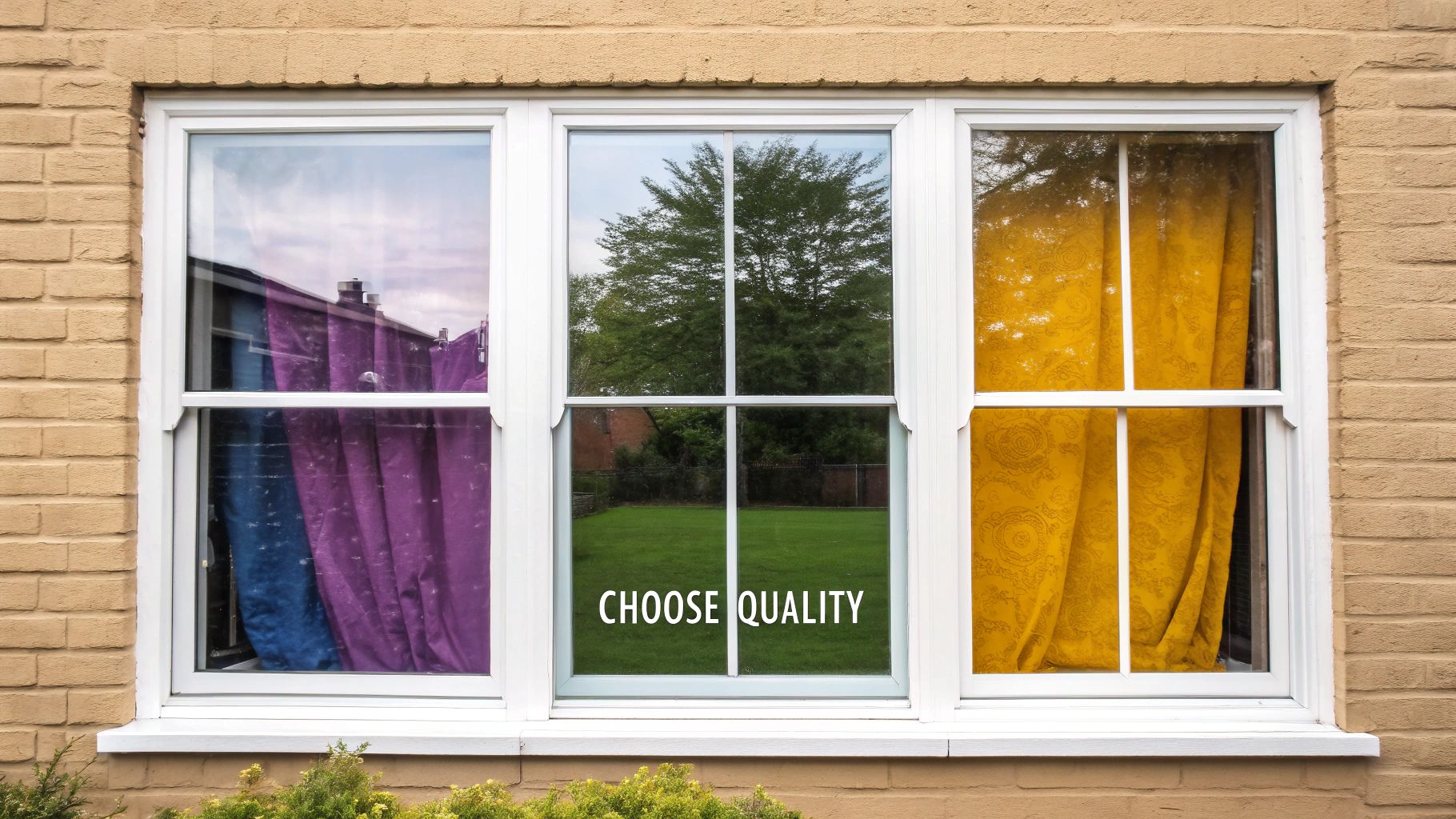
Those bargain-bin films just can't handle Chattanooga's sun and humidity. They're often made with cheap dyes and weak adhesives that break down fast. In just a year or two, you'll see the ugly signs: bubbling, peeling corners, and that dreaded purple haze. Not only does it look terrible, but it also means the film isn't doing its job anymore—no heat blocking, no UV protection.
That puts you right back where you started, but now you have to pay for someone to scrape off the old, failed film before installing a new one. All those initial savings? Gone. Investing in a top-tier product from the get-go is simply the smarter financial move.
The Science Behind a Superior Film
This is where advanced materials like XPEL nano-ceramic films are a complete game-changer. Think of cheap film as a sponge that just soaks up some heat. Nano-ceramic film is more like a smart shield, engineered to actively reject heat. It's packed with microscopic ceramic particles that specifically block infrared rays—the part of the sunlight that makes you feel hot—while letting all the good, natural light stream in.
This sophisticated technology gives you some serious advantages:
- It’s Built to Last: Those ceramic particles are incredibly stable. They won’t fade or break down, so your film will perform just as well in year ten as it did on day one.
- Crystal-Clear Views: You get incredible heat rejection without that dark, mirrored look. Your views stay crisp and clear.
- Serious UV Protection: Premium films block over 99% of damaging UV rays, acting as a powerful sunscreen for your floors, furniture, and family.
When you invest in a high-performance film, you're not just buying a temporary fix. You're securing decades of energy savings, fade protection, and peace of mind, all backed by a lifetime residential warranty.
A Growing Market for Quality
This shift toward quality isn't just happening here in Chattanooga. All over the world, home and business owners are realizing that professional window tinting is no longer just a nice upgrade—it's a crucial investment in energy efficiency and property protection.
The numbers back it up. The global window film market hit USD 11.56 billion in 2023 and is expected to climb to USD 16.56 billion by 2030. You can discover more about this market expansion on Grand View Research. That kind of growth shows a clear trend: people understand the long-term value of doing it right the first time.
Discover The Surprising Winter Benefits Of Window Film
When folks in Chattanooga start looking into how much window tinting costs, their minds usually jump straight to surviving our brutal summer heat. But if you think window film is only a one-season wonder, you're missing out on some major benefits, especially as the colder months roll in. The truth is, modern window tinting is a year-round performance upgrade for your property.
Think of your windows as the weak link in your home's insulation. All winter long, a huge amount of the heat your furnace works so hard to generate escapes right through the glass. This is where advanced window films, particularly those with Low-E (low-emissivity) technology, completely change the game for your home's efficiency.
How Low-E Window Film Works As Insulation
Imagine a thermal blanket made specifically for your windows. That’s pretty much what a Low-E film is. It's engineered with a microscopic, totally transparent coating that reflects long-wave infrared energy—which is just a fancy way of saying it reflects your indoor heat.
Instead of letting all that cozy warmth escape through the glass, the film bounces it right back into the room where you want it. This simple trick has a powerful effect, lightening the load on your furnace and helping you maintain a much more consistent, comfortable temperature inside.
By keeping more of the heat you've already paid for inside, you're not just creating a cozier space. You're actively cutting down on the energy needed to keep your home warm, which translates directly to lower heating bills all winter.
More Than Just Heat Retention
But the winter perks of window tinting don't stop with insulation. That low winter sun can create a harsh, relentless glare that makes it miserable to watch TV, work on a computer, or even just relax in your living room.
Professional window film is designed to tackle these problems, too, making your home more comfortable in several ways:
- Glare Reduction: The film drastically cuts down on that blinding glare, making your rooms more usable and pleasant all day long without blocking the natural light.
- Continued UV Protection: Harmful UV rays don't pack up and leave for the winter. A quality film continues to block over 99% of UV radiation, protecting your floors, furniture, and artwork from fading year-round.
This dual-action performance means your investment is working for you every single day, no matter the season. To see just how this technology can stack up in savings, you can dive deeper into our guide on window films for energy savings. When you understand these winter advantages, you get the full picture of the incredible year-round value packed into your window tinting cost.
Calculating Your Return on Investment
Let’s shift the conversation. Instead of just asking, "how much does window tinting cost?" let's ask, "what's my return on this investment?" Because that's exactly what professional window film is: a powerful financial upgrade for your property that starts paying you back from day one.

The most immediate return comes from slashing your energy bills. High-performance films can cut your annual heating and cooling expenses by up to 40%, a huge number that you'll feel in your budget every single month.
By adding an insulating barrier to your glass, the film traps heat inside during Chattanooga's chilly winters and blocks solar heat in the summer. This means your HVAC system doesn't have to work nearly as hard, which not only saves money but also extends the life of the unit itself.
A Chattanooga ROI Example
So, what does this look like in the real world? Let's run some numbers for a typical Chattanooga home or small office.
Imagine a property with about 20 standard-sized windows, which adds up to roughly 300 square feet of glass. Here’s a hypothetical breakdown to show you how quickly this investment starts working for you.
Sample ROI Calculation for a Chattanooga Property
| Metric | Example Value / Calculation |
|---|---|
| Initial Investment | 300 sq. ft. @ $10/sq. ft. = $3,000 Total |
| Annual Energy Bill (Pre-Tint) | $2,400 per year ($200/month average) |
| Annual Energy Savings | $2,400 x 25% Reduction = $600 per year |
| Payback Period | $3,000 (Cost) ÷ $600 (Savings) = 5 Years |
| 10-Year ROI | $600 x 10 years – $3,000 = $3,000 Profit |
As you can see, the film completely pays for itself in just 5 years. After that, the $600 you save every year is pure profit, straight back into your pocket. Thinking about the long game is key, and it helps to understand the total cost of ownership when you're moving beyond the initial price tag.
The Priceless Return of UV Protection
Now, let's talk about a benefit that doesn't show up on your energy bill but is just as valuable: blocking 99% of harmful UV rays. This invisible shield is like a constant guardian for everything inside your home or office.
Think of it as SPF 1000 for your property. It's a level of protection that stops your expensive hardwood floors, furniture, rugs, and artwork from fading and breaking down over time.
This powerful defense preserves the value and beauty of your most cherished possessions for years to come, helping you avoid thousands in replacement or repair costs down the road.
When you add up the direct energy savings and the long-term asset protection, the return on your window film investment becomes impossible to ignore. For a deeper dive into these benefits, check out our complete guide on window films for energy savings.
How To Choose The Right Chattanooga Tinting Professional
Let's be blunt: the world's best window film is worthless if it's installed poorly. After you've figured out the costs, the final and most crucial step is picking the right professional here in the Chattanooga area to do the work. This decision is what protects your investment and ensures you get the flawless, long-lasting results you're paying for.
A top-tier installer won't just sell you film; they'll be an officially certified partner with a premium brand like XPEL. That certification isn't just a fancy sticker for their truck. It's proof they've gone through specialized training to handle these advanced materials correctly. It also means your project is backed by a powerful manufacturer's warranty—the ultimate peace of mind.
Your Installer Checklist
Before you sign on the dotted line with any company, run them through this quick checklist. You're looking for a team that lives and breathes excellence and proudly stands behind every job they complete.
- A Proven Local Portfolio: Don't just take their word for it. Ask to see pictures of recent residential and commercial jobs they've done right here in our 45- to 60-mile service area.
- Transparent and Detailed Quotes: A pro will give you a clear, itemized quote that breaks down every cost. No hidden fees, no last-minute surprises.
- Exceptional Customer Service: How do they treat you? From that first phone call to the final walk-through, you should feel like your project is their top priority.
Think of it this way: you wouldn't hire a random person off the street for a major renovation. The same logic applies here. While the specifics are different, the core principles of hiring an expert are universal, whether you're choosing a kitchen remodeling contractor or a window film specialist.
Here at Solar Sentinel, we've built our reputation on two things: expert craftsmanship and an absolute obsession with customer satisfaction. We pair the best XPEL films on the market with a meticulous installation process to make sure your project doesn't just meet your expectations—it exceeds them. To see exactly how we operate, take a look at our guide to residential window film installation.
Ready to get your project started with a team you can trust? Reach out to us today for a free, no-pressure consultation.
Got Questions? We’ve Got Answers.
When you’re thinking about an upgrade for your home or business, questions are a good thing. It means you’re doing your homework! Here are a few of the most common ones we hear from property owners around Chattanooga when they’re considering professional window film.
How Long Does Professional Window Film Last?
This isn't a temporary fix; it's a long-term upgrade. Premium films, especially the XPEL products we use, are engineered to go the distance.
When a certified pro handles the installation, you can expect your residential window film to last a lifetime. That's why they come with comprehensive manufacturer warranties that cover things like bubbling, peeling, cracking, or discoloration. Your investment is protected for decades.
Will Window Tinting Make My House Too Dark?
Not a chance! That's a common misconception, especially in an area where many are new to the benefits of modern architectural film. Today’s technology is all about high performance without the dark, mirror-like look.
You can pick from films that are virtually clear but still block incredible amounts of solar heat and 99% of those damaging UV rays. You get to keep your natural light and your beautiful views, no problem. Our job is to educate you on the options so you find the perfect balance of performance and aesthetics for your property.
Can Window Film Be Installed During The Winter?
Absolutely! In fact, winter is a fantastic time to get it done. Our installers work year-round because the entire job happens inside your home or business, completely unaffected by whatever the weather is doing outside.
Choosing a winter installation means you start feeling the benefits right away. The film adds a layer of insulation to your glass, helping you save on heating costs from day one. It’s a smart move that more and more people are making—North America is still the biggest market for window films, with folks looking for high-performance solutions for year-round efficiency. You can even explore the complete global market report on window tinting to see just how much the demand is growing.
Ready to make your property more comfortable and efficient this winter? Give Solar Sentinel Window Films & Tinting a call for a free, no-pressure consultation. Let's find the perfect film for your space!
Visit us at https://www.mysolarsentinel.com to get started.
