

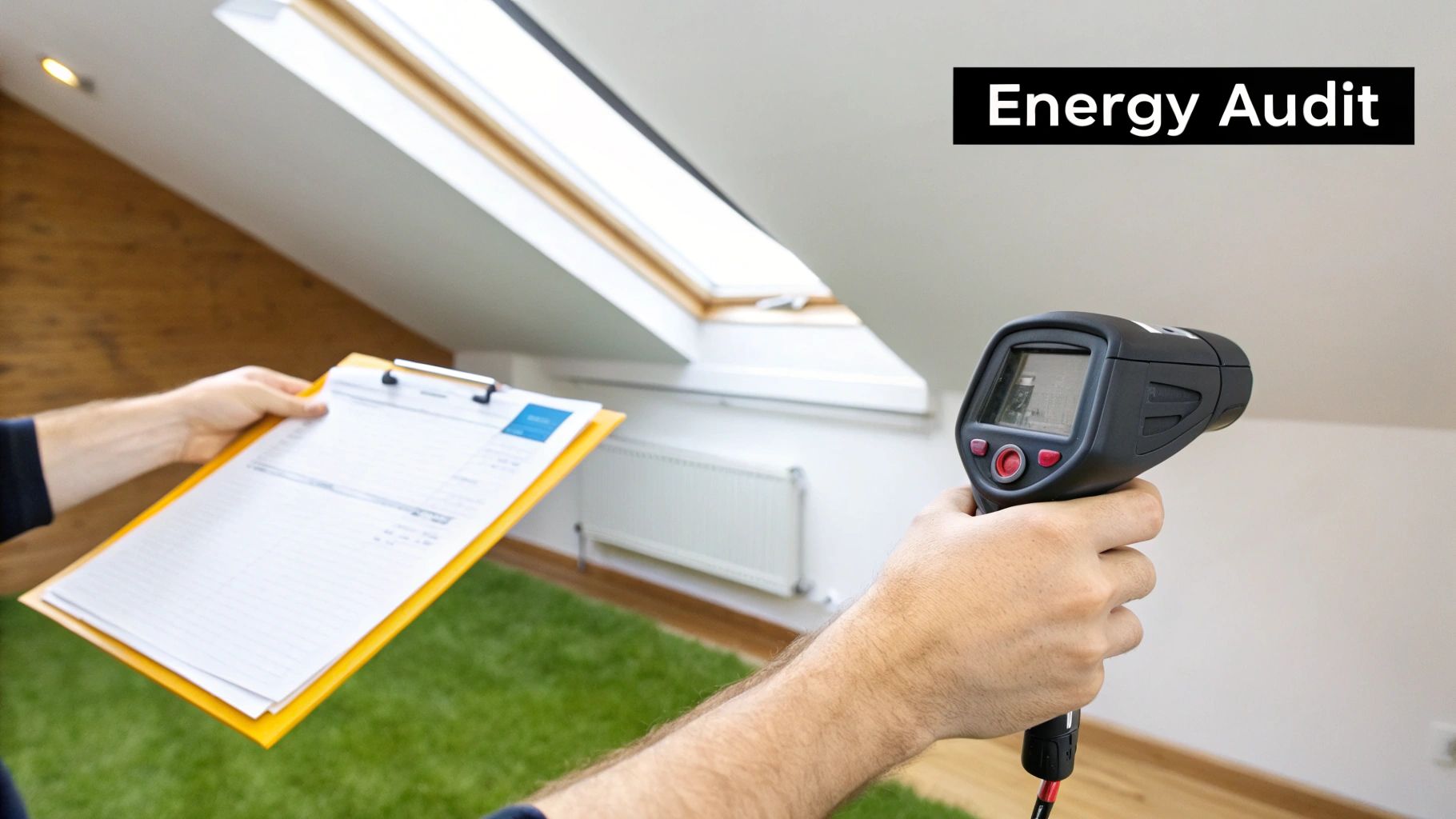
If you want to improve your home's energy efficiency, you first have to figure out where your money is actually going. A home energy audit is that critical first step. Think of it as a roadmap that pinpoints exactly where your precious heated and cooled air is escaping, which lets you build a smart plan for upgrades that deliver real, tangible savings.
Finding Your Energy Weak Spots with an Audit
Before you can make any cost-effective upgrades, you need to play detective for a day. For so many of us here in the Chattanooga area, high energy bills feel like an unsolvable mystery, especially with our muggy summers and surprisingly chilly winters. More often than not, the real culprit is hidden energy waste—all those tiny leaks and nagging inefficiencies that quietly add up to hundreds of dollars flying out the window each year.
A home energy audit is your best tool for cracking the case.
It's like a doctor's check-up for your house. You wouldn't start a new health kick without knowing your baseline stats, right? The same logic applies to your home's energy performance. The whole point is to identify the "energy vampires"—the specific spots draining your bank account.
This process takes you beyond just guessing. Instead of wondering if your old windows are the main problem, an audit can give you a definitive answer. It helps you prioritize the fixes that matter, so you can tackle the low-cost, high-impact solutions first.
This visual breaks down the simple but powerful process: you inspect for issues, identify what's causing them, and then prioritize your plan of attack.
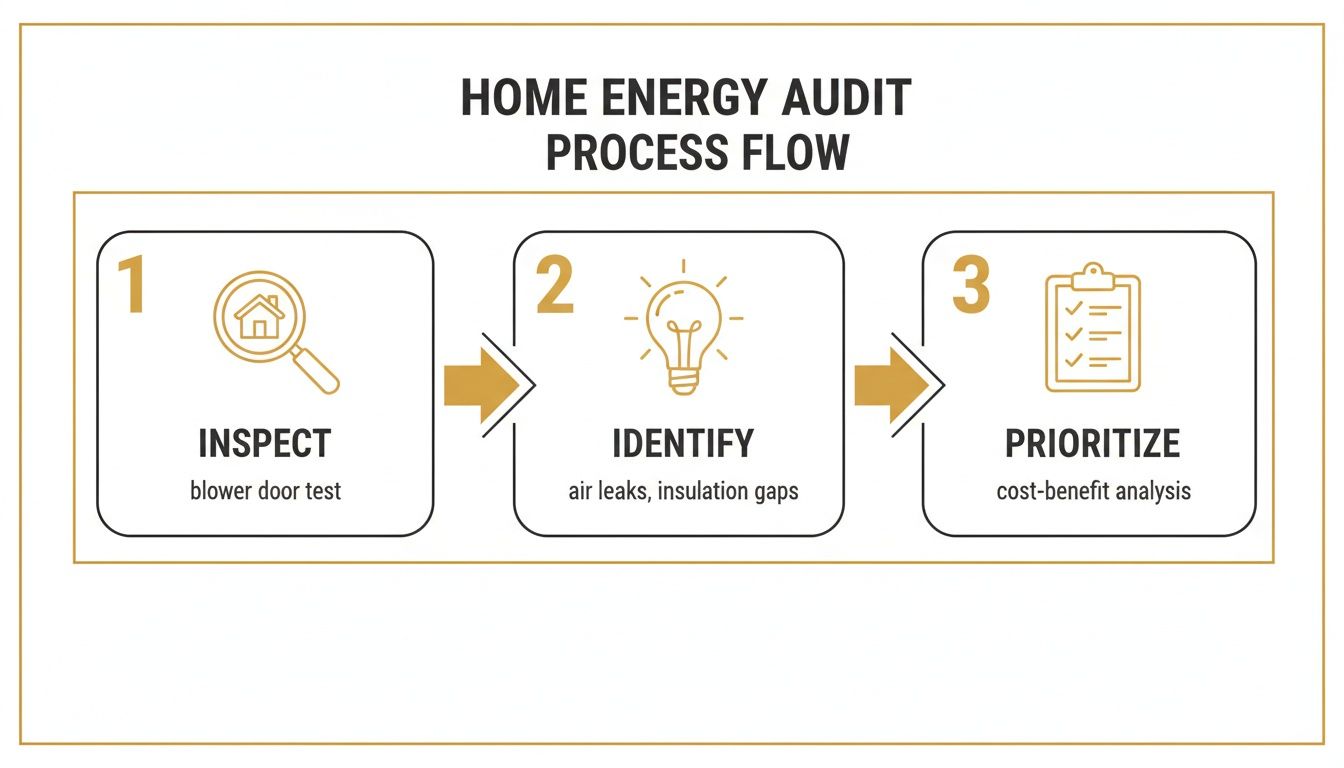
Following this straightforward flow ensures you're putting your time and money where it will make the biggest difference.
Common Energy Culprits in the Tennessee Valley
Living in our unique climate means certain problems pop up again and again. When you do your audit, pay close attention to these common weak spots:
- Drafty Windows and Doors: Tiny gaps in weatherstripping or old caulk are just like leaving a window cracked open 24/7.
- Under-Insulated Attics: Heat rises. Without enough insulation up there, all that expensive warmth from your furnace escapes right through the roof in winter.
- Leaky Ductwork: It's shocking, but up to 30% of your conditioned air can be lost through holes and bad connections in ducts that run through your crawl space or attic.
- Aging Appliances: That old fridge in the garage or that ten-year-old water heater can be absolute energy hogs compared to modern, efficient models.
To get a clear picture of where your home is losing energy, I highly recommend using a practical home energy audit checklist. It's a great resource that can guide you room by room.
Creating Your Action Plan
Once you've found the problem areas, it's time to make a list and prioritize. Your action plan should always start with the easiest and cheapest fixes. For example, slapping some new weatherstripping around a drafty door costs next to nothing but can give you an immediate boost in comfort and savings. Sealing air leaks with a tube of caulk is another fantastic quick win.
And for a deeper look into smart strategies, you can always explore more home energy efficiency tips that build on what you discover during your audit.
By setting aside a single weekend for a DIY audit, you can create a clear, prioritized list that will start transforming your home from an energy-waster into an efficient, comfortable space. This first step is the foundation for everything that follows.
Seal Up Your Home for Real, Lasting Savings
Alright, so your home energy audit gave you a map of all the weak spots. What’s next? It's time to plug the leaks. Think of your home’s outer shell—the roof, walls, and foundation—as its "envelope." It’s supposed to keep the good stuff (your heated and cooled air) in and the bad stuff (Chattanooga’s weather) out.
The reality is, most homes around here are full of tiny gaps and cracks that break that seal. These little openings around windows, doors, pipes, and light fixtures create drafts that force your HVAC system to work way harder than it should. That’s why sealing this envelope is one of the smartest moves you can make.
Start with Some Easy DIY Air Sealing
You don’t have to drain your savings to make a big impact. A lot of the most effective air-sealing jobs are perfect for a weekend warrior. A quick trip to the hardware store and a few hours of work can make a world of difference.
These small fixes stop that constant, costly air exchange between your cozy living room and the great outdoors. Here are the high-impact spots to hit first:
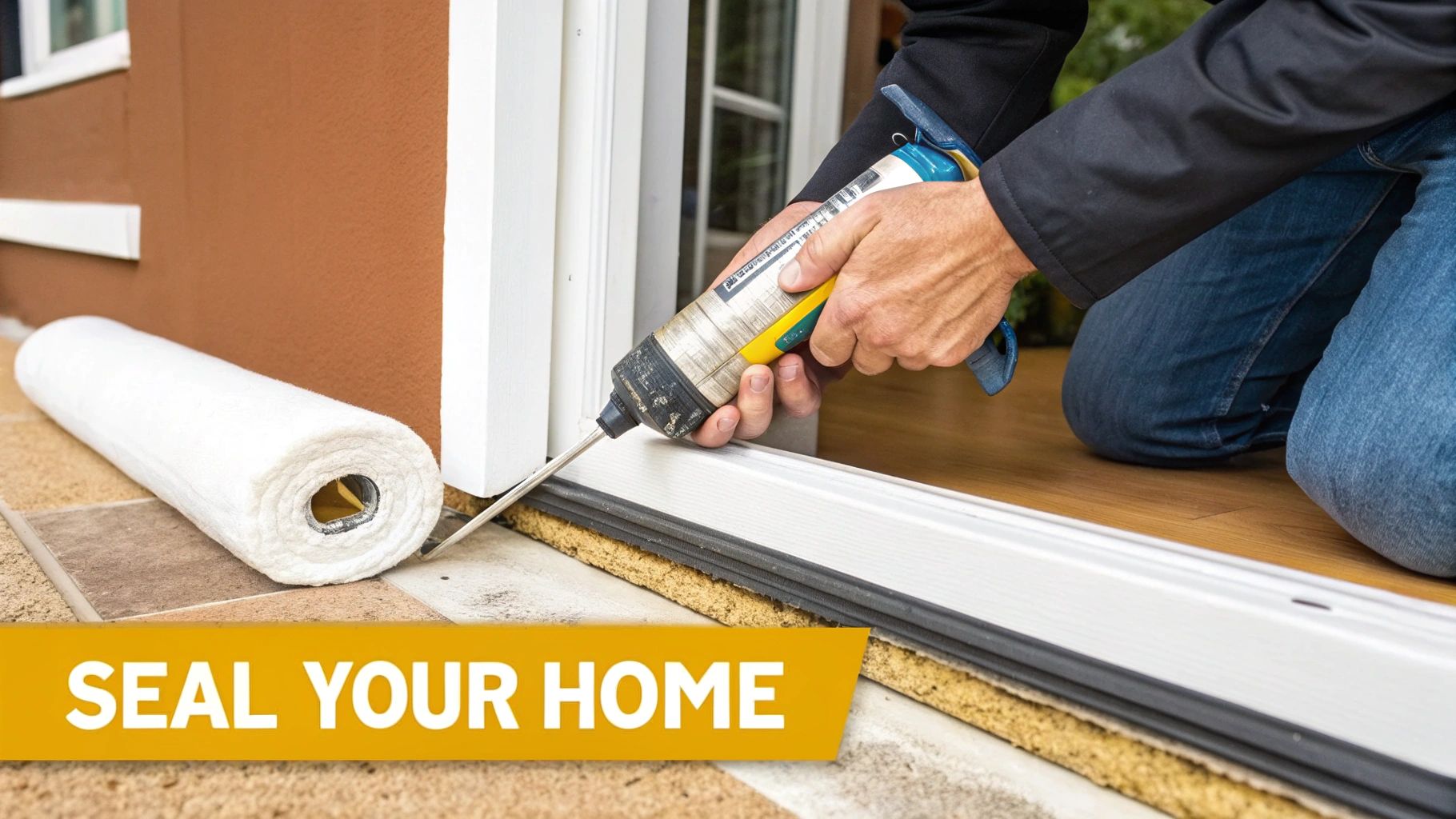
- Caulk Around Windows & Doors: Take a walk around the outside of your house and check the caulk. If it’s cracked or peeling, scrape that old stuff out and lay down a fresh bead of a quality exterior-grade caulk. This one step can block a massive source of drafts.
- Beef Up Your Weatherstripping: Open your front door. Can you see daylight around the edges? Feel a draft? It's time to replace that weatherstripping. Self-adhesive foam or rubber stripping is cheap, effective, and takes minutes to install. Don’t forget the door to the garage!
- Plug Gaps Around Pipes & Wires: Grab a can of foam sealant and get to work under your sinks, behind the toilets, and anywhere else pipes or wires enter your home. These are sneaky spots where a ton of air can sneak through.
A well-sealed home isn't just about saving money. It's about comfort. No more cold spots in the winter, and way less humidity during our sticky Tennessee summers. It also makes every other upgrade, from a new AC unit to window film, work that much better.
Let’s Talk Insulation and R-Values
If sealing stops the leaks, insulation is the thermal blanket that wraps your home. Its job is to slow down heat transfer, keeping you warmer in winter and cooler in summer. We measure how well it works with an R-value—the higher the number, the better it insulates.
For our specific climate here in Chattanooga, having the right insulation is non-negotiable. It's been shown that Americans waste between $200 to $400 a year on energy just from air leaks and inefficient HVAC systems. One of the best bangs for your buck is proper attic insulation, which can slash energy bills by 10% to 50%. You can find out more about these energy efficiency stats and how to save.
Where to Insulate First in a Chattanooga Home
Not all insulation projects give you the same return. To get the most out of your investment, you need to focus on the areas where you lose (and gain) the most heat.
Your Top Insulation Priorities:
- The Attic: Heat rises. An under-insulated attic is like wearing a winter coat with a giant hole in the hood. In our area, you should be aiming for an R-value between R38 and R60 in the attic.
- Crawl Spaces & Basements: Insulating the floor above your crawl space or along the basement walls is key to preventing icy floors in the winter and helps manage moisture.
- Exterior Walls: This one is a bit trickier to do after a home is built, but making sure your exterior walls are properly insulated is crucial for creating a truly efficient home.
When you systematically seal up the leaks and get your insulation levels right, you’re building a strong thermal boundary. This is the foundation for lower energy bills and a home that feels comfortable all year long.
Optimize Your HVAC for Chattanooga's Climate
Let's be honest, your home's heating and cooling system is the undisputed heavyweight champion of your energy bill. For us here in Chattanooga, our distinct seasons—from humid, sticky summers to surprisingly brisk winters—mean the HVAC unit rarely gets a break.
If you want to see a real drop in your monthly bills, optimizing your HVAC is one of the most direct ways to do it.
It's easy to assume everything is fine if hot or cold air is coming out of the vents, but your system could be quietly wasting a fortune. In fact, heating and cooling can account for up to 30% of energy waste in a typical home. That's money you’re literally throwing away on conditioned air that never even makes you more comfortable.
Remember how we talked about sealing and insulating your home? That’s the foundation. A tight home envelope drastically reduces the strain on your equipment, letting it maintain the temperature without running at full blast. This not only saves money but also extends the life of your expensive HVAC unit.
Go Beyond Just Changing the Filter
Everyone knows to change the air filter every 1-3 months. That's non-negotiable for basic efficiency and air quality. But true optimization is more than just that. Think of your system as a finely tuned machine that needs a bit more strategy to perform at its best.
Here’s where you can make a real impact:
- Invest in a Smart Thermostat: This is a complete game-changer for managing our area's wild temperature swings. A smart thermostat learns your family's schedule and automatically dials back the temperature when you're away or asleep. You save energy without lifting a finger.
- Schedule Annual Professional Maintenance: Please don't wait until your AC dies on the hottest day of July. A yearly tune-up from a pro ensures all the components are clean, lubricated, and operating efficiently. It's an investment that pays for itself in avoided repairs and better performance.
- Check Your Ductwork: Leaky ducts are a massive, hidden energy vampire. If your ducts run through a crawlspace or attic, have them professionally inspected and sealed. You want all that conditioned air making it into your living room, not leaking out into the attic.
Smart Settings for Winter and Summer
How you set your thermostat makes a huge difference. Constantly bumping it up and down forces the system to work way harder than necessary. For those sweltering summer days, it's worth learning more about how to lower your electric bill in summer with smart settings and other simple tricks.
When winter rolls around, try this approach:
- Figure out your ideal temperature when you're home and active (let's say 68°F).
- Program your thermostat to automatically lower the temp by 7-10 degrees when you're asleep or out of the house.
- That simple "setback" can cut your heating costs by up to 10% per year.
The goal isn't to be uncomfortable; it's to be smart. By aligning your HVAC's work schedule with your family's actual needs, you stop paying to heat or cool an empty house. A well-managed HVAC system in a sealed home creates a powerful combination for lasting energy savings.
Unlock Winter Warmth with Window Tinting
Once you've sealed up all the cracks and given your HVAC a tune-up, it's time to tackle the biggest energy thief in your home: the windows. Too many homeowners in Chattanooga figure they’re stuck with drafty, inefficient windows unless they shell out for a full, costly replacement. But there’s a powerful and often-overlooked solution that delivers savings all year long.
Residential and commercial window tinting isn’t just for beating our brutal Tennessee summers anymore. Modern window films have evolved into sophisticated insulators, creating a serious barrier against the cold and playing a key role in keeping your home cozy during our chilly winter months.
Let's Bust the Winter Window Film Myth
There's a common myth floating around that window film will make your house darker and colder in the winter, right when you're craving that natural sunlight. That might have been the case with old-school, dark tints, but today’s advanced nano-ceramic films—like the ones from XPEL—are in a different league entirely. They’re designed to be virtually invisible, so you can enjoy bright, natural light and those beautiful Tennessee views without compromise.
Instead of blocking warmth, these films act like a thermal blanket for your glass. Their magic lies in reflecting the heat your furnace generates back into the room, preventing it from escaping through the cold window panes.
This simple change has a huge impact:
- Your furnace runs less often to keep the house at your set temperature.
- Those annoying cold spots and drafts near windows practically disappear.
- Your heating bills drop as your HVAC system gets a well-deserved break.
The science is straightforward, but the results are massive. High-performance window film adds a crucial layer of insulation to your existing windows, effectively boosting their performance and turning a major point of heat loss into a heat-retaining asset.
The Science of Keeping Your Heat Indoors
Think of your windows as thermal highways. In winter, all that expensive, heated air inside your home is naturally drawn toward the cold glass, where it escapes outside in a process called heat transfer.
Modern window films are engineered with microscopic ceramic particles that are "spectrally selective." This just means they're smart enough to tell the difference between types of energy. They're designed to kick out infrared heat (the kind you feel) while letting visible light (the kind you see) stream right through.
In the winter, that tech works in reverse. The film’s insulating properties slow down the heat transfer from inside your home to the chilly outdoors. By keeping more of that furnace-generated warmth where you want it—inside—you stay cozier while your heating system works smarter, not harder. This is a critical piece of any real energy efficiency strategy. According to the International Energy Agency, doubling global efficiency progress could slash energy bills by a third, and upgrades like window film are a huge part of that. You can read more about this global push for efficiency at aceee.org.
Benefits Beyond Your Home in Chattanooga
The perks of window tinting aren't just for homeowners. For Chattanooga's business owners, commercial window tinting is a sharp investment that pays off in more ways than one, especially as the temperatures drop.
Any commercial space with large windows knows how expensive it can be to heat. Just like in a house, those big panes of glass are huge sources of heat loss. Applying professional window film can dramatically cut heating costs, which goes directly to your bottom line.
But for a business, the benefits go way beyond just the energy bill. Window films provide a powerful, year-round advantage for homes and commercial spaces alike.
Here’s a quick look at the benefits of professional window tinting in our unique Chattanooga climate.
Window Film Benefits for Chattanooga Homes and Businesses
| Benefit | Winter Advantage | Summer Advantage | Year-Round Value |
|---|---|---|---|
| Energy Savings | Retains indoor heat, reducing furnace workload and lowering heating bills. | Rejects up to 80% of solar heat, slashing AC costs. | Lower utility bills every single month. |
| Comfort | Eliminates cold drafts near windows for a cozier space. | Reduces hot spots, keeping rooms consistently cool. | A more pleasant environment for family, employees, & customers. |
| Glare Reduction | Tames the harsh glare from the low winter sun on screens and eyes. | Cuts intense summer glare, improving visibility and comfort. | A more productive and comfortable space, no matter the season. |
| UV Protection | Blocks 99% of UV rays, which are still present and damaging. | Prevents fading of furniture, flooring, and merchandise. | Protects valuable assets and skin from sun damage all year. |
In short, whether you're managing a retail shop on Frazier Avenue, an office downtown, or a restaurant out in Hixson, professional window film delivers a real, measurable return on your investment. It’s a strategic upgrade that makes your property more efficient, comfortable, and professional.
If you want to get into the nitty-gritty, our guide on window films for energy savings dives even deeper into how this technology works. By embracing smart solutions like window tinting, property owners all over the Chattanooga area can see big improvements in both comfort and cost.
Upgrade Appliances and Lighting for Long-Term Gains
Once you've tightened up your home's envelope and fine-tuned your HVAC system, it's time to look at the next layer of smart savings: the things you use every single day. Your appliances and light bulbs can be silent energy hogs, quietly adding up on your monthly utility bill. Making a few strategic upgrades here can deliver some serious long-term gains that truly pay for themselves.
This isn’t about running out and replacing everything at once. Far from it. It's about being smart when an old appliance finally kicks the bucket. That ten-year-old fridge or the top-loading washer from the early 2000s just can't hold a candle to the efficiency of today's models. Making a priority of replacing the oldest, least efficient units is a fantastic way to see a noticeable drop in your energy costs.
Decoding the ENERGY STAR Label
When you're out shopping, that little blue ENERGY STAR label is your best friend. This isn't just some clever marketing sticker; it's a government-backed seal of approval for top-tier energy efficiency. To earn that label, a product has to meet strict performance standards set by the EPA. That means it uses significantly less energy and water than a standard model, all without sacrificing performance.
Since its launch back in 1992, the ENERGY STAR program has been a powerhouse for savings. It's helped American families and businesses save an incredible 5 trillion kilowatt-hours of electricity and slash over $500 billion from their energy costs. You can dig into the full story in their annual overview report. Choosing an ENERGY STAR certified appliance is one of the easiest ways to guarantee you're bringing home a product designed to keep your bills low.
For a family here in Chattanooga, the savings from upgrading just one or two major appliances can be huge.
- Refrigerators: An old fridge, especially one humming away in a hot garage, is a true energy vampire. Swapping out a model made before 2001 for a new ENERGY STAR unit can save you more than $200 over its lifetime.
- Water Heaters: Heating water is one of the biggest energy expenses in any home. Upgrading to an ENERGY STAR certified heat pump water heater can literally cut your water heating costs in half. For a family of four, that adds up to around $3,500 in savings over the heater's life.
- Dishwashers: Modern ENERGY STAR dishwashers are engineering marvels. They use advanced soil sensors and smarter water jets, making them 12% more energy-efficient and a whopping 30% more water-efficient than standard models.
When an old appliance finally gives out, resist the temptation to just grab the cheapest replacement on the floor. Spending a little more for an ENERGY STAR model is an investment that will pay you back every single month for the next decade.
The Clear Choice of LED Lighting
If you're looking for the easiest, most immediate energy-saving upgrade you can make, look no further than your light bulbs. The difference between old-school incandescent bulbs and modern LEDs is absolutely staggering. An LED bulb uses up to 90% less energy and can last 25 times longer than a traditional bulb.
Let that sink in for a moment. A single LED bulb can last for over a decade of normal use. You're not just saving money on your electric bill; you're also saving money on buying replacement bulbs. The days of constantly swapping out burnt-out lights are officially over.
To really lock in those savings, consider upgrading to modern LED replacement light fixtures throughout your house. This move guarantees maximum efficiency and can dramatically improve the quality of light in your living spaces.
By systematically updating your appliances and lighting, you're locking in years of lower energy bills. It's a practical, high-impact strategy that makes your home more modern, more comfortable, and a lot cheaper to run.
Your Top Home Energy Questions Answered

As you start digging into ways to make your home more energy-efficient, you're bound to have some questions. It’s only natural. Here in the Chattanooga area, we get a lot of the same queries from homeowners who are curious about the real-world impact of different upgrades, especially newer tech like advanced window films.
We've pulled together the most common questions we hear to give you clear, straight-up answers. The goal is to cut through the noise and help you make the best call for your home or business.
Will Window Tinting Make My House Too Dark in the Winter?
This is probably the number one concern we hear, and it’s a great question. The short answer is no. Modern nano-ceramic window films are a world away from the dark, bubbly tints you might remember from the past. They’re designed to be virtually clear while still packing a powerful insulating punch.
Think of it this way: today's films are smart. They selectively block the specific energy wavelengths that cause heat loss (like infrared) while letting almost all the visible light stream through. You get to keep your bright, naturally lit rooms and your gorgeous Chattanooga views, all while holding more heat inside during the winter. It's a win-win.
What Is the ROI on Window Film Compared to New Windows?
When it comes to return on investment, professional window film installation leaves a full window replacement in the dust. Replacing all your windows is a massive project—we're talking tens of thousands of dollars and a long, messy process. It often takes years and years for the energy savings to even begin to pay back that initial cost.
High-quality window film, on the other hand, costs just a fraction of that. It can help slash your heating and cooling costs by up to 40%, which is a huge deal. For most homeowners and businesses we work with within a 45-60 mile radius of Chattanooga, the payback period for window film is typically just 2 to 5 years. That makes it one of the smartest financial moves you can make for energy efficiency.
Besides Energy Savings, What Are the Other Perks of Window Tinting?
Lower energy bills are fantastic, but that’s just the beginning. Professional window film brings a whole host of other benefits to your home or business.
- UV Protection: It blocks 99% of the sun's damaging UV rays—the main culprit behind faded hardwood floors, furniture, and artwork.
- Glare Reduction: It cuts down that annoying glare on your TV and computer screens, making your space much more comfortable.
- Enhanced Appearance: For businesses, it can add a layer of privacy and create a sleek, uniform look from the outside.
- Safety and Security: We also offer specialized films that are designed to hold shattered glass together, adding an extra layer of protection against break-ins or accidents.
Can I Just Install Window Film Myself?
You’ll see DIY kits at the big-box stores, but I’ll be honest—professional installation is the only way to go if you want results that last. As certified installers, we use premium-grade films (like XPEL) that you simply can't buy off the shelf. More importantly, we have the training and specialized tools to get a perfect, bubble-free application that’s bonded correctly to the glass.
A professional job is also backed by a lifetime residential warranty. That’s your peace of mind against the peeling, bubbling, or discoloration that almost always happens with DIY jobs. It protects your investment for the long haul.
Ready to see how window film can transform your home or business? The experts at Solar Sentinel Window Films & Tinting provide professional consultations and installations throughout the Chattanooga area. We'll help you find the perfect solution to improve your property's energy efficiency and comfort. Visit us online at https://www.mysolarsentinel.com to learn more and schedule your free estimate.
