


Keeping your house cool without constantly blasting the AC is more than possible—it's a smart strategy that pays off. By leaning into passive cooling techniques like strategic shading and smart ventilation, you can dramatically lower the temperature inside your home, especially during those notoriously humid Chattanooga summers.
It’s about working smarter, not harder.
Why Passive Cooling is Your First Line of Defense
When the Chattanooga heat and humidity really settle in, our first instinct is to reach for the thermostat. But what if you could keep your home comfortable without the sky-high energy bills and the constant drone of an AC unit?
That's the magic of passive cooling. It’s not one single trick; it's a whole collection of clever strategies that work with your home's environment to manage heat. Think of it this way: you're stopping the heat from ever getting inside, rather than fighting a losing battle to pump it out once it's already there.
This guide is built specifically for homeowners and business owners right here in the Chattanooga area. We know the unique challenges our local climate throws at us, and these methods will help you turn your space into a cool, energy-efficient sanctuary.
Core Principles of a Cooler Home
To really understand how to keep your house cool without AC, you just need to grasp a few core ideas. These are the building blocks for every specific tip we'll dive into.
- Block Solar Gain: The sun is enemy number one when it comes to unwanted heat. The single most effective thing you can do is stop its direct rays from ever touching your windows and walls.
- Improve Natural Ventilation: Airflow is your best friend. Moving air not only creates a cooling effect on your skin but also pushes out the hot, stagnant air that builds up inside.
- Reduce Internal Heat Sources: Your own home is working against you. Appliances, lighting, and even people generate a surprising amount of heat. Cutting down on these internal heat sources makes a real, tangible difference.
Focusing on these principles creates a powerful system where small, intentional actions add up to a huge impact. It’s about being proactive with heat management, not just reactive with your thermostat.
And the best part? As we head into the cooler months, many of these strategies pull double duty. Solutions that block summer sun can also help trap precious warmth during the winter, giving you savings all year long.
For more immediate actions you can take right now, check out these quick, practical tips on how to cool a room without AC. Otherwise, let's start with the most impactful method of all: mastering the shade.
To help you prioritize, we've put together a quick-reference table summarizing the most effective non-AC cooling methods we'll be covering. Think of this as your cheat sheet for a more comfortable home.
Quick Wins for a Cooler Chattanooga Home
| Strategy | Primary Benefit | Estimated Impact on Comfort |
|---|---|---|
| Window Films & Treatments | Blocks direct solar heat gain | High |
| Strategic Ventilation | Removes hot air, creates breezes | High |
| Targeted Landscaping | Shades walls and windows | Medium to High |
| Reduce Appliance Use | Lowers internal heat sources | Medium |
These strategies, especially when combined, can create a significant and noticeable difference in how your home feels day-to-day. You'll be amazed at how much control you can have over your indoor climate without ever touching the AC.
Master the Shade Game to Block Solar Heat
Let's get straight to the point: the single biggest heat source in your Chattanooga home is the sun. A shocking 76% of the sunlight hitting a standard double-pane window blasts right through and becomes heat inside your house. If you want to stay cool without cranking the AC, winning the shade game is your most powerful move.
Think of it like building a fortress against the sun. You want to stop that intense solar energy before it ever gets a chance to heat up your rooms. It’s way easier to block the heat from getting in than it is to get it out once it’s already there.
Your First Line of Defense: Outside Your Home
The absolute best way to shade your house is from the outside. When you block the sun before it even touches the glass, you prevent the window itself from turning into a giant radiator beaming heat into your living room.
- Awnings and Overhangs: These are champs, especially for south-facing windows. A well-placed awning can block almost all the high-angle summer sun but still let in the lower-angle winter sun to help warm your home when you actually want it.
- Strategic Landscaping: This is the ultimate long-term play. Planting deciduous trees (the kind that lose their leaves in the fall) on the south and west sides of your home is genius. They provide a thick canopy of shade in the summer, then drop their leaves to let all that free, warming sunlight pour in during the winter. It’s a win-win.
And don't forget your window screens! They're a form of exterior shading, too. To get the most out of them, make sure they're clean. Good airflow and shading performance depend on effective window screen cleaning.
Managing Heat from the Inside
While exterior shade is king, your indoor window coverings are your essential backup crew. They handle any sunlight that sneaks past your outdoor defenses. The trick is to use them actively—don't just set them and forget them.
Get into a simple daily habit. As the sun moves across the sky, close the blinds or curtains on the windows getting blasted with direct light. For most of us here in Chattanooga, that means keeping east-facing windows covered in the morning, then closing up the south- and west-facing ones as the afternoon heat intensifies.
Pro Tip: Medium-colored drapes with a white plastic backing are surprisingly effective. They can cut heat gain by up to 33%. Just closing them during the hottest part of the day is one of the easiest, zero-cost things you can do for a cooler home.
Choosing the Right Window Coverings
Not all blinds are created equal when it comes to fighting heat. The material, color, and design make a huge difference in how well they work.
| Window Covering Type | Primary Benefit | Heat-Blocking Effectiveness |
|---|---|---|
| Blackout Curtains | Blocks light completely and offers thermal insulation. | High |
| Cellular Shades | Traps air in honeycomb-shaped pockets, providing insulation. | High |
| Reflective Blinds | Bounces sunlight back outside, especially effective when closed. | Medium |
| Standard Curtains | Offers some light filtering but minimal heat reflection. | Low |
For the best performance, look for products specifically labeled as "thermal" or "blackout." Yes, they’ll make the room darker, but the trade-off is a much cooler, more comfortable space. When you combine smart interior coverings with strong exterior shading, you're building a complete system that will seriously slash your need for air conditioning.
Harnessing Smart Ventilation and Airflow
Moving air is a game-changer for comfort. While fans don't actually lower the room's temperature, the breeze they create helps sweat evaporate from your skin—your body's built-in cooling system. It's a simple trick that makes a huge difference.
This is all about working with nature, not fighting against it. By understanding a few basic principles of how air moves, you can make your home feel dramatically cooler, even on a sweltering Chattanooga afternoon, without ever touching the thermostat. Let's start with the most powerful tool in your arsenal: natural ventilation.
Creating a Natural Chimney in Your Home
You probably remember this from science class: hot air rises. You can use this simple fact of physics to your advantage through something called the stack effect. This technique essentially turns your home into a natural chimney, pulling cool, fresh air in from below while pushing hot, stale air out the top.
Here’s how to make it work. During the cooler parts of the day—think early mornings or late evenings—open windows on the lower levels of your home. Then, open windows on the upper levels or in a stairwell. The cooler, denser air from outside will flow in through the low windows, and as it warms up, it will rise and escape through the high windows, taking the day's accumulated heat with it.
For multi-story homes, this method is incredibly effective. You're creating a steady, upward flow of air that flushes out the heat that's been building up all day, leaving your home refreshed for a comfortable night's sleep.
Master the Art of the Cross-Breeze
If you live in a single-story home or just want to cool a specific room, the cross-breeze is your best friend. The goal here is to create a clear path for air to travel through a space, not just wander into it.
First, figure out which way the wind is blowing. Open windows on the side of your home facing the breeze (the windward side) and then open windows on the opposite side (the leeward side). This lets the incoming air literally push the warm indoor air out, creating a cooling current you can feel.
Of course, the less heat you let in, the less you have to ventilate out. Layering your defenses—from the outside in—is the key to blocking solar heat before it ever gets inside.
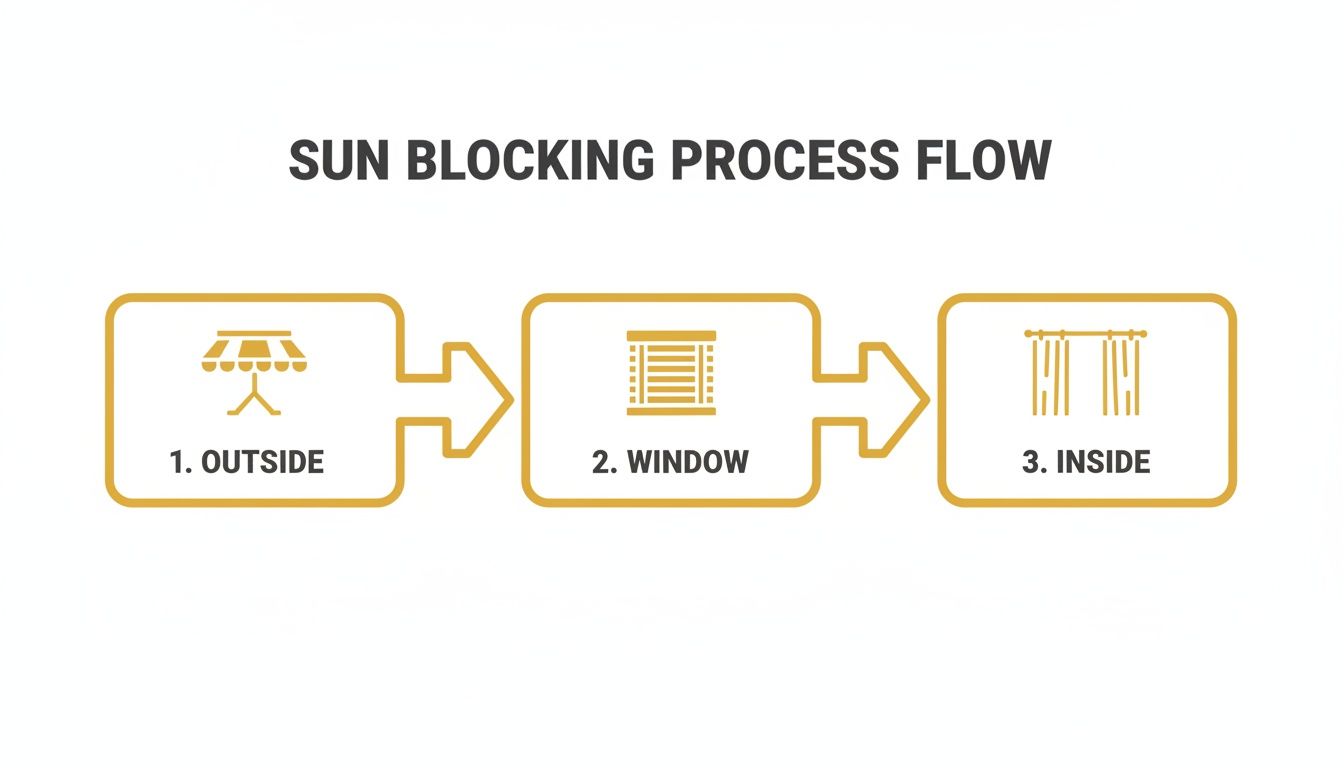
As you can see, the most effective heat-blocking starts on the exterior with things like awnings, followed by window treatments like blinds, and finally interior solutions like curtains.
Using Fans to Maximize Airflow
Fans are the perfect backup dancers for natural ventilation. They amplify the effects of a natural breeze and can provide relief all on their own when the air outside is still.
- Ceiling Fans: Double-check this one! In summer, your ceiling fan blades need to spin counter-clockwise. This pushes cool air downward, creating that pleasant wind-chill effect. It’s a simple switch on the fan's motor housing that makes a world of difference.
- Box and Window Fans: When evening comes, put a box fan in a window facing out. This will actively pull hot air from your room and exhaust it outside, which in turn helps draw cooler night air in through other open windows.
- The "Ice Fan" Trick: Need a quick blast of cold air? Place a shallow pan of ice or a couple of frozen water bottles directly in front of a portable fan. As the fan blows over the ice, it creates a surprisingly chilly breeze.
These ventilation strategies are powerful ways to manage your home's temperature without running the AC. To find even more ways to beat the heat, check out our complete guide on how to lower your electric bill in summer. When you combine smart airflow with other energy-saving habits, you're well on your way to a comfortable and efficient home.
Reducing Heat Generated Inside Your Home
It's easy to blame the sun for a hot house, but you'd be surprised how much heat is actually generated inside your walls. Your everyday appliances and routines can act like tiny space heaters, constantly working against your efforts to stay cool. Getting a handle on these indoor heat sources is a foundational step in keeping your house comfortable without AC.
Think about it—trying to cool a room while something inside is actively warming it up is a losing battle. A few simple tweaks to your daily habits can dramatically cut down on this internal heat load, making your home feel naturally cooler.
Rethink Your Appliance Schedule
Some of the hardest-working machines in your home—your dishwasher and clothes dryer—pump out a massive amount of heat. The dishwasher uses piping hot water and a heated dry cycle, while the dryer is literally a hot box designed to blast your clothes with heat. Running them in the middle of a hot afternoon is like inviting a furnace into your home.
The fix is surprisingly simple: just shift your schedule.
- Dishwasher: Load it up after dinner and run it late at night while you sleep.
- Laundry: Tackle it first thing in the morning or later in the evening when temperatures have dropped.
- Dryer: Better yet, skip it altogether! Use a clothesline outside or an indoor drying rack whenever you can.
This small adjustment costs absolutely nothing but pays off in comfort, especially in smaller homes or apartments where that appliance heat has nowhere to go.
A single cycle from a clothes dryer can easily raise the temperature in a laundry room by several degrees. By running it during cooler hours, you prevent all that warmth from seeping into the rest of your living space.
Smart Cooking Strategies for Hot Days
On a sweltering Chattanooga summer day, the last thing you want to do is turn on your oven. Firing it up to 400 degrees can make the whole kitchen feel like a sauna. Thankfully, you don't have to resort to cold sandwiches all summer.
Give these oven alternatives a try:
- The Grill: The ultimate summer cooking tool. Take all that intense heat outside and enjoy everything from burgers to grilled veggies.
- Slow Cooker & Pressure Cooker: These countertop workhorses are brilliant because they contain almost all the heat they generate, keeping your kitchen from overheating.
- Microwave: For reheating leftovers or steaming vegetables, the microwave is your best friend. It generates far less ambient heat than a stovetop or oven.
Switching up your cooking methods during a heat wave is one of the most effective ways to lower your indoor temperature. It’s a practical skill for anyone learning how to keep a house cool without AC, and it might just simplify your meal prep, too.
The Year-Round Solution: High-Performance Window Film
While things like managing airflow and unplugging hot appliances definitely help, they're mostly dealing with heat that’s already snuck inside your house. If you want to make a truly massive impact on your indoor climate, you have to stop that solar heat at its source—your windows.
This is where high-performance window film stops being a simple add-on and becomes a critical upgrade for any home in the Chattanooga area.
Think about it: curtains and blinds just absorb sunlight and then radiate that heat into the room anyway. Modern window films are engineered to reject solar energy before it even gets through the glass. This one difference is what makes it such a powerful weapon in your mission to keep your house cool without AC.
The Science Behind Modern Window Film
First, forget any preconceived notions you might have about window tint. Today’s residential and commercial window films, especially the nano-ceramic films we use, are in a completely different league. These films are embedded with microscopic ceramic particles that are invisible to the naked eye but are absolute powerhouses at blocking specific types of solar energy.
Here’s a breakdown of what they target:
- Infrared Heat (IR): This is the invisible part of sunlight you feel as heat. A quality film can reject the vast majority of these IR rays, stopping that oppressive warmth right at the glass.
- Ultraviolet Light (UV): These are the nasty rays responsible for fading your hardwood floors, couches, and artwork. Professional films block over 99% of UV radiation, acting like a permanent sunscreen for your belongings.
- Visible Light: This is the light you actually see. The real magic of nano-ceramic film is its ability to block tons of heat without making your rooms feel like a cave. You get to keep all that beautiful natural light and your views.
Imagine that west-facing living room that turns into an oven every summer afternoon. With window film, you can actually sit in there and enjoy the light without breaking a sweat, all while your AC unit gets a much-needed break.
Beyond Summer: A Crucial Winter Benefit
As we head into the cooler months around Chattanooga, the value of window film becomes even more obvious. It’s a superstar at rejecting heat in the summer, but it does an equally important job in the winter: retaining indoor heat.
The same technology that blocks solar heat from getting in also adds an insulating layer to your glass, which reduces how much of that expensive, heated air escapes outside.
This year-round performance transforms window film from a seasonal cooling trick into a permanent energy-efficiency upgrade. It works 24/7, 365 days a year to lower both your cooling and heating bills.
This dual-action benefit is why even the U.S. Department of Energy considers window film a top-tier technology for energy conservation. For many homeowners, the payback period is just a few years. It's an investment that truly pays for itself.
Debunking Common Window Film Myths
For an industry that offers so much real value, there are still a few stubborn myths floating around that we need to clear up, especially for those in the Chattanooga market who are new to this technology.
-
Myth: "It will make my house too dark."
Reality: Not at all. Modern ceramic films come in a whole range of tint levels, including options that are virtually clear. You can get incredible heat rejection without sacrificing that bright, airy feel you love. -
Myth: "It will bubble and peel over time."
Reality: This only happens with cheap, low-quality DIY films and shoddy installation. Professionally installed, premium films from brands like XPEL are bonded directly to the glass and come with a lifetime residential warranty against bubbling, peeling, or cracking. -
Myth: "It's just for cars."
Reality: This is a key distinction. Residential and commercial window films are completely different products from automotive tints. They're engineered specifically for the flat glass used in buildings and are designed for long-term durability and thermal performance in homes and offices, not the curved glass on a car.
Choosing the right product is everything. That’s why we put together a detailed guide to help you find the best window film for heat reduction based on your home's specific needs.
The Financial and Comfort Payoff
The benefits aren't just about feeling more comfortable. High-performance window film delivers a real, tangible return on your investment.
You can finally ditch the AC guilt. With films that block up to 97% of infrared rays and 60% of total solar heat, homeowners can slash their energy costs by an average of 30%. The data shows you can save $1-2 per square foot of film installed, which adds up to a massive reduction in energy use.
For anyone living within a 45-60 mile radius of Chattanooga, this technology isn't just a nice-to-have—it's one of the smartest, most permanent solutions available for tackling high energy bills and uncomfortable rooms.
Creating Your Chattanooga Cooling Action Plan
Knowing a few tricks to keep your house cool is one thing, but having a real game plan is how you win the war against the summer heat. You have to combine these different strategies—shading, ventilation, insulation—to get a powerful cooling effect where each small change boosts the others.
Let's build a practical action plan that works for any budget, whether you've got a weekend or a season to make it happen. This isn't about gutting your house overnight. It's about smart, targeted upgrades that add up to a home that finally feels comfortable when the Chattanooga sun is beating down.
Weekend Wins: Immediate and No-Cost Actions
You can make a real dent in the heat this weekend without spending a dime. These are the quick wins, the simple habit changes that use what you already have to your advantage.
- Master Your Windows: This is your new daily routine. In the morning, shut the blinds and curtains on the east-facing side of your house. As the sun moves, do the same for the south and west-facing windows in the afternoon. Once the sun goes down, open everything back up to flood your home with that cooler night air.
- Check Your Fan Direction: Go look at your ceiling fans. There's a little switch on the base—flip it so the blades are spinning counter-clockwise. This creates a downdraft, pushing cool air down onto you and making the room feel instantly more comfortable.
- Reschedule Hot Tasks: Make a pact to only run heat-generating appliances like the dishwasher and clothes dryer late in the evening or first thing in the morning.
Seasonal Projects: Low-Cost, Higher-Impact Upgrades
When you're ready to put in a little more effort and a small budget, you can tackle some projects that deliver a much bigger cooling punch. These are perfect to knock out in the spring before the real heat arrives.
- Strategic Landscaping: Planting a deciduous tree (one that loses its leaves in the winter) on the west side of your home is the ultimate long game. It’s an investment in natural shade that will pay you back for decades.
- Seal Air Leaks: Grab some caulk and weatherstripping and hunt down every little gap around your windows and doors. This is a simple but incredibly effective way to keep your hard-won cool air inside and that thick, humid outdoor air where it belongs.
- Upgrade to Blackout Curtains: For those rooms that just get absolutely blasted by the sun, swapping out your current drapes for thermal-backed blackout curtains is a game-changer. You can cut the heat coming through that window by over 30%.
The Ultimate Long-Term Investment
If you're looking for the single biggest, most permanent impact on not just your summer cooling but your winter heating, too, the clear winner is professional window film. While all the other strategies are about managing heat that's already gotten in, high-performance window film stops the problem at the source. It fundamentally changes how your home deals with the sun.
This isn't just a temporary fix; it's a permanent infrastructure upgrade for your property. It’s the ultimate step in creating a comfortable, efficient home that works for you year-round, not against you.
This one investment blocks the vast majority of solar heat right at the glass, protecting your floors and furniture and taking a massive load off your HVAC system. It’s really the cornerstone of a truly energy-efficient home, a topic we dive into deeper in our guide to home energy efficiency tips. When you pair a powerful solution like this with all the behavioral and seasonal strategies we’ve talked about, you're truly taking control and creating a cool sanctuary, finally freeing yourself from the thermostat.
Your Top Questions About Window Film Answered
When it comes to keeping a Chattanooga home comfortable without cranking the AC, a lot of folks have questions, especially about a solution like window film. I get it. It's a big decision, so let's clear up some of the most common questions we hear from homeowners just like you.
Will Window Film Make My House Too Dark In The Winter?
This is probably the number one concern I hear, and it’s a great question. The short answer is a definite no.
The technology behind modern nano-ceramic films is pretty incredible. They're designed to be "spectrally selective," which is a fancy way of saying they can tell the difference between good light and bad heat. They zero in on the invisible infrared rays—the ones that make a room feel like an oven—and reject them, all while letting the visible light pour in.
So you can block the overwhelming majority of solar heat gain in the summer without sacrificing that bright, natural light you love. And here's the kicker for winter: that same film adds a layer of insulation to your glass, helping to keep your expensive heated air inside. It’s a true year-round upgrade for your home.
How Much Can I Realistically Save On Energy Bills?
Every home is different, so savings will vary based on things like your home's size, how many windows you have, and which direction they face. But the results are consistently impressive. Many of our clients right here in the Chattanooga area see a serious drop in their cooling costs.
Don't just take my word for it—the Department of Energy actually ranks window film as one of the best energy conservation technologies out there. For many homeowners, the payback period is just a few short years.
It's one of the most effective upgrades for improving a home's overall efficiency. By reducing the strain on your HVAC system in both summer and winter, the film essentially pays for itself over time.
Is Professional Installation Really Necessary?
One hundred percent, yes. You can buy the best film on the market, but if it's not installed correctly, you've wasted your money. The performance, the long lifespan, and—most importantly—the warranty all hinge on a perfect, professional installation.
Our certified installers in the greater Chattanooga region have the training and tools to ensure a flawless, bubble-free application. This is what activates the film's powerful heat-rejecting properties and makes it look like it's part of the glass itself.
Going the DIY route often ends in frustration and a less-than-stellar result. We've seen it all:
- Corners that start peeling up within months
- Ugly, distracting bubbles that won't go away
- A massive reduction in the film's effectiveness
A poor installation just undermines the entire investment. When we do it, you're guaranteed to get the full benefits you paid for, and you'll have that lifetime residential warranty locked in for peace of mind.
Does This Also Work For Commercial Buildings?
Absolutely. Window film is a game-changer for commercial properties. We've helped businesses within a 45-60 mile radius of Chattanooga completely transform their spaces.
Think about it: they can slash massive cooling costs, get rid of those awful hot spots that make employees and customers miserable, kill the glare on computer screens, and protect thousands of dollars in inventory from fading due to UV damage. Honestly, the energy savings and return on investment are often even bigger and faster for a business than for a home.
Ready to make your home or business a more comfortable, energy-efficient space? Give Solar Sentinel Window Films & Tinting a call. We can show you how our premium XPEL films make a real difference, all year long. Get your free, no-obligation quote today at https://www.mysolarsentinel.com.
