

When you start looking into upgrades for your home, the residential window tinting cost is usually the first question that pops into your head. The good news? It's a surprisingly affordable investment that starts paying you back the second it's installed, both in comfort and in lower energy bills.
Your Guide to Home Window Tinting Costs
A lot of people think window film is just a summer thing for blocking the brutal Tennessee heat. But the truth is, modern window films work for you all year long, especially during our chilly Chattanooga winters. Think of it like a winter coat for your glass—it helps keep all that cozy, warm air your furnace is working so hard to produce inside your house.
That thin layer of insulation stops heat from escaping, which means your HVAC system doesn't have to run constantly just to keep up. The result? Real, noticeable savings on your heating bills. It’s a smart upgrade that never takes a day off.
Understanding the National Averages
To get a sense of the bigger picture, it helps to look at what homeowners are paying across the country. Data from 2025 shows the average cost to tint a typical home usually falls somewhere between $316 and $941, with most people landing around the $611 mark.
That price range covers homes with about 10 to 15 standard-sized windows and really depends on the type of film you choose. A basic decorative film will be on the lower end, while a high-performance ceramic film will be at the top. Professional installation is a huge part of the final cost, typically adding $5 to $10 per square foot. If you want to dive deeper into these figures, you can explore the full breakdown of house window tinting pricing.
What This Means for Chattanooga Homeowners
While those national numbers are a great starting point, what really matters is what it costs right here in Chattanooga and the surrounding areas within our 45-60 mile service radius. Local factors, from our unique home styles to our specific climate, make a big difference. Here at Solar Sentinel, we specialize exclusively in residential and commercial properties, so we know exactly what our community needs to stay comfortable and save money.
We believe an educated customer is a happy customer, which is especially important in a market like ours where many people are just learning about the benefits of window film. This guide will walk you through everything that goes into your specific residential window tinting cost, so you'll have a crystal-clear idea of the value you're getting.
What Really Drives Your Window Tinting Cost
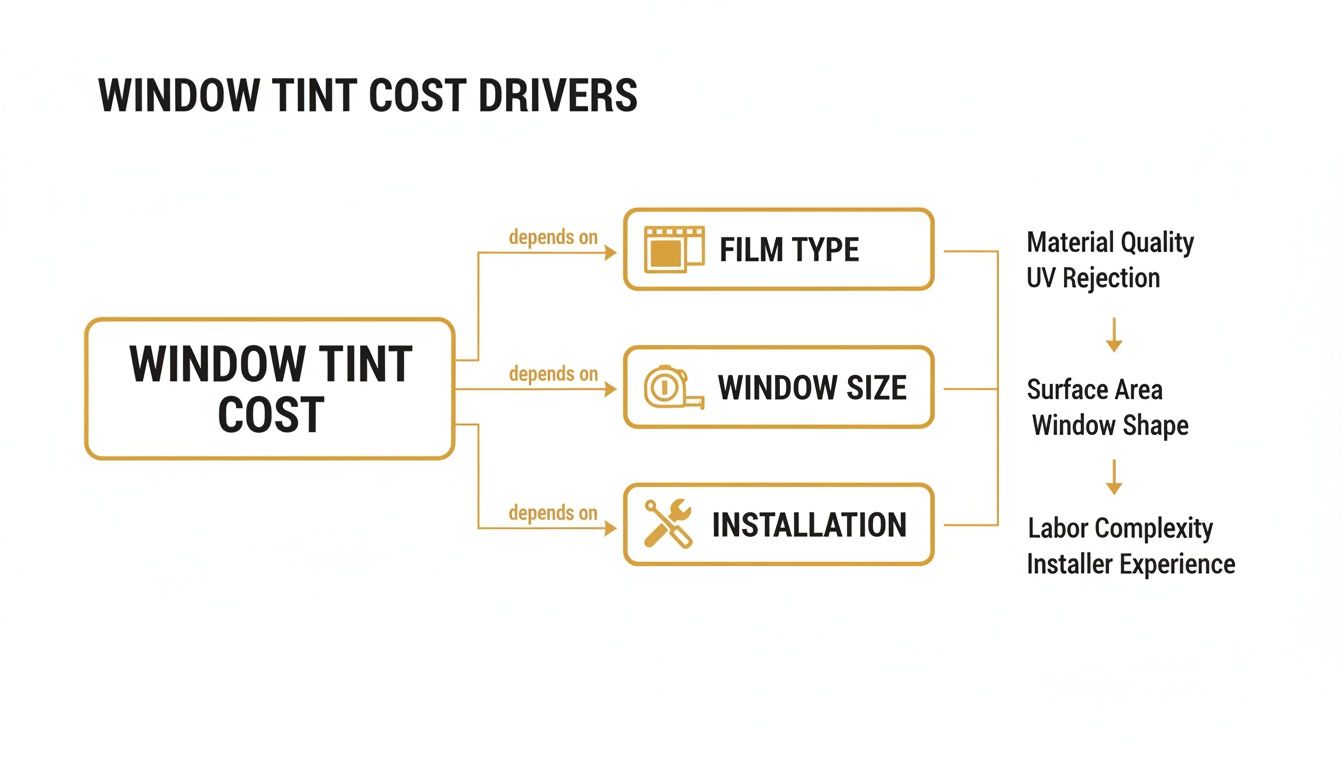
Ever wonder why one quote for window tinting can look so different from the next? It’s not a mystery, I promise. It all boils down to a few key factors that directly shape the final residential window tinting cost. Once you get a handle on these, you’ll be able to look at any estimate with total confidence.
Think of it like buying a new furnace. A basic model will heat your home, sure. But if you want superior efficiency and long-term savings in all kinds of weather, you spring for the high-performance unit. Window film is the exact same idea—the level of your investment is directly tied to the performance and long-term value you get back.
Let's break down the three main things that drive the price.
Film Type: The Biggest Price Factor
Hands down, the single biggest factor in your project's cost is the type of film you choose. Each film is engineered differently to do a specific job, from providing basic privacy to delivering advanced heat rejection. For 2025, the national average for a total installed job usually lands somewhere between $5 to $15 per square foot.
A basic dyed film might run you $5 to $8 per square foot. It’s a great starting point for privacy and offers some UV protection. Step up to a more advanced metalized film, and you're looking at $7 to $12 per square foot for much better heat blocking and durability. For the best of the best, premium ceramic films can range from $10 to $15 per square foot, but they give you elite-level heat rejection and crystal-clear views without that mirror-like look on the outside. You can learn more about 2025 home window tinting costs and how it all adds up to real savings.
Window Size and Quantity
The next piece of the puzzle is simple: how big and how many. A bigger project with more square footage is naturally going to need more film and more time to install. This is exactly why a real, on-site measurement is the only way to get a truly accurate quote.
Just imagine a modern home here in Chattanooga with those big, beautiful floor-to-ceiling windows designed to capture the view. That project will have a much higher material cost than a historic home downtown with lots of smaller, standard-sized window panes.
Here at Solar Sentinel, we never guess. We measure every single window so your quote is exact and transparent. What you see is what you pay—no surprise fees, ever.
Installation Complexity
Finally, we have to talk about how complex the job is. Not all windows are simple squares, and some bring unique challenges that demand more time and skill from our certified installers.
Here are a few common things that can add to the labor cost:
- Window Shape: Custom shapes are beautiful but tricky. Arched, circular, or trapezoidal windows, which we see in a lot of historic Chattanooga homes, need to be meticulously hand-cut for a perfect fit.
- Accessibility: High windows, skylights, or windows blocked by built-in furniture mean bringing in ladders, scaffolding, and maneuvering carefully to get the job done right.
- Window Condition: Older windows sometimes need a lot of prep work. We might have to do some extensive cleaning to make sure the film adheres perfectly, which adds to the overall installation time.
Each of these little details adds up to the total labor involved, and that directly impacts the final price. A skilled pro ensures you get that flawless, bubble-free finish that’s going to last a lifetime, making expert installation a critical part of your investment.
Choosing the Right Film for Your Chattanooga Home
The single biggest decision you'll make that impacts your final residential window tinting cost is the film itself. It's not just about picking a certain darkness; it's about choosing the right technology for the job. Are you battling that intense afternoon sun that turns your living room into a sauna? Dealing with chilly drafts in the winter? Or maybe you just want a little more privacy from the street.
Think of it like buying a jacket for a Tennessee winter. A simple windbreaker offers a little protection, but it won't do much when the temperature really drops. An insulated, high-tech parka, on the other hand, provides serious warmth and comfort. Window films work the same way—different technologies deliver wildly different levels of performance, and the price reflects that engineering. For homes here in the Chattanooga area, understanding what you're buying is the key to a smart investment.
Comparing Your Film Options
Window film technology has come a long way. The days of bubbly, purple tint are ancient history. Today’s options are advanced materials engineered for specific purposes, from basic privacy to elite solar control that can slash your energy bills.
The type of film you choose is the foundation of your project's cost. It dictates the material price and can even affect the complexity of the installation.
Let's break down the most common types you’ll encounter for your home or commercial building.
- Decorative Films: These are fantastic for adding a touch of style or, more commonly, privacy. Think of a frosted film for a bathroom window or an elegant etched pattern on a front door sidelight. They are great at obscuring the view while still letting light pour in, but they offer very little in the way of heat rejection.
- Metalized Films: A solid step up in performance. These films are made with micro-thin layers of metal that are excellent at reflecting solar heat and cutting down on glare. They've been a popular mid-range choice for years, but the trade-off is their reflective, almost mirror-like appearance, which isn't for everyone.
- Ceramic Films: This is the top-of-the-line solution for property owners who want maximum performance without changing the look of their windows. Made with non-metallic, nano-ceramic particles, these films can be virtually clear yet block a massive amount of solar heat and 99% of damaging UV rays. This is the best choice for protecting your hardwood floors, furniture, and artwork from fading. You can learn more about how UV-blocking window film works to safeguard your home's interior.
To make it even clearer, let's look at how these technologies stack up against each other.
Comparing Window Film Technologies
Choosing the right film means balancing performance with your budget. This table breaks down what you can expect from each of the main categories.
| Film Type | Heat Rejection | UV Blockage | Glare Reduction | Average Cost |
|---|---|---|---|---|
| Decorative | Low | Good (99%) | Low to High | $ |
| Metalized | Good | Excellent (99%) | Good | $$ |
| Ceramic | Excellent | Excellent (99%) | Excellent | $$$ |
As you can see, while all professional films offer excellent UV protection, the real difference in price and comfort comes from their ability to reject heat and reduce glare without compromising your view.
So, How Do You Make the Best Choice?
It really comes down to your primary goal. If you just need privacy for a first-floor bathroom window, a decorative film is a perfect, budget-friendly solution.
But if you're battling extreme heat in a sun-drenched living room with a gorgeous view of the Tennessee River Valley, a premium ceramic film is the undisputed winner. You get all the protection without sacrificing the view you paid for.
The key is to match the film's strengths to your home's biggest challenges. A professional consultation helps identify these needs and ensures you invest in a solution that delivers real, year-round value.
The Overlooked Winter Benefits of Window Film
When most folks in Chattanooga think about the residential window tinting cost, their minds immediately jump to summer. It's all about blocking that brutal Tennessee sun, right? But what about when the temperatures drop? The truth is, window film is a year-round workhorse, and its winter benefits are just as impressive, even if they're not as well-known.
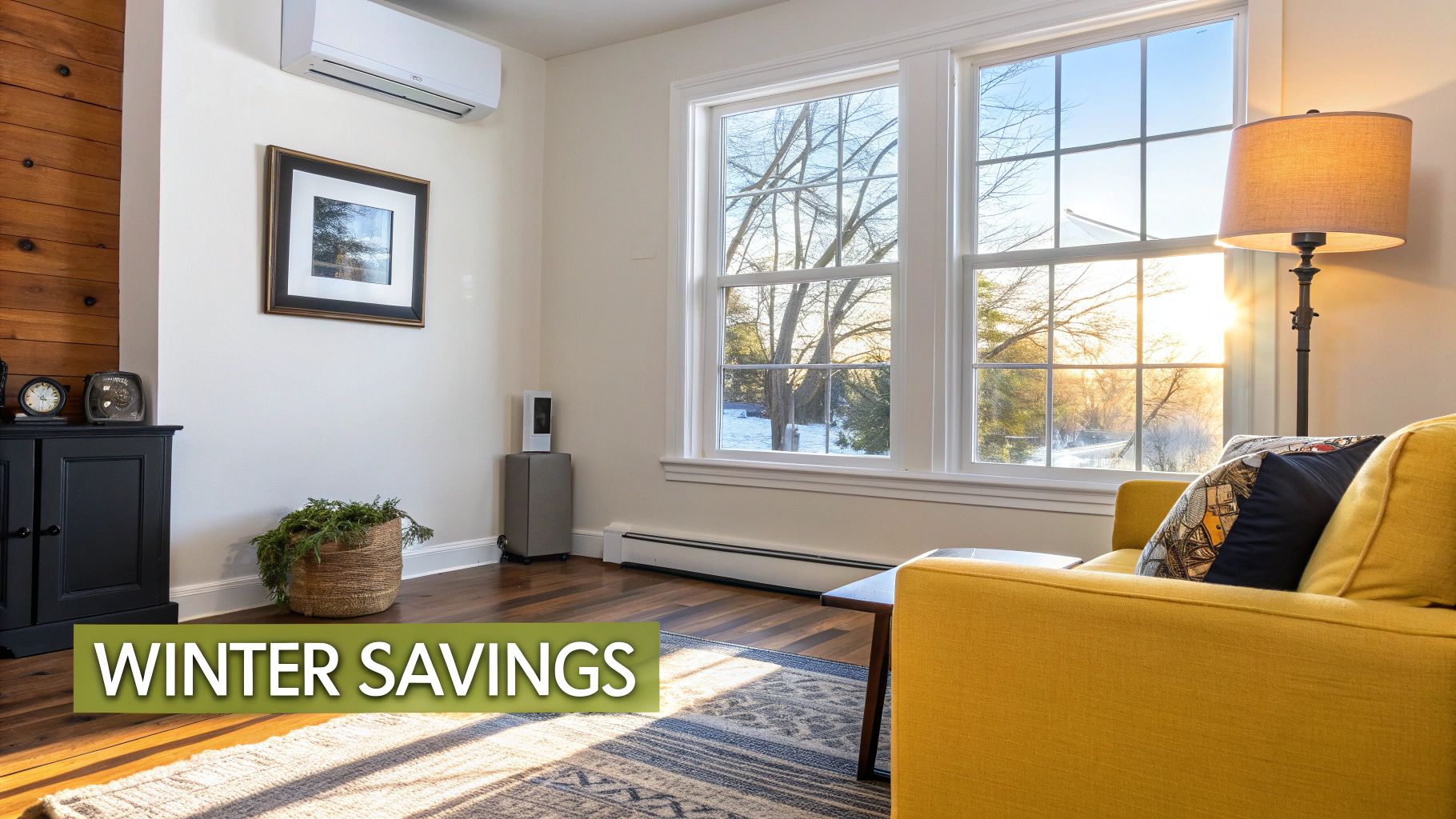
Think of high-quality window film as a thermal blanket for your glass. Your windows are one of the biggest culprits for heat loss in the colder months. In fact, studies show that up to 30% of your home's heating energy can bleed right out through the panes. That means your furnace is working overtime just to keep the house comfortable.
Insulating Your Home Against the Cold
Modern window films add a powerful layer of insulation to your existing windows. Instead of letting all that furnace-generated heat escape, the film reflects it back into the room where it belongs. It’s a simple concept with a huge impact on your home's efficiency.
By trapping more of the heat you've already paid for, window film eases the burden on your HVAC system. You'll notice a more consistent temperature throughout the house, fewer of those chilly drafts by the windows, and a very welcome drop in your monthly heating bills.
Window film isn't just a shield against summer heat; it's a two-way regulator. In winter, it works to keep warmth inside, ensuring the energy you use for heating doesn't go to waste and contributing to lower utility costs.
Year-Round Protection Beyond Temperature Control
Even in winter, the lower angle of the sun can create some seriously intense glare, especially when it bounces off snow or frost. A good window film keeps cutting down that harsh light, making it easier to read a book, watch TV, or work from your home office without squinting.
And don't forget about those sneaky UV rays. The sun’s damaging ultraviolet radiation doesn’t take a winter vacation—it’s out there every single day, and it’s the number one cause of fading for everything inside your home.
Window film is your constant defense, blocking up to 99% of UV radiation. This is crucial for preserving the color and life of your valuables, like:
- Hardwood floors and area rugs
- Upholstered furniture and curtains
- Photographs and artwork
This means your investment is always on the job, protecting your home and everything in it 365 days a year. You can learn more about other ways window tinting can improve livability in your home no matter the season. Once you see it as a year-round upgrade, the initial cost starts to look like one of the smartest investments you can make for your property.
How Window Tinting Pays for Itself
When you look at the price tag for a professional window film installation, it's easy to see it as just another home expense. But that's only half the story. The real value isn't in what you spend, but in what you get back. Think of it less as a cost and more as an investment that starts paying dividends right away.
This isn't just about making your home more efficient; it's about making your home's finances more efficient. Professional window films ease the constant strain on your HVAC system, helping it run less in the brutal summer heat and work smarter in the winter. For many homeowners right here in Chattanooga, that initial investment is often paid back within just a few years. After that, the savings on your utility bills are pure profit.
It's no surprise that more and more people are catching on. The global window tint market is on track to hit nearly $4.5 billion by 2025, and a huge part of that growth is coming from homeowners who are tired of high energy bills and uncomfortable rooms.
More Than Just Energy Savings
Lower energy bills are definitely the headliner, but the return on your investment shows up in a lot of other ways that make daily life better.
- Consistent Comfort: Finally, you can say goodbye to those rooms that are always too hot or too cold. Film evens out the temperature, eliminating annoying hot spots and chilly drafts near your windows.
- Enhanced Privacy: You bought your windows to enjoy the view, not to feel like you're in a fishbowl. Tint lets you enjoy all that natural light without sacrificing your family's privacy during the day.
- Increased Safety: Accidents happen. If a window ever breaks, security films are designed to hold the dangerous shards of glass together, dramatically reducing the risk of injury.
A Chattanooga ROI Example
Let's bring this down to earth with a real-world scenario. Imagine a typical Chattanooga home that gets blasted by the sun all afternoon. A professional installation with a premium ceramic film might run about $1,800.
By blocking a huge amount of solar heat during our hot summers and keeping your furnace's warmth inside during the winter, that homeowner could easily knock $40-$60 per month off their energy bills. That adds up to $480 to $720 in savings every single year.
Do the math, and you'll see the entire project could pay for itself in as little as two and a half to four years. From that day forward, those savings go straight back into your pocket.
Window tinting is one of the very few home improvements that boosts your comfort from day one while delivering a clear, measurable financial return for years to come. You can learn more about how to reduce cooling costs by up to 40% with our premium films and see what those numbers could look like for your home.
Your Top Home Window Tinting Questions Answered
When you’re thinking about an upgrade for your home, you deserve straight answers. We get a lot of fantastic questions from homeowners in Chattanooga and the surrounding areas about the real-world benefits and residential window tinting cost, so we've put together the most common ones we hear every day.
This isn't just about sticking film on glass; it's a long-term investment in your home's comfort, privacy, and energy efficiency.
Will Tinting Make My House Feel Like a Cave in the Winter?
That’s a great question, and a common worry we hear, especially when the winter sun is already scarce. The good news is that modern window films are incredibly sophisticated. The high-quality ceramic films we use are engineered to target the invisible light—infrared (heat) and UV (fading)—not the visible light that makes your home feel bright and welcoming.
You can actually choose a film that’s virtually clear, so you won’t even know it’s there. You'll still get all that beautiful natural light pouring in, but without the heat and UV damage. We always bring samples to our consultations so you can see for yourself how they look on your windows before making any decisions.
How Long Does This Stuff Actually Last? Is There a Warranty?
When installed by a professional, premium window film is built to last. We only use top-of-the-line films that come with a manufacturer's lifetime warranty for residential jobs. That’s how much we trust the product.
This isn't some limited warranty with a bunch of fine print. It covers you against problems like cracking, peeling, bubbling, or delaminating. It’s a guarantee that your film will perform just like it should for as long as you live in your home, giving you real peace of mind.
A lifetime warranty isn't just a sales pitch. It's proof of the quality and durability of the materials we install. Your investment is protected from day one.
Is It Safe to Put Film on My Double-Pane Windows?
Absolutely, and it’s smart to ask. The professional-grade films we use are specifically designed to be 100% safe for all modern residential glass, including double-pane (or dual-pane) and low-e windows.
As certified installers, we know exactly which films are compatible with which types of glass to prevent any risk of thermal stress. Part of our free consultation involves a careful assessment of your windows so we can recommend the safest, most effective solution for your specific home.
How Do I Get a Real Price for My House?
The only way to get a firm, accurate residential window tinting cost is for us to see your home in person. Every house is different—from Signal Mountain to Ooltewah—and things like the exact window sizes, the type of glass, and how easy they are to access all play a part in the final price.
That’s why we offer a completely free, on-site consultation. One of our experts will come out, measure everything up, talk with you about what you want to achieve (less glare, lower AC bills, more privacy), and show you different film options. You'll get a detailed, itemized quote with zero pressure. It’s the best way to ensure there are no surprises and you get a solution that’s perfect for you.
Ready to feel the difference window film can make? Get in touch with Solar Sentinel Window Films & Tinting today. We’ll schedule your free estimate and help you find the perfect fit for your home.
