

Ever wonder how window films can cut glare and heat without turning your Chattanooga home or office into a dark cave? The secret is a simple number called Visible Light Transmission, or VLT.
Think of it like sunglasses for your windows. VLT is just a percentage that tells you exactly how much visible light is making it through the film. A high number means more light, and a low number means less. It's that straightforward.
What Is Visible Light Transmission in Window Film?
Technically, Visible Light Transmission measures the amount of light that passes through a material—like your window glass plus a new film—without getting absorbed or reflected away. For anyone considering window tinting for their home or commercial property, VLT is the key metric for balancing natural daylight with performance benefits like heat and UV rejection. We're essentially installing a dimmer switch right onto your glass.
For example, a film with a 70% VLT is barely noticeable and lets in tons of beautiful, natural light, keeping your rooms bright and airy. On the other hand, a film with a 20% VLT will cut down significantly on incoming light, which is perfect for killing harsh glare and boosting your privacy.
Why VLT Matters for Your Property
For homeowners and property managers here in the Chattanooga area, getting a handle on this one number is the first step toward controlling your building’s comfort, energy costs, and overall vibe. There’s a common myth that you need a super-dark film to block serious solar heat, but that’s old-school thinking. Modern film technology has completely changed the game.
Now, you can get incredible performance without sacrificing those gorgeous Tennessee Valley views. Picking the right VLT delivers some major advantages:
- Glare Reduction: Lower VLT films are fantastic for knocking down the blinding glare on TV and computer screens. This makes media rooms, living rooms, and office spaces so much more comfortable and usable.
- Energy Efficiency: By managing how much light—and the heat that comes with it—enters a room, window films help your HVAC system run smarter, not harder. This is a huge deal during our chilly Chattanooga winters when you want to keep that precious heat inside.
- UV Protection: Here's the best part: high-quality films block over 99% of damaging UV rays, no matter what their VLT percentage is. This is non-negotiable protection for your furniture, hardwood floors, and artwork, stopping them from fading over time.
The right VLT doesn't just change how a room looks; it changes how it feels. It’s about creating an environment that is comfortable, efficient, and perfectly suited to your needs, year-round.
A Quick Guide to VLT Percentages
To make it even simpler, we've put together a quick cheat sheet. This table breaks down common VLT ranges to help you visualize how each one might look and feel in your own space.
| VLT Percentage Range | Light Level | Glare Reduction | Primary Use Case |
|---|---|---|---|
| 70% – 80% | Very High | Low | Maximum natural light; preserving views with good heat rejection. |
| 50% – 60% | High | Moderate | A great balance of light and comfort, popular for living areas. |
| 35% – 45% | Medium | High | Noticeable glare control for offices and media rooms. |
| 20% – 30% | Low | Very High | Excellent for privacy and reducing intense, direct sunlight. |
| 5% – 15% | Very Low | Maximum | Specialty applications needing extreme privacy or darkness. |
Choosing the perfect VLT really comes down to what you're trying to achieve for each specific room. Are you battling glare in a home office, or do you just want to take the edge off the heat in your sunroom without losing the light? Your goals will point you to the right film.
How VLT Shapes Your Daily Environment
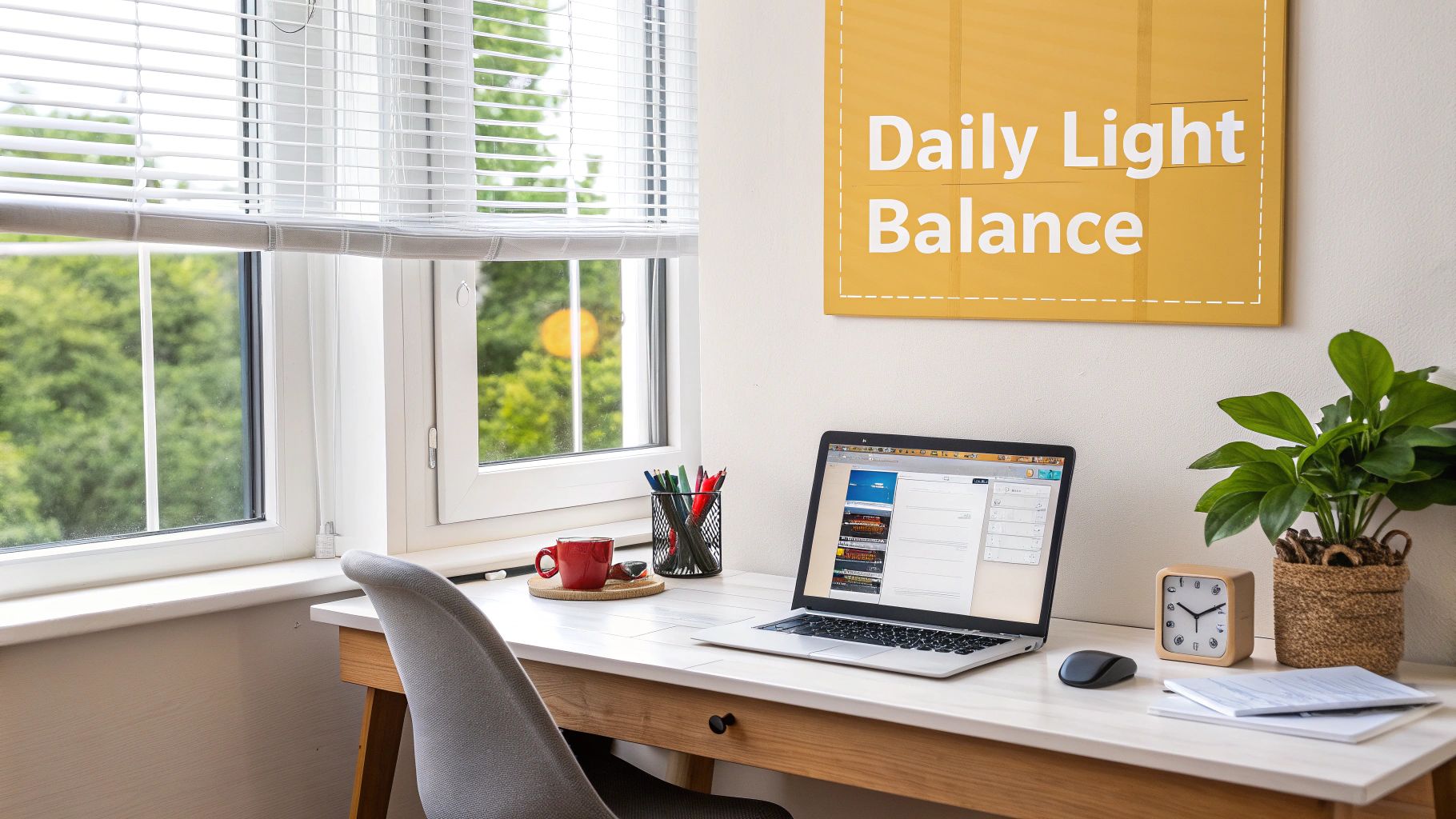
The Visible Light Transmission (VLT) you choose has a direct, hands-on impact on the comfort and feel of your space. This isn't just about a number on a spec sheet; it's about crafting the perfect atmosphere for your home or business, room by room.
Think about trying to watch a movie on a bright, sunny Chattanooga afternoon. That blinding glare bouncing off the screen is incredibly frustrating. A mid-range VLT film completely solves this, cutting the harsh light without plunging the room into darkness.
The same idea works for businesses and ground-floor homes. A lower VLT creates a powerful one-way privacy effect during daylight, stopping outsiders from peering into a street-facing office or living room. But here’s the best part: you get that privacy without sacrificing your gorgeous view of the Tennessee Valley.
Finding the Sweet Spot for Your Space
The real goal is to strike that perfect balance between natural light, privacy, and performance. The right VLT percentage is completely dependent on how you actually use the room.
- Bright and Welcoming: For kitchens, lobbies, or retail showrooms where you want brilliant, energizing light, a higher VLT (60-80%) is perfect. It keeps the space feeling open and inviting.
- Controlled and Comfortable: In a media room, private office, or conference room, a lower VLT (20-40%) provides the controlled ambiance you need. No more fighting glare on your screens.
It’s all about tailoring the light to your lifestyle or your business operations. This is why property managers often select films that maintain a 60-80% VLT—it keeps spaces looking bright for tenants while still blocking 99% of UV rays that cause expensive furniture and merchandise to fade.
More Than Just Light Control
While VLT is all about the light you can see, it’s only one piece of the performance puzzle. High-quality films are smart; they separate light management from other critical jobs.
You don't have to choose between a bright room and a protected one. Modern window films allow you to block overwhelming heat and nearly all UV rays, regardless of the tint level you select.
This means a nearly clear film can still offer outstanding heat rejection, keeping your space comfortable and your energy bills in check. This is especially key as we head into a Chattanooga winter—the same film that rejects summer heat helps insulate your windows to keep warm air inside.
Understanding how films handle visible light, UV, and heat is the secret to making a smart choice. You can learn more about how infrared rejection and UV protection work together. By finding the right VLT, you’re not just improving the look of your space; you’re upgrading its everyday performance and efficiency.
Unlock Winter Energy Savings with the Right VLT
Most people hear "window film" and immediately think of beating the brutal summer heat. That's a huge part of what we do, but it's only half the story. High-quality window films are year-round insulators, and that’s a game-changer for anyone dealing with Chattanooga's chilly winters.
Think about it: your windows are often the weakest link in your home's thermal shield. All winter long, the warm air you're paying to heat is bleeding right out through the glass. This forces your furnace to constantly kick on, working overtime just to keep up. Professional window film adds a powerful, invisible layer of insulation to your existing glass, trapping that expensive heated air right where you want it—inside.
Insulate Your Windows Without Losing the Light
Modern films, especially the nano-ceramic options we use, are engineered specifically to stop this heat loss in its tracks. When your HVAC system isn't constantly battling the cold, it runs less. That translates directly into lower heating bills every single month. We break down exactly how window film creates energy savings in another guide if you want to dive deeper.
The best part? You don't have to turn your home or office into a dark cave to get these benefits. The secret is picking the right Visible Light Transmission (VLT).
You can choose a film with a high VLT to let in as much of that precious natural sunlight as possible during the shorter winter days. This keeps your space feeling bright and welcoming, while the film's insulating magic works silently in the background to keep you warm.
A common myth is that window tinting makes rooms too dark in the winter. In reality, a high-VLT film can be virtually clear, providing powerful insulation benefits without you even noticing it's there.
The technology behind this is pretty incredible. The revolution in LED lighting has driven major advancements in managing light, and that innovation has spilled over into window films. High-VLT nano-ceramic films use similar principles, allowing them to let in 70% or more of visible light while simultaneously rejecting up to 93% of infrared heat.
This dual-action performance is what makes them so powerful at slashing energy bills all year long—sometimes by as much as 40%. In fact, the technology is so effective that the visible light communication market is expected to see huge growth in components designed to manage light and energy.
Ultimately, investing in the right window film is one of the smartest moves you can make for year-round energy efficiency in the Chattanooga area. It keeps you comfortable from the peak of summer heat to the dead of winter.
Choosing the Perfect VLT for Your Chattanooga Property
Alright, we've covered the science. Now, let's bring it all home and figure out what this means for your property right here in the Chattanooga area, which we proudly serve within a 45-60 mile radius. Picking the right Visible Light Transmission (VLT) isn't about finding some magic "best" number. It’s all about matching the film’s performance to what each specific room in your house or commercial building actually needs.
Getting this right can completely change how a room feels and how you use it. Think about a homeowner in Ooltewah with a gorgeous mountain view they don't want to sacrifice. A high VLT film is the perfect call—it keeps the natural light pouring in and the scenery crystal clear, all while quietly blocking that punishing heat and UV radiation.
Tailoring VLT to Your Specific Needs
Every room has its own personality and its own problems. That west-facing bedroom that feels like an oven every afternoon needs a totally different solution than a downtown Chattanooga storefront trying to stop inventory from fading without looking like it’s closed for business. The real key is to pinpoint the main problem you're trying to solve.
- For Preserving Natural Light & Views: If you're dealing with a living room, kitchen, or a retail space where you want things bright and inviting, a high VLT film (60-70%) is your best bet. This choice gives you fantastic heat and UV rejection without making it feel like you're wearing sunglasses indoors.
- For Balancing Light & Comfort: Got a home office that gets blindingly bright or a west-facing bedroom that's just too much in the afternoon? A medium VLT film (30-50%) strikes the perfect balance. It cuts the harsh glare and a good chunk of heat but still lets in plenty of pleasant, natural light.
- For Maximum Glare & Privacy Control: For spaces like a conference room, a media room where screen glare is the enemy, or a ground-floor commercial space needing privacy, a low VLT film (15-25%) is the way to go. This range delivers serious light management and privacy, creating a much more controlled environment.
This simple chart shows how window film can be a smart move for winter comfort, too, leading to real savings on your energy bills.
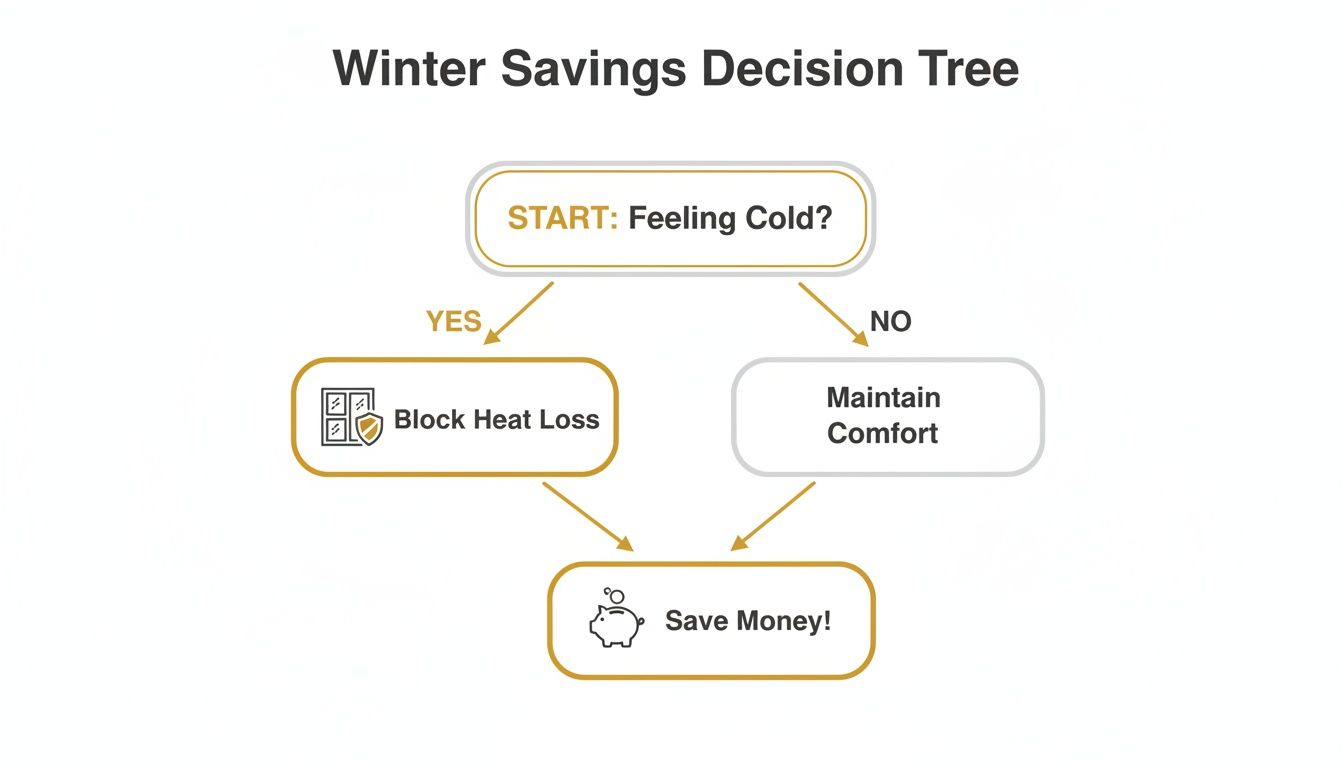
As you can see, a huge benefit when it gets cold is that the film acts as an extra layer of insulation. It helps block heat from escaping through the glass, taking some of the strain off your heating system.
A Practical Guide for Local Properties
So, let's get specific with some common situations we see all around the Chattanooga area. We've put together a quick guide to help you match the right VLT solution to the problem you're facing.
VLT Recommendations for Local Homes and Businesses
This table breaks down some real-world local scenarios to show you exactly which VLT range works best and why.
| Room or Building Type | Common Problem | Recommended VLT Range | Why It Works |
|---|---|---|---|
| Residential Living Room (Ooltewah) | Fading floors and furniture, mild glare | 60% – 70% | Blocks 99% of UV rays to stop the fade, all while keeping the room bright and the views wide open. |
| Commercial Storefront (Downtown) | Merchandise fading, high energy bills | 50% – 70% | Protects your inventory and cuts HVAC costs without making the windows too dark for shoppers to see in. |
| Home Office (Signal Mountain) | Intense afternoon sun and screen glare | 35% – 50% | Slashes glare for better focus and comfort, striking a great balance between light and heat control. |
| Restaurant Dining Area (NorthShore) | Patrons complaining of glare and heat | 40% – 60% | Makes for a much more pleasant dining experience by cutting the heat without sacrificing the welcoming ambiance. |
| West-Facing Bedroom (Hixson) | Room gets too hot and bright to relax in | 30% – 40% | Tames that brutal afternoon sun, adding a layer of privacy and turning the room into a cooler, more restful space. |
By taking a moment to think about how you use each space, you can turn every room in your home or business into a high-performing, comfortable environment. It’s a strategic upgrade that really pays off in comfort, privacy, and lower energy bills all year long.
Busting Common Window Film Myths
When you start looking into window film for your home or business in Chattanooga, you're going to run into a lot of opinions and old information. We've been in this business for years, and we've heard it all. Let's clear the air and bust a few of the most common myths we hear from property owners. Getting the facts straight is the first step to making a smart choice for your space.
Myth 1: The Darker the Film, the More Heat It Blocks
This is probably the biggest misconception out there. It might have been true back when window tint was simple dyed plastic, but modern film technology has completely changed the game.
Lots of folks assume that to get powerful heat rejection, you need to turn your windows into dark, reflective mirrors. Not anymore. Today’s advanced nano-ceramic films can be almost perfectly clear while blocking an incredible amount of solar heat. They're engineered to specifically target and reject infrared heat—the invisible wavelength that makes you feel hot—without cutting down on the Visible Light Transmission (VLT) you actually want.
What does that mean for you? You can keep your stunning views and let all that beautiful natural light pour in, all while making your home or office drastically cooler and more comfortable.
Myth 2: Window Film Will Kill My Houseplants
We hear this one a lot, especially from proud plant parents. The worry is that window film will starve their green friends of precious sunlight. In reality, it's usually the exact opposite. Most common houseplants actually do better with the filtered, less intense light that our films provide.
Think of it this way: the film acts like a protective screen, shielding your plants from the harsh, direct UV rays that can easily scorch their leaves. It creates a gentler, more stable growing environment. Your plants will thank you for it.
That old image of window film turning purple and bubbling up? That's a ghost from the past. It's a problem you'd only see with cheap, low-grade dyed films that no professional installer would touch today.
Here at Solar Sentinel, we exclusively use premium, professional-grade films for residential and commercial applications. They’re guaranteed for a lifetime against bubbling, peeling, or changing color. When you combine top-tier materials with a professional installation, you get a flawless finish that lasts.
Myth 3: Film Will Make My House Too Dark in the Winter
This is a totally valid concern. Nobody wants their home to feel like a cave, especially during Chattanooga's gray winter days. But this myth is easily busted by one simple thing: choosing the right VLT for your goals.
If you want to soak up every bit of precious winter daylight, we can install a high-VLT film. These films are virtually invisible, so you won't even know they're there. But they still provide powerful insulation benefits, trapping the warm air from your furnace inside and helping lower your energy bills. You really get the best of both worlds—a bright, inviting space and better energy efficiency all year long.
Your Top Questions About VLT Answered
Choosing the right window film can feel like you're trying to solve a puzzle. When it comes to something as important as your home or business here in Chattanooga, you deserve straight answers. We've put together some of the most common questions we get about Visible Light Transmission (VLT) to clear things up.
Will a High VLT Film Still Block UV Rays?
Absolutely. This is probably the biggest and most important myth to bust: UV protection is independent of VLT.
You can have a film that's crystal clear—letting in almost all of the visible light—that still blocks over 99% of harmful UV rays. This means you get to protect your wood floors, your new couch, and your family's skin from sun damage without having to sacrifice that beautiful natural light.
Can I Have Different VLT Films in Different Rooms?
Yes, and honestly, this is the smartest way to do it. Think about it: the sun that blasts your west-facing living room in the afternoon is completely different from the soft morning light in your kitchen. Your media room has totally different needs than your home office.
We specialize in creating custom solutions, picking the perfect VLT for each space to get you the absolute best in comfort and performance. You can see how this works by exploring the different levels of window tint we offer.
We believe in a tailored approach. A single VLT percentage is rarely the best solution for an entire home or commercial building. Customizing film by room delivers the best possible results.
How Do I Know the Final VLT of My Windows?
This is such a critical question. The final VLT isn't just the percentage of the film itself; it's a combination of your window's natural tint plus the film we apply.
This isn't a guessing game for a professional installer. Our certified technicians use a digital VLT meter to get an exact reading of your glass before we even unroll the film. This lets us calculate the final VLT with pinpoint accuracy, making sure the result is exactly what you wanted for your property.
Ready to find that perfect sweet spot of light, comfort, and energy savings for your Chattanooga home or business? The team here at Solar Sentinel Window Films & Tinting is ready to help. Contact us today for a free consultation!
