

So, how long does professionally installed window tint really last? It's the number one question we get from homeowners and business owners in the Chattanooga area. The short answer is that high-quality residential or commercial film can easily last anywhere from 10 to over 20 years.
But the real answer isn't just one number. It’s a range that depends heavily on the type of film you choose, the skill of the installer, and even our unique Chattanooga climate. For properties within our 45-60 mile service radius, making the right choice means decades of comfort and savings.
The True Lifespan of Your Window Tint
When you invest in window film for your home or business, you're not just buying a product off the shelf. You're investing in long-term comfort, protection, and energy savings.
Think of it like painting your house. You can go with a cheap, low-grade paint that looks okay for a season but starts to peel and fade fast, forcing you to repaint way sooner than you wanted. Or, you can choose a premium, durable paint that protects your home and keeps its color for years. Window film is exactly the same.
This chart breaks down the two biggest factors that determine how long your film will stick around.
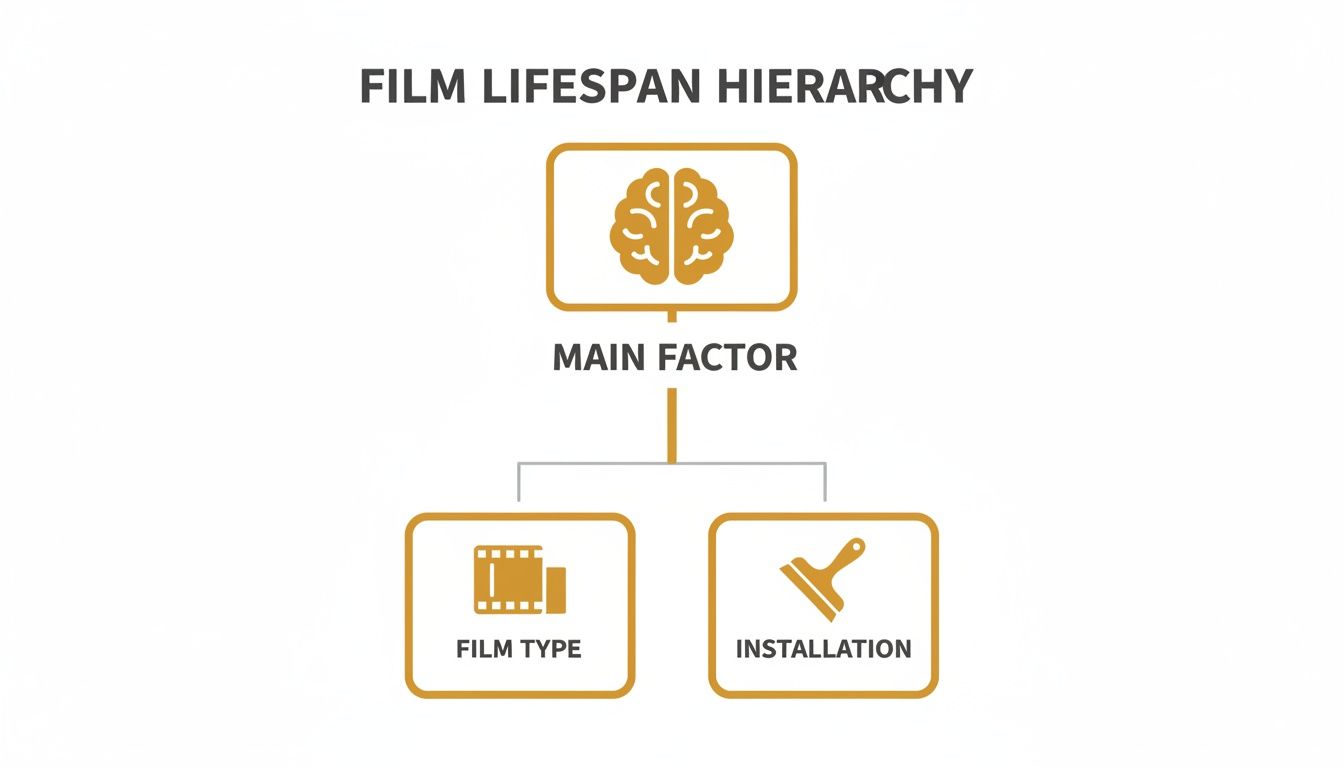
As you can see, it really boils down to two things: the quality of the film itself and how well it was put on your glass.
Why Quality Matters for Durability
The type of window film you pick is the single best predictor of its lifespan. Cheaper films might only give you 3-5 years before they start looking rough. On the other hand, premium ceramic tints from brands like XPEL routinely perform flawlessly for 10+ years.
This massive difference in durability is why the best residential films now come with lifetime warranties against fading, bubbling, and peeling. Top-tier commercial films often carry 15-year warranties. The quality is just that much better.
Here’s a quick breakdown to help you compare the most common types of window film we see here in the Chattanooga area.
Window Film Lifespan At a Glance
| Film Type | Typical Lifespan | Key Characteristics | Best For |
|---|---|---|---|
| Dyed Film | 3-5 Years | Inexpensive, provides privacy and glare reduction, but fades to purple over time. | Budget-conscious projects where longevity is not the primary concern. |
| Metallized Film | 7-10 Years | Reflective appearance, good heat rejection, very durable. | Commercial buildings needing strong heat control and a modern look. |
| Carbon Film | 5-10 Years | Matte finish, good heat rejection, won't interfere with electronic signals. | A step up from dyed film, offering better performance without a metallic look. |
| Ceramic Film | 15-20+ Years | Highest heat rejection, crystal clear view, non-reflective, blocks 99% of UV rays. | Homeowners and businesses wanting the absolute best performance and longevity. |
| Security Film | 15-20+ Years | Thicker construction, holds shattered glass together, provides UV protection. | Businesses and homes looking for enhanced safety and smash-and-grab deterrence. |
Ultimately, choosing a higher-quality film like a modern nano-ceramic means you're investing once for decades of performance, rather than planning for a replacement in just a few years.
Winter Benefits for Chattanooga Properties
A lot of folks think window film is just for blocking that brutal Tennessee summer heat, but its benefits are just as important in the winter. As we head into the colder months, it’s a perfect time to educate our local market on this advantage. High-performance films act like insulation for your glass, reflecting the heat from your furnace back into the room instead of letting it escape outside.
This simple function takes a surprising amount of strain off your heating system, which means lower energy bills when the temperature drops.
A window film that lasts for 15 or 20 years isn't just an aesthetic upgrade; it's a functional improvement that continuously pays you back in year-round energy savings and comfort.
This mindset of investing in quality for long-term returns is key. While we're talking about window tint, the same logic applies across the board, from your roof to your HVAC. In fact, many of the same principles are found in strategies to maximize the longevity of various home systems. Understanding these factors helps you make a smart, lasting choice for your Chattanooga-area property.
Why Some Window Films Fail While Others Endure
Ever drive around Chattanooga and notice the window film on one building looks perfect after a decade, while another is already bubbling and peeling after just a couple of years? It’s not a matter of luck—it’s all about the technology inside the film.
Just like any other major upgrade to your property, the engineering and materials used are what really determine how long the window tint will last. Not all films are built the same; understanding what separates a temporary fix from a long-term solution is key to making a smart investment.
The Foundation of Film Technology
The lifespan of any window film is directly tied to how it’s made. Older, entry-level films are typically dyed films. They use simple dyes to absorb the sun's energy, which helps cut down on glare and some heat. While they're easy on the wallet upfront, there's a major catch: those dyes break down under the constant barrage of UV rays.
Think of it like a cheap t-shirt you left out in the Tennessee sun all summer. That vibrant color is going to fade and look washed out. The same exact thing happens to dyed window film. It often turns a weird, hazy purple as it fails, losing its ability to do its job.
A Step Up in Durability
A step up from dyed film is metalized film. This technology embeds tiny metallic particles into the film layers, which act like a mirror to reflect the sun’s heat away from your windows. These films are much more durable than their dyed cousins and provide better heat rejection.
The trade-off? They have a very distinct, shiny look. For some homes or businesses, that highly reflective appearance can feel a bit dated or too industrial, which doesn't fit every property’s style.
The Modern Solution: Nano-Ceramic Film
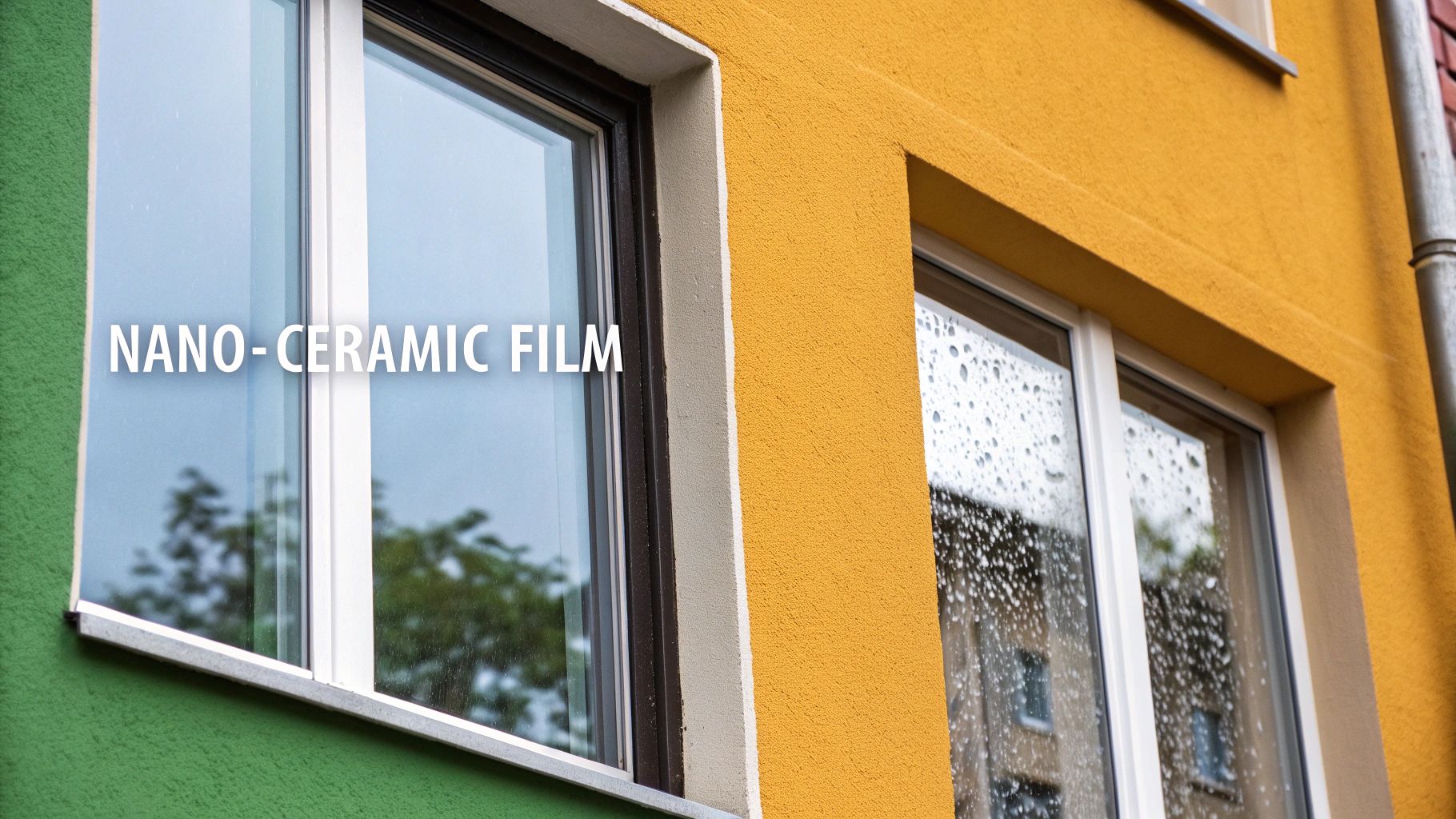
Today, the gold standard in window film is nano-ceramic film. This is, hands down, the most durable and highest-performing option you can get, engineered from the ground up for longevity. Instead of using dyes that fade or metals that look like a mirror, these films use microscopic ceramic particles that are completely invisible to the eye.
These ceramic particles are incredibly stable; they simply don't break down or degrade when exposed to the sun. They're fantastic at absorbing infrared heat—that’s the part of the sunlight that makes you feel hot—without ever losing their power or changing color.
This advanced construction means a top-tier nano-ceramic film, like the XPEL products we install, delivers superior performance that you can count on for decades.
- Color Stability: They are guaranteed not to fade, turn purple, or discolor. The crystal-clear film you get installed today will look just as good in 15 or 20 years.
- Peak Performance: The heat and UV-blocking power stays consistent for the entire life of the film. Your energy savings won’t drop off over time.
- Signal Friendly: Unlike metalized films, ceramic technology is completely friendly to cell phones, Wi-Fi, and other electronic signals.
Choosing a nano-ceramic film is a decision to invest in predictable, long-term performance. It's the difference between a temporary patch and a permanent solution for your property's comfort and efficiency.
Of course, even the best film needs proper care. One big reason some films fail is improper cleaning. For instance, knowing the risks associated with pressure washing tinted windows is critical. That high-pressure water can easily get under the edge of the film, wreck the adhesive, and drastically shorten its life.
What Affects Window Film Durability in Tennessee
You've picked out the perfect window film, but how long will it actually last? That's the million-dollar question, and the answer isn't just about the product itself—it's about how that film stands up to its environment. Here in the Chattanooga area, our distinct seasons throw a unique set of challenges at any window treatment.
Understanding these local factors is key to knowing what to expect from your investment. The film's quality, the precision of the installation, and the simple care it receives all play a huge part. A top-tier film on one side of a house can easily outlast a cheaper one on the other, simply because of the different stresses they face day in and day out.
The Impact of the Chattanooga Climate
Our region's climate is probably the biggest single factor influencing a window film's lifespan. The intense sun, high humidity, and wild temperature swings common to Southeast Tennessee put a serious strain on any film.
-
Sun Exposure: The direction your windows face matters—a lot. Here, south- and west-facing windows get absolutely blasted by the sun's powerful UV and infrared rays, especially during our long, hot summers. This constant bombardment can break down lower-quality adhesives and dyes much faster.
-
Heat and Humidity: That sticky summer heat isn't just uncomfortable for us; it tests the limits of a film's adhesive. Research shows that in hot, humid climates like ours, glass surface temperatures can soar past 140°F. That kind of heat can speed up adhesive fatigue and cause the edges to fail. In fact, these conditions can literally cut a film's lifespan in half compared to the same product installed somewhere milder.
This is exactly why choosing a film engineered for our climate, like the advanced XPEL nano-ceramic films we use, is so critical for getting decades of solid performance.
Professional Installation is Not Negotiable
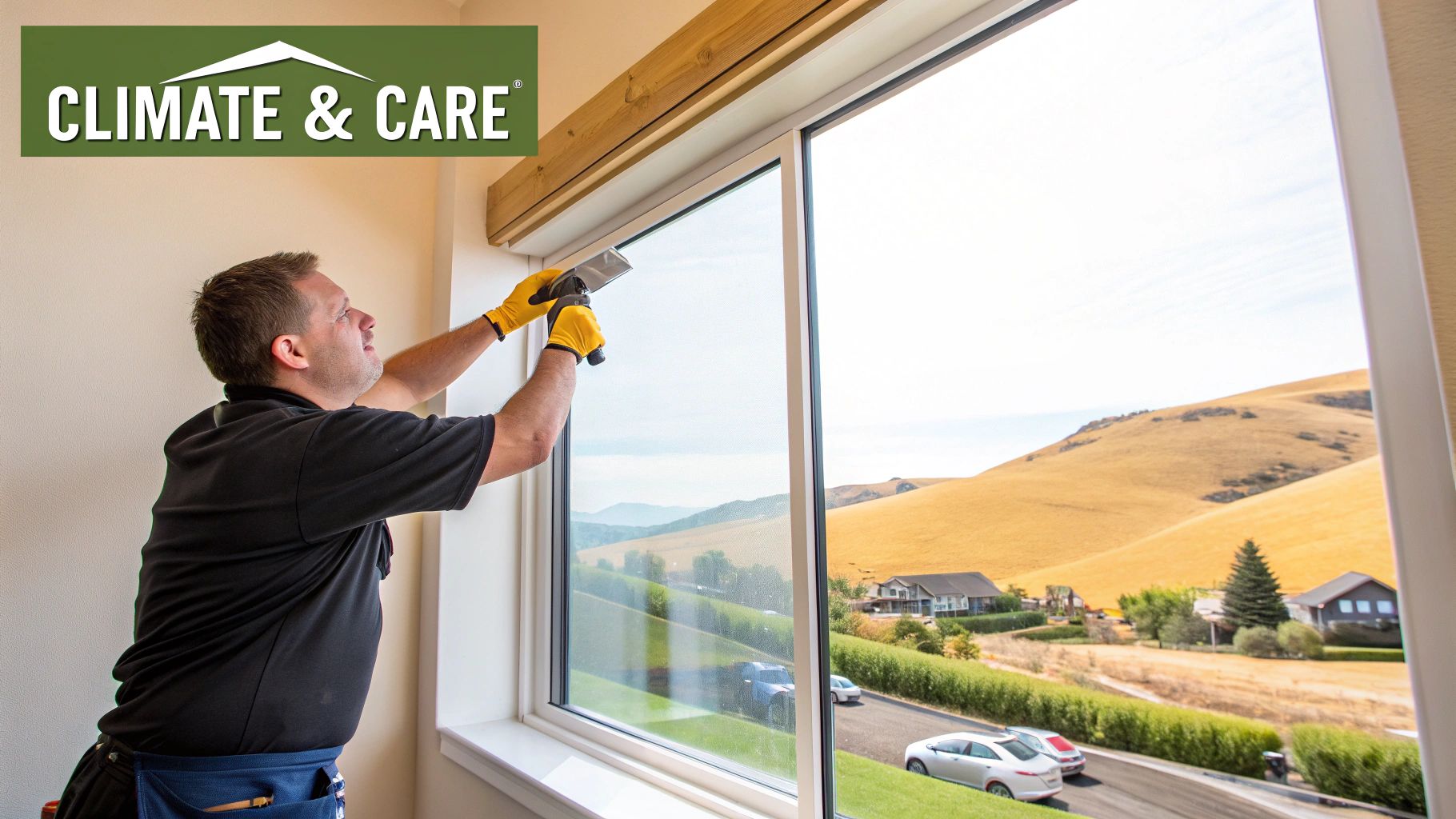
You can buy the best, most expensive window film on the planet, but it will fail prematurely if it's not installed correctly. Professional installation is the single most important factor in making sure your film lasts as long as it should. A DIY attempt or a rookie installer almost always leads to the bubbling, peeling, and disappointment you're trying to avoid.
An expert installer follows a meticulous process:
- Impeccable Glass Prep: We clean the glass surface obsessively to get rid of every last speck of dust, oil, or debris that could ruin a perfect bond.
- Precision Application: Using specialized tools and years of experience, we lay the film down smoothly, squeegeeing out any air pockets or imperfections.
- Perfect Edge Sealing: The edges are carefully sealed to lock out moisture and dirt. This is the secret to preventing peeling, which is the number one cause of film failure.
This flawless application is what stops the bubbling, peeling, and cracking that plague amateur jobs, guaranteeing your film looks amazing and performs perfectly for years to come.
The Surprising Winter Advantage
Most people think about window film for the summer heat, but a quality film offers a huge benefit during Chattanooga's chilly winters, too. Your glass is often the weakest link in your home's insulation, and high-performance film helps fix that.
In the winter, the film works in reverse, reflecting the precious heat from your furnace back into the room instead of letting it escape outside. This simple trick reduces the strain on your heating system and helps lower your energy bills.
This year-round efficiency is a massive part of the return on your investment. To see how this translates into real-world savings, check out our guide to window film energy savings in Chattanooga.
Simple Care for Long-Lasting Performance
Taking care of your window film is easy, but it’s essential for getting the maximum lifespan. Once the film has fully cured (which usually takes about 30 days), just follow these simple rules:
- Use the Right Cleaner: Stick to a mild, ammonia-free cleaning solution. Honestly, a simple mix of water and a few drops of baby shampoo is perfect.
- Use a Soft Cloth: A soft microfiber cloth is your best friend. Never use paper towels, abrasive sponges, or anything that could scratch the film’s protective topcoat.
That's it. By following these easy tips, you'll ensure your window tint continues to deliver comfort, protection, and energy savings for its entire life.
Signs Your Window Tint Is Nearing Its End
Even the best window film on the market isn't a "set it and forget it" solution for life. Think of it like a shield. For years, that shield takes a constant beating from UV rays, Chattanooga’s humid summers, and chilly winters. Eventually, that shield is going to show some wear and tear.
Knowing what to look for is key to making sure your home or business stays protected, comfortable, and efficient. Catching the signs of failing film early means you can get ahead of the problem before you lose the benefits you paid for. Some signs are painfully obvious, while others are a lot more subtle.
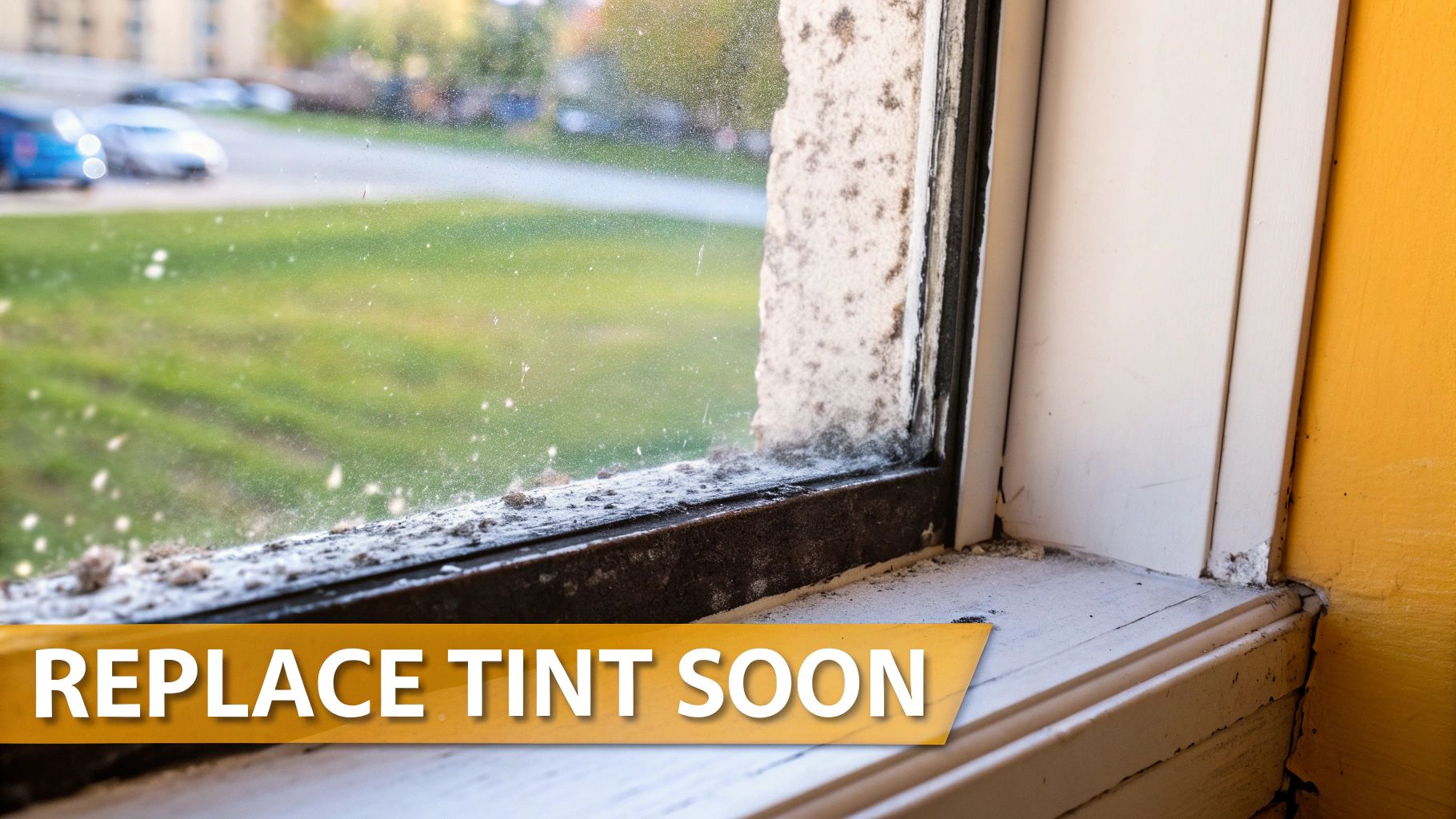
Obvious Visual Red Flags
Some problems with old window tint are impossible to ignore. These are the tell-tale signs that the film's adhesive has given up the ghost or the material itself has just plain worn out. If you spot any of these, your film is well past its prime.
- Bubbling: This is the classic, number-one sign of film failure. Little air pockets get trapped between the film and the glass, creating an ugly, blistered look. It’s a dead giveaway that the adhesive has been broken down by years of heat and sun.
- Peeling: You'll see this at the corners and edges, where the film starts to curl and lift away from the glass. That's a total failure of the adhesive bond, and trust me, it only gets worse.
- Cracking or Tearing: Older, cheaper films can get brittle over time, leading to visible cracks or tears. Not only does this look terrible, but it completely negates any of the film's protective benefits in those spots.
These aren't just cosmetic flaws; they're symptoms of a product that has failed. Once bubbling or peeling starts, the film is no longer doing its job, and its days are numbered.
Subtle Symptoms of Degradation
Not every sign of failure is as dramatic as a window full of bubbles. Sometimes, the most important clues are about performance—the film just isn't working like it used to, even if it looks mostly okay from a few feet away.
One of the biggest giveaways is a change in color. If your once-neutral tint now has a weird purple or brownish hue, that's the dyes inside the film breaking down from all the UV exposure. That purple haze is a clear signal that the film's ability to block heat and UV rays has tanked.
Another subtle but crucial sign is how your rooms feel. Are you suddenly noticing more glare on your TV or computer screens? Does a certain room feel hotter in the afternoon than it used to? That's your film losing its heat-rejecting power. For property owners here in Chattanooga counting on that film to keep energy bills down, this is a big deal.
A Quick Checklist for Your Windows
Not sure if your film is on its way out? Take a quick walk through your property and give your windows a once-over with this simple checklist:
- Look for Color Change: Check out the windows from inside and outside. Is the color clear and consistent, or are you seeing a funky purple, hazy, or blotchy tone?
- Inspect the Edges: Get up close and look at the corners and edges. Is the film lying perfectly flat, or is it starting to lift or peel back?
- Check for Bubbles: Stand back and look at the glass from different angles and in different light. Do you see any air pockets or blisters, no matter how small?
- Feel the Heat: On a sunny day, put your hand near the glass. Does it feel a lot hotter than you remember it being?
- Notice the Glare: Is the sun suddenly more annoying than it used to be? More glare often means the film has stopped doing its job.
If you answered "yes" to any of these, it's a safe bet your window tint is nearing the end of its life. Getting it replaced will bring back the protection, comfort, and energy savings you've been missing.
The Real ROI of Premium Window Film
It’s easy to think of high-performance window film as just another line item on a property improvement budget. But that’s a mistake. In reality, it’s a powerful investment in your building's efficiency, comfort, and long-term value. When you truly understand how long window tint lasts, you start to see its real return on investment (ROI).
A premium film that looks and performs like new for 15 years or more isn't just offering temporary relief from the sun; it's delivering sustained financial benefits year after year. The biggest and most immediate return comes from energy savings. By rejecting a massive amount of solar heat, the film drastically cuts the workload on your HVAC system, leading to much lower cooling bills during our brutal Chattanooga summers.
But the savings don’t stop when the weather cools off. As we head into winter, that very same film acts as an insulator, reflecting your expensive indoor heat back into the room. This helps keep your space warm and cozy, taking a bite out of your heating costs. Over a decade or more, these year-round savings can pay for the initial installation several times over.
Beyond the Energy Bill
While lower utility bills are a huge win, the financial benefits of a long-lasting window film go much, much further. It's an investment that actively protects your other investments.
The same UV rays that damage your skin also wreak havoc on everything inside your home or business. A quality nano-ceramic film blocks 99% of harmful UV radiation, acting as a powerful, invisible shield for your assets.
- Protect Your Furnishings: Hardwood floors, custom furniture, artwork, and expensive rugs are all vulnerable to fading and sun damage. Window film preserves their color and integrity, saving you thousands in replacement or repair costs down the road.
- Preserve Merchandise: For Chattanooga business owners, this is non-negotiable. Faded inventory in a storefront window looks cheap and can become a complete loss. Film keeps your products looking vibrant and new.
- Enhance Curb Appeal: Modern window films add a sleek, uniform look to any building, boosting its curb appeal and potentially increasing its property value.
Calculating the Payback Period
So, when does the investment actually start paying you back? It happens a lot faster than most people realize.
Premium architectural films that cut cooling loads by 20–40% in hot climates commonly deliver energy paybacks in 3–7 years, while their physical lifespan can exceed 10 years with proper installation.
This means for many projects, you get to enjoy at least 3–7 more years of performance after the initial energy savings have already covered the cost. While high-performance tints can maintain up to 90% of their initial performance for over eight years, standard films often show noticeable degradation within just 3–5 years.
When you invest in a solution that's built to last, you aren't just buying a product; you're securing years of positive cash flow through reduced operational costs. The long-term performance directly translates to a stronger ROI. Understanding the full benefits of ceramic window tint can help you appreciate why this technology offers such a compelling financial advantage for any property owner.
How a Warranty Guarantees Your Investment
Think of a window film warranty as more than just a piece of paper you file away. It's the manufacturer's handshake—their direct promise to you that their product is built to last. Honestly, the warranty tells you almost everything you need to know about how long the window tint is expected to last.
When you're investing in a solution for your Chattanooga home or business, you deserve to know it's going to hold up. A solid warranty is your safety net, protecting your investment against defects and giving you that crucial peace of mind. It’s the difference between hoping your film lasts and knowing it will.
What a Strong Warranty Covers
A reputable manufacturer’s warranty isn't for accidental damage, like a kid scratching the film with a toy. It covers failures that happen because of a defect in the product itself, ensuring it performs as advertised under normal conditions.
Here’s what you should always be protected against:
- Bubbling and Blistering: This is the classic sign of cheap film failure. You’ve seen it—ugly air pockets that form when the adhesive gives up. A good warranty says this won't happen.
- Peeling: Quality film should never, ever curl up at the edges. The warranty is a guarantee that the adhesive will stay bonded to your glass for the long haul.
- Discoloration: Cheap dyed films often turn a hazy purple over time. A superior warranty, especially for ceramic films, promises your view will stay crystal clear and color-stable.
These aren't just random promises. High-end manufacturers know their films are engineered to avoid these problems, which is why they have no problem offering such rock-solid protection.
The Warranty Gap: Budget vs. Premium Films
The single biggest clue to a film's quality is the warranty. This is where the difference between a budget film and a premium product becomes impossible to ignore.
A short, limited warranty is a huge red flag. If a manufacturer only backs their product for 3-5 years, they’re basically telling you that’s the most you can expect before fading, peeling, and bubbling start to kick in.
In complete contrast, premium products like the XPEL films we install come with guarantees that match their superior engineering.
- Lifetime Residential Warranties: For homeowners, this is the gold standard. It means the manufacturer guarantees the film against defects for as long as you own your home. Simple as that.
- Long-Term Commercial Warranties: Businesses can expect warranties of 10 to 15 years—sometimes even longer—on high-performance films. This gives you confidence that your investment will be paying dividends in energy savings and comfort for more than a decade.
Choosing a film with a strong warranty isn’t just about covering yourself if something goes wrong. It’s about choosing a product engineered for longevity from the very start. It ensures you won’t be dealing with this same expense and headache again in just a few short years. It's your best assurance that the answer to "how long does window tint last?" is measured in decades, not seasons.
Got Questions About Window Tint Longevity? We've Got Answers.
When folks in the Chattanooga area are thinking about investing in window film, they ask some really smart questions. It's all about making sure the value and performance are there for the long haul. Here are the most common things we get asked, with straightforward answers from our years of experience.
Will Window Tint Actually Help Lower My Heating Bills In Winter?
You bet it will. This is a huge benefit that often gets overlooked, especially once the weather starts to cool down. Think of high-quality window film as an extra layer of insulation for your glass.
Instead of letting all that expensive heat you're paying for escape right out the window, the film reflects a significant portion of it back into the room. This helps your heating system run more efficiently, meaning less energy used and lower bills during those chilly Chattanooga winters. It's an investment that pays you back all year long.
Is Professional Installation Really That Important For How Long It Lasts?
Absolutely, and I can't stress this enough: professional installation is probably the single most important factor in your film's lifespan. A certified installer does way more than just stick film on glass. We meticulously prep the window surface, use specialized tools to get a flawless, bubble-free application, and perfectly seal every edge to keep moisture and dirt from ever getting underneath.
Almost every case of premature film failure—the peeling, bubbling, and cracking you want to avoid—can be traced back to a shoddy installation.
The lifespan of a window film is only as good as its installation. Even the highest-quality film will fail if not applied with expert precision, turning a long-term investment into a short-term headache.
How Do I Clean My Tinted Windows Without Ruining The Film?
Taking care of your tinted windows is incredibly easy. First, you need to let the film fully cure, which takes about 30 days. After that, all you need is a soft microfiber cloth and a gentle, ammonia-free cleaning solution. Honestly, a spray bottle of water with a couple of drops of baby shampoo or basic dish soap works perfectly.
Just be sure to avoid anything abrasive like paper towels or scrub pads. And stay far away from cleaners that contain ammonia, as they can eat away at the adhesive and scratch the film over time. A little gentle care is all it takes to keep it looking great for years. It's also helpful to understand how window tinting blocks UV rays to appreciate the full protective power you're preserving.
Ready to invest in a window film solution that's guaranteed to last? The experts at Solar Sentinel Window Films & Tinting are here to help you choose the perfect XPEL film for your Chattanooga-area home or business. Contact us today for a free consultation!
