

Absolutely. In fact, professional window tinting is one of the single most effective things you can do to block damaging UV rays from pouring into your home or business.
Modern architectural window films are incredible pieces of technology, specifically engineered to block over 99% of UV radiation. Think of it as a powerful, invisible shield that your standard glass just can't provide on its own. It's a silent guardian, working around the clock to protect your property and the people inside it.
The Clear Answer on Window Tint and UV Protection
When you look out your windows in Chattanooga, you’re enjoying the beautiful natural light. What most people don't think about is that along with that light comes a constant stream of invisible, harmful ultraviolet (UV) radiation. This is where the question of whether window tinting really blocks UV rays becomes so important for local property owners.
Your untreated windows can be a major source of UV exposure, which comes in two main flavors, both of which cause damage:
- UVA Rays: These are the long-wavelength rays that penetrate deep into the skin, contributing to premature aging. They're also the primary culprit behind the fading you see on furniture, flooring, and artwork.
- UVB Rays: These shorter-wavelength rays are what we typically associate with sunburn, and they play a huge role in the development of skin cancer.
It often surprises property owners to learn just how little protection their standard windows offer. A typical pane of tempered glass, common in both homes and commercial buildings, can let as much as 70–79% of UVA rays pass right through. That’s a massive vulnerability in our indoor spaces, which we assume are safe. You can discover more insights about UV protection and glass to see just how exposed we really are.
An Invisible Shield Against the Sun
This is where professional window film steps in, acting like a permanent sunscreen for your property. It’s a sophisticated, multi-layered material designed to filter out specific parts of the solar spectrum while letting the good stuff—the visible light—pass through.
The most important thing to understand is that you don't have to make your rooms dark to get complete UV protection. Even optically clear films can block more than 99% of UV rays, preserving your views and natural light.
This means you can enjoy that bright, welcoming atmosphere you love, even on a cloudy winter day in Tennessee, without worrying about the relentless damage from UV radiation. It’s a year-round investment in the health of your family and employees, not to mention the longevity of everything inside your building.
To put it in perspective, let's look at a side-by-side comparison.
UV Protection at a Glance: Untreated Glass vs. Professional Film
The difference between a standard window and one treated with professional film is night and day when it comes to UV protection. This table breaks it down clearly.
| Property | Standard Untreated Window Glass | Professionally Installed Window Film |
|---|---|---|
| UVA Blocking | Poor (Blocks only 21-30%) | Excellent (Blocks 99% or more) |
| UVB Blocking | Good (Blocks most) | Excellent (Blocks 99% or more) |
| Fade Protection | Minimal | Maximum |
| Skin Protection | Low | High |
| Visible Light | High Transmission | High Transmission (No darkness required) |
As you can see, relying on untreated glass leaves your interior—and your skin—exposed to the most damaging types of UV rays. Professional film closes that gap completely.
How Window Film Works Its Invisible Magic
It’s easy to think of window tinting as just a colored sheet you stick on glass, but the reality is way more interesting. Professional window film for your home or office is a serious piece of solar control technology. Think less like a pair of cheap sunglasses and more like a high-tech, multi-layered filter designed specifically for your Chattanooga property.
This "filter" is incredibly selective. It’s engineered to let the good stuff—natural visible light—stream right through, while aggressively blocking the invisible, damaging parts of the sun's energy. I’m talking about ultraviolet (UV) and infrared (IR) rays. This is the secret to protecting everything inside your home or office without making it feel like a dungeon.
The Science of Solar Control
So, how does it actually work? Different films use different methods. Some older styles rely on microscopic metal particles to literally reflect the sun's energy away. Others use dyes to absorb it. But the real game-changers for homes and commercial buildings today are films made with advanced carbon or ceramic nanoparticles.
- Carbon Films: These films have tiny carbon particles embedded right into the material. They are fantastic at soaking up and scattering heat and UV radiation. Plus, they give your windows a nice, deep matte look without being shiny or reflective.
- Ceramic Films: This is the top-of-the-line stuff. Ceramic films use non-metallic, non-conductive ceramic nanoparticles that are absolute beasts when it comes to absorbing and rejecting solar energy. The best part for modern buildings? They don't mess with your cell phone, Wi-Fi, or radio signals.
With ceramic films, you get the highest level of protection possible—blocking over 99% of UV rays—often with a film that’s virtually invisible. This means folks in the Chattanooga area can keep their stunning mountain or city views crystal clear while getting total solar protection. We dive deeper into the nuts and bolts in our guide that explores the secrets behind infrared rejection and UV protection. Honestly, this is why we’ve started calling it "solar control film" instead of just "tinting." It’s a much better description of what this amazing product actually does.
This chart really puts the difference into perspective.

You can see right away how exposed your home is with standard glass. Professional window film, on the other hand, creates a nearly impenetrable shield against that damaging radiation.
The Year-Round Benefits of UV Protection
When most folks in the Chattanooga area think about window tinting, their minds jump straight to surviving our sweltering summer heat. And while that’s a huge perk, the real power of professional window film lies in its tireless, year-round performance, especially during the winter.
The truth is, the sun’s most damaging effects don’t take a vacation during the fall and winter.
Even on a cold, bright winter day, those invisible UV rays are just as relentless. They stream through your untreated windows and go to work silently fading your hardwood floors, expensive furniture, and cherished family photos. The damage is slow and sneaky, but it’s happening every single day the sun is out, regardless of the temperature.
This is where understanding the complete benefits package of window film becomes a game-changer. Blocking 99% of UV rays is a constant defense that protects the value and beauty of your property's interior 365 days a year.
More Than Just UV: A Winter Insulation Boost
Beyond blocking the sun's destructive rays, modern window films offer another incredible benefit that's especially valuable during Chattanooga's colder months: insulation. Your windows are often a major source of heat loss in the winter, forcing your furnace to work overtime just to keep your space comfortable.
High-quality solar control films add an invisible layer of insulation to your glass. This film works by reflecting the heat generated by your HVAC system back into the room instead of letting it bleed outside.
By trapping precious indoor heat, window film reduces the strain on your furnace. This not only makes your home or office feel warmer and more comfortable but also translates directly into lower energy bills throughout the winter.
This dual-action performance makes window film one of the smartest investments for any property owner. Many are surprised to learn about these energy-saving capabilities; for instance, you can explore the many benefits of ceramic window tint to see how advanced technology delivers both superior clarity and insulation.
The table below breaks down how the advantages shift with the seasons but never stop working for you.
Seasonal Advantages of UV-Blocking Window Film
| Benefit | Summer Advantage | Winter Advantage |
|---|---|---|
| Energy Efficiency | Rejects solar heat to keep rooms cooler and lower AC costs. | Traps indoor heat to keep rooms warmer and lower heating costs. |
| Asset Protection | Prevents fading of floors, furniture, and art from intense sun. | Continues to block 99% of UV rays, which are present even on cold days. |
| Comfort | Dramatically reduces hot spots and uncomfortable glare. | Minimizes cold drafts near windows, creating a more stable indoor temperature. |
Simply put, window film is always on the job, protecting your home and your wallet, no matter what the calendar says. It’s an investment in year-round comfort and preservation.
Protecting What Matters Most: People and Property
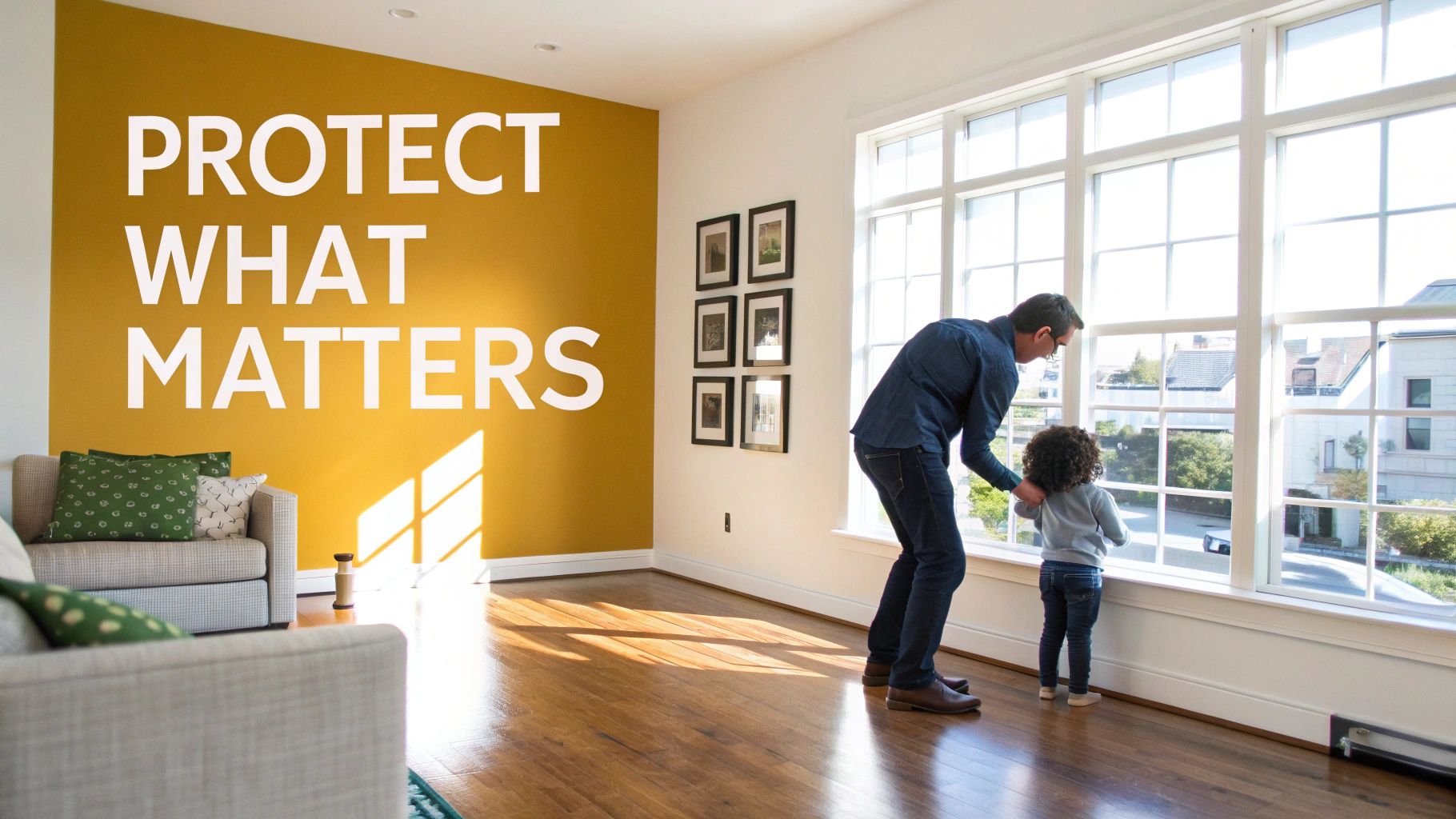
It’s great to know a window film can block 99% of UV rays, but what does that number actually do for you here in Chattanooga? It’s simple. It protects the things you’ve invested your heart and money into, and it creates a healthier space for the people you care about.
Think of UV radiation as a silent, invisible force that slowly wears down everything it touches. It’s relentless.
Take that gorgeous new hardwood floor you installed next to a big, sunny window. Without protection, those UV rays are going to work, slowly bleaching the color out and leaving behind mismatched, faded spots. The same thing is happening to your furniture, your vibrant area rugs, and even the family photos hanging on the wall. The damage is slow, permanent, and completely preventable.
Safeguarding Your Irreplaceable Valuables
For a local business owner, the stakes are just as high. A retail storefront on a busy Chattanooga street needs its windows to draw customers in, but those same windows can ruin the very products you're trying to sell. UV rays cause fabrics to weaken and colors to fade, making perfectly good merchandise look old and tired.
Window film acts as a vital shield in all kinds of places:
- Art Galleries and Museums: Preserving the original colors of priceless paintings and artifacts from irreversible light damage.
- Retail Storefronts: Keeping clothing, furniture, and other display merchandise from fading in the sun.
- Homeowners: Shielding hardwood floors, custom draperies, and cherished heirlooms from discoloration.
Professional window film is like archival-grade insurance for your property. It ensures the colors, textures, and value of your interior investments stay vibrant for years. This is a huge part of understanding how window tinting can improve the livability of your home.
Creating a Healthier Indoor Environment
Beyond protecting your property, window film offers a huge health benefit for your family, employees, and customers. We usually think about sun protection when we’re heading outside, but we get a surprising amount of UV exposure just sitting inside our homes and offices.
That cumulative exposure, even through glass, adds up. Over time, it can contribute to premature skin aging and even increase the risk of skin cancer. Professional window films that block over 98-99% of UV rays drastically cut down this indoor exposure. It’s a layer of protection that health authorities actually recommend for maintaining skin health over a lifetime. You can read more about recommendations for window tinting from cancer prevention experts.
This invisible shield is on the job every single day—even on cloudy winter days—protecting everyone inside from the long-term effects of the sun. It’s a simple, passive upgrade that makes your indoor spaces significantly safer.
Choosing the Right Film for Your Chattanooga Property
Okay, so we've established that window tinting absolutely blocks UV rays. Now for the fun part: finding the perfect film for your space. Whether you own a home overlooking the Tennessee River or a bustling business in the heart of Chattanooga, there’s a film designed to solve your exact problems.
Here’s the great news: virtually all professional-grade films we install block over 99% of UV radiation. This means you don't have to sacrifice UV protection to get the heat rejection, glare control, or specific look you're after. Your primary choice really comes down to those other performance factors.
Understanding Your Film Options
Architectural window films aren't one-size-fits-all. They generally fall into a few key categories, each engineered to tackle different challenges for property owners. For those of us living and working within a 45 to 60-mile radius of Chattanooga, picking the right one is all about matching the film to your building's unique needs and your personal style.
Here are the main types you'll come across:
- Solar Control Films: These are the real workhorses. They’re designed to manage brutal solar heat and annoying glare, making them perfect for those south-facing rooms that feel like an oven or for offices where screen glare drives everyone crazy.
- Decorative Films: Need to add some privacy to a glass-walled conference room or a touch of style to a storefront? Decorative films are your answer. They come in all sorts of frosted, patterned, and colored options while still delivering that critical UV protection.
- Safety and Security Films: Built tougher and thicker, these films are designed to hold shattered glass together. They provide an impressive extra layer of protection against everything from break-ins to severe weather.
The key takeaway is this: you can solve multiple problems with a single film. A solar film can reduce your energy bills and stop your furniture from fading, while a decorative film can increase privacy and block harmful UV rays.
Speaking the Language of Window Film
To feel confident when you're discussing your project, there's one term you really need to know: Visible Light Transmission (VLT). It's just a simple percentage that tells you how much visible light a film lets through the glass.
Think of it like this: a lower VLT means a darker, more private tint, while a higher VLT results in a clearer, nearly invisible look.
For instance, a storefront in downtown Chattanooga might go for a film with a lower VLT to cut down on that intense glare for customers. On the other hand, a homeowner who wants to preserve their stunning mountain views would likely choose a high-VLT film. Both options will stop UV rays in their tracks, letting you tailor the perfect solution for your property.
Still Have Questions About UV Protection and Window Film?
Even after seeing just how powerful window tinting is against UV rays, it's smart to have a few more questions. We get it. This is a big decision for your home or business, and you want to be completely confident.
Here are some of the most common questions we hear from folks around Chattanooga, with the straightforward answers you're looking for.
Will Window Film Make My House Too Dark in the Winter?
This is probably the number one concern we hear, especially from people who love a bright, sunny room during those gray winter months. The short answer? Not at all. Your home won’t feel like a cave just because you’ve got UV protection.
Modern window film is worlds away from the dark, bubbly tint you might be picturing. We work with advanced ceramic films that are optically clear, meaning they can be virtually invisible to the naked eye while still blocking over 99% of damaging UV rays.
You keep your beautiful views and the natural light you love, but you block the invisible damage. It's all about managing the sun's downsides—like UV, heat, and glare—without sacrificing any of the parts you actually enjoy.
Is Window Tinting a Good Investment for Winter Energy Savings?
Absolutely. While everyone thinks of window tinting for summer cooling, its insulating power in the winter is a massive, often-overlooked benefit. Your windows are one of the biggest culprits when it comes to heat loss.
A quality solar control film adds a serious layer of insulation to your glass. It works by reflecting the heat your furnace is working so hard to produce back into the room, instead of letting it escape out the cold window.
This simple change means your heating system doesn't have to kick on as often to keep the house comfortable. For property owners here in Chattanooga, that translates directly to lower utility bills and a cozier home all winter. It’s a true year-round investment in efficiency.
This dual-purpose performance—blocking heat in the summer and keeping it in during the winter—is what makes window film one of the smartest upgrades you can make to a building's energy footprint.
How Long Does Professional Window Film Last?
When you have architectural window film installed by certified pros, you're getting an incredibly durable product that's built to last for the long haul. This isn't the flimsy DIY stuff you find at a big-box store; it’s engineered with tough, scratch-resistant coatings that hold up to daily life and normal cleaning.
You can expect a professional installation to last for many years—often for decades. Our premium films are backed by a manufacturer's warranty that covers things like peeling, bubbling, cracking, or discoloring.
- Residential Warranty: For homes, many of our best films come with a lifetime warranty, giving you peace of mind for as long as you own your property.
- Commercial Warranty: For commercial buildings, warranties typically run from 10 to 15 years, reflecting the different demands of a business environment.
The secret to this long life is a proper installation. That’s what ensures a perfect bond to the glass and a flawless finish that performs exactly as it should for its entire lifespan.
Can I Just Install Window Film Myself to Save Money?
Look, we understand the temptation to DIY and cut costs. But for a home or commercial property, we strongly advise against it. Getting that flawless, bubble-free finish isn't just about looks—it's critical for performance. It’s a skill that takes years of training, specialized tools, and a knack for the process.
A professional installer knows exactly how to prep the glass, handle the film without contamination, and ensure a perfect application. A botched DIY job often leads to ugly bubbles, creases, and peeling edges that not only look terrible but also completely undermine the film’s ability to block UV and control heat.
Even more importantly, you need a professional installation to get the manufacturer's warranty. If a DIY project goes wrong, you’re out of luck. Investing in a pro protects your investment and guarantees you get every bit of the performance and durability the film was designed for. It's the only way to get a result you'll be happy with for years to come.
Ready to protect your property and start saving on energy bills year-round? The experts at Solar Sentinel Window Films & Tinting are here to help you find the perfect solution for your Chattanooga-area home or business.
