

When you start looking for the best window tint to reduce heat for your property, one option consistently rises to the top: nano-ceramic window film. This isn't your old-school, dark purple tint. It's advanced technology that provides maximum heat rejection without making you feel like you're living in a cave, making it the go-to solution for homeowners and businesses in the Chattanooga area who want to boost comfort and slash energy bills.
Your Guide to The Best Window Film for Heat Reduction
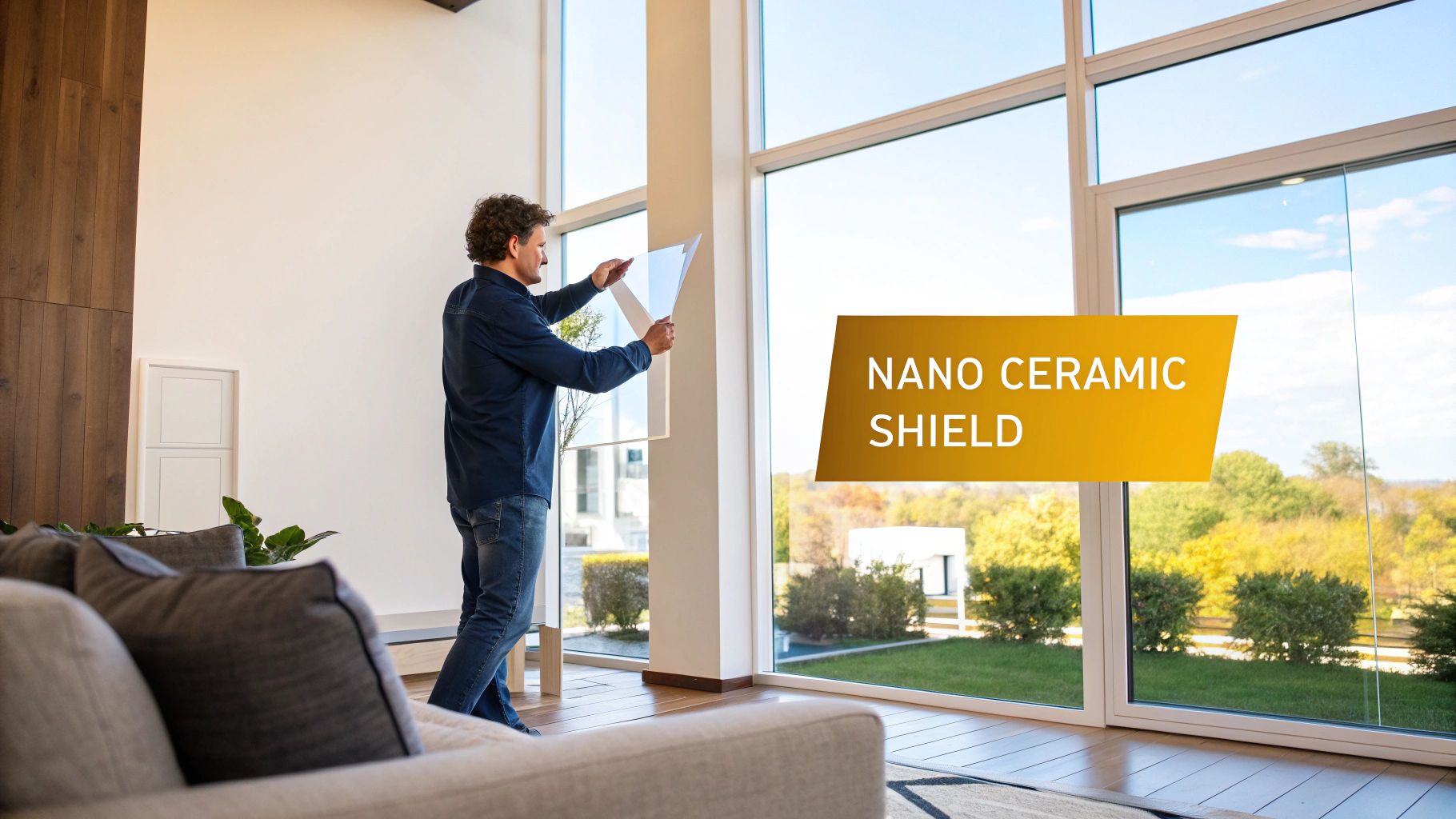
When that intense Tennessee sun beats down, your windows can turn into giant radiators, pumping heat into your home or office. This unwanted solar energy sends your air conditioning into overdrive, creates miserable hot spots, and produces blinding glare. For anyone managing a property within a 45-60 mile radius of Chattanooga, finding a real solution is critical for your comfort and your budget.
The answer is modern window film technology. Unlike the dark films of the past that just blocked visible light, today's advanced films are engineered to selectively target the invisible infrared rays—the part of the solar spectrum that actually produces heat.
Year-Round Performance for Chattanooga Properties
While the benefits during our sweltering summers are obvious, the best window films for heat reduction also pull their weight during the colder months. High-performance films, like the XPEL nano-ceramic solutions we install, add a powerful layer of insulation to your existing glass. This means the technology works all year long to help you control your indoor climate.
- In the Summer: The film is a powerhouse, reflecting a huge amount of solar heat away from your windows. This keeps your rooms cooler and gives your HVAC system a much-needed break.
- In the Winter: It does the opposite. The film reflects the heat from your furnace back into the room, preventing it from escaping through the cold glass. This helps you maintain a warmer, cozier temperature inside.
This two-way performance is exactly what makes modern window film such a brilliant investment for the Chattanooga climate. It’s not just about surviving the summer; it's about achieving real energy efficiency and comfort in every season.
Once you understand that professional window tinting is a year-round solution, the decision becomes much easier for local homeowners and business managers. It’s an upgrade that boosts property value by improving comfort, protecting your furniture and floors from UV fading, and delivering real, measurable energy savings, month after month. As your local experts, we love showing our clients these benefits and finding the perfect film for their specific needs.
How Window Film Works as Year-Round Insulation
It’s easy to think of window film as just a summer thing—a glorified sun blocker. But that’s selling it way short. Modern residential and commercial window film is more like smart, invisible insulation for your glass that works tirelessly, day in and day out, all year long. Think of it as a pair of high-tech sunglasses for your entire property.
Just like polarized sunglasses cut blinding glare without making the world dark, advanced window films are designed to be selective. They let all that beautiful, natural sunlight pour in while specifically targeting and reflecting the invisible infrared (IR) light—the part of the spectrum that you feel as heat.
This intelligent filtering is what separates the good stuff from cheap, ineffective tints. It’s all about separating the light you want from the heat (and damaging UV rays) you don’t.
Winter Insulation for Chattanooga’s Colder Months
While kicking summer heat to the curb is a massive win for any property in the Chattanooga area, high-performance window film doesn't clock out when winter arrives. In fact, the best films have Low-E (low-emissivity) properties that are absolute game-changers during our colder months.
This Low-E technology basically flips the script. Instead of reflecting the sun's heat out, it starts reflecting your furnace's heat back into the room. It acts like a thermal shield on your windows, stopping precious warmth from seeping out into the cold. This heat retention is just as important as heat rejection for true, year-round energy savings.
It’s this dual-action performance that makes professional window tinting such a powerful upgrade. It fights solar heat gain in July and slashes heat loss in January, giving you a far more stable and comfortable property, no matter what the weather is doing. The principle is similar to how radiant barrier insulation combats heat in an attic—it's all about reflecting radiant energy.
The Science of Year-Round Savings
This year-round performance isn't just about comfort; it translates directly into real, measurable savings. High-performance tints can block anywhere from 50–80% of solar heat while stopping nearly 99% of destructive UV rays. Even more impressive, the U.S. Department of Energy has found that window films can reduce the heat lost through windows and doors by an average of 30% in homes.
That kind of efficiency takes a huge load off your HVAC system. It runs less often and works more efficiently, which shows up right where it counts: your monthly utility bills.
The real value, though, is in creating a consistent climate inside your home or business. No more freezing spots next to the big picture window in winter or rooms that feel like a sauna in the summer. It makes every corner of your property comfortable and usable, 365 days a year.
When you invest in the right film, you aren't just buying a summer solution. You're upgrading your property’s entire thermal envelope, making it tougher and more resilient against Chattanooga's seasonal mood swings. You can take a deeper dive into how window film drives energy savings in our dedicated guide. This is what makes modern window film a must-have for any energy-conscious property owner.
Decoding the Numbers on a Window Film Spec Sheet
When you start comparing different window films for your Chattanooga property, you’ll quickly run into a spec sheet loaded with acronyms. It can feel like trying to read another language at first, but these numbers are exactly how you cut through the marketing hype and see a film's real-world performance.
Think of it like the nutrition label on your food. Just as you'd check calories or sugar, these metrics tell you everything you need to know about how the film handles heat, light, and energy. Learning to read this "label" is the key to picking the right film based on proven data, not just promises.
The Most Important Metric for Heat Reduction
If your main goal is to cool down your home or office, there’s one number that matters more than any other: Total Solar Energy Rejected (TSER). This is the single most complete measure of a film's heat-blocking power.
TSER tells you how much of the sun's total energy—that's visible light, infrared (the heat you feel), and UV rays combined—is being blocked. A higher TSER percentage means more heat is being bounced away, keeping your rooms cooler and giving your AC a much-needed break.
A film with a 60% TSER is literally blocking 60% of the sun's total heat-producing energy. In the middle of a Chattanooga July, that’s a difference you can feel the moment you walk inside.
Right alongside TSER, you'll see the Solar Heat Gain Coefficient (SHGC). This number measures the opposite: how much solar heat is transmitted through your windows. For SHGC, a lower number is always better. A low SHGC means your windows are doing an incredible job of stopping heat before it ever gets inside.
Together, TSER and SHGC give you the full story on a film's cooling capabilities.
Balancing Light and Comfort
Of course, nobody wants to live in a cave. Blocking heat is crucial, but you still want your rooms to feel bright and welcoming. That’s where Visible Light Transmission (VLT) comes into play.
VLT is simply the percentage of visible light that passes through the film. A higher VLT means more natural light, while a lower VLT creates a darker, more shaded look. The real magic of modern films, especially nano-ceramics, is that you can get massive heat rejection without needing a super dark, low-VLT film.
- High VLT (50-70%): Perfect for living rooms, kitchens, or storefronts where you want to keep that bright, open feel and a crystal-clear view.
- Medium VLT (30-50%): A fantastic sweet spot for rooms that get blasted with direct sun. It cuts the glare significantly but still keeps the space feeling bright.
- Low VLT (Below 30%): Best for specialty applications like home theaters or rooms where you need maximum privacy.
Want to dive deeper? Check out our guide on understanding Visible Light Transmission to find that perfect balance for your space. It’s all about getting that powerful heat reduction without sacrificing the light you love.
This isn't just a summer solution, either. High-quality films provide year-round benefits.
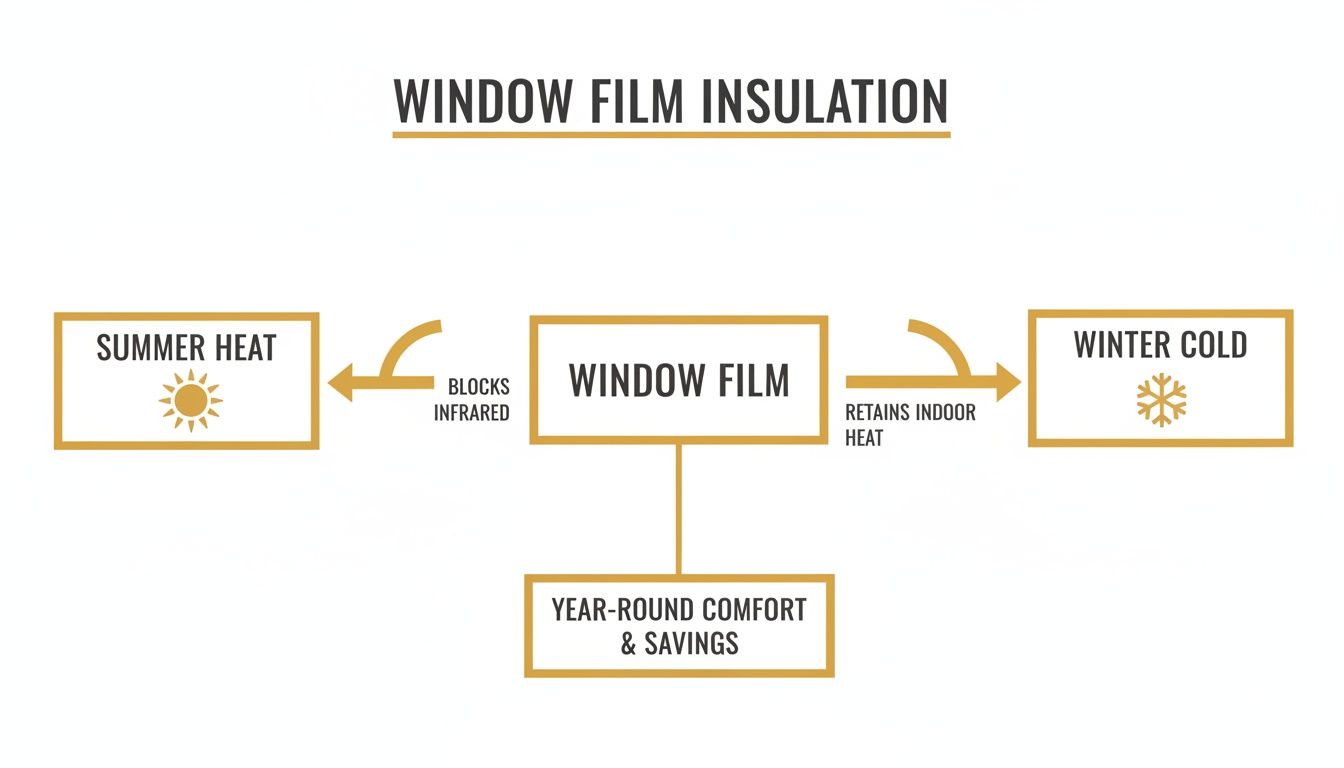
As you can see, the film works both ways. It reflects the sun’s heat out in the summer, but in the winter, it reflects your furnace's heat back inside, helping you stay warmer and save on heating bills, too.
Comparing Window Film Technologies for Your Property
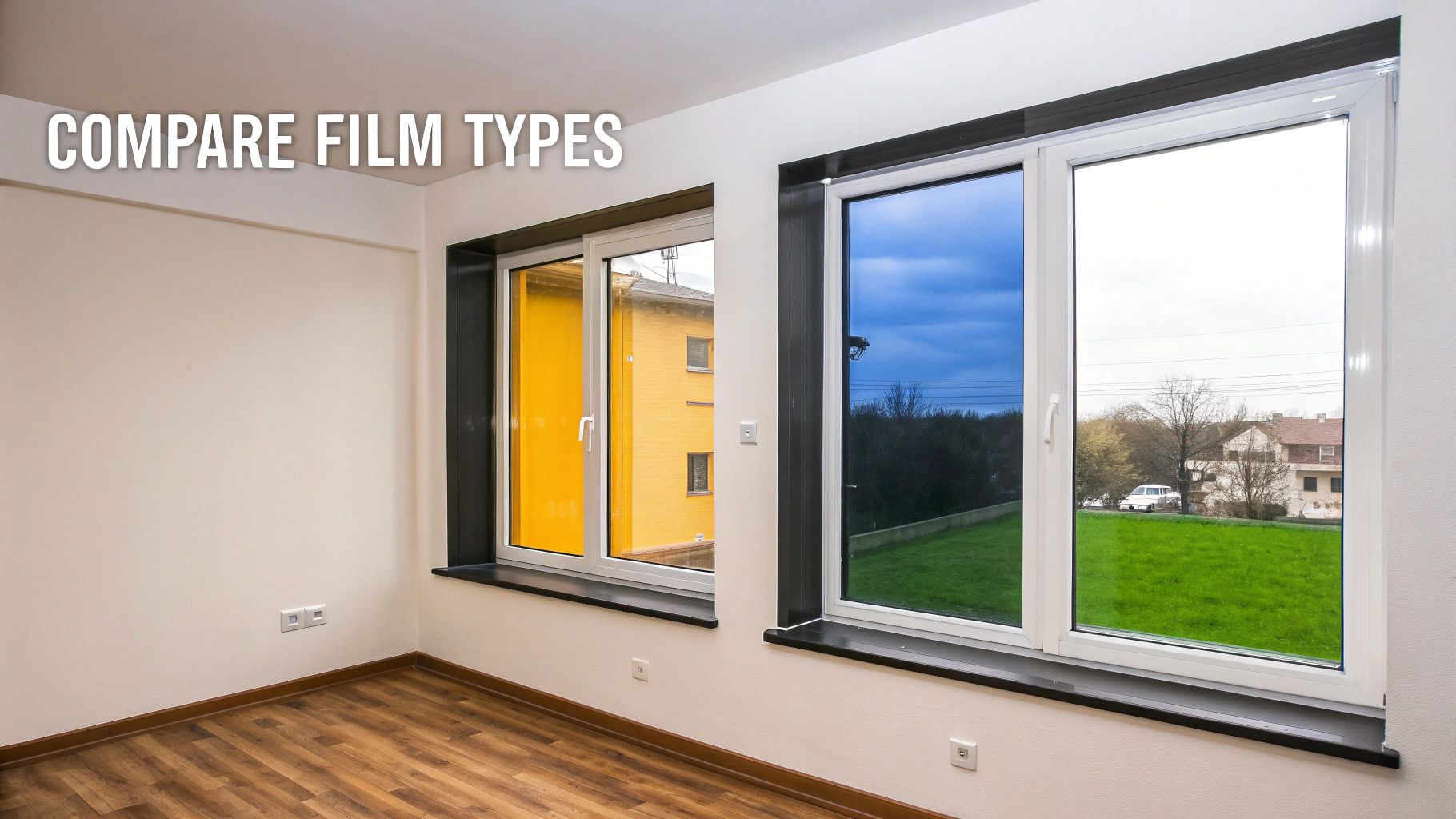
Picking the best window tint for heat reduction isn't just about choosing a dark shade. The real magic—and the real performance—is in the technology baked into the film itself. When it comes to homes and businesses, the market is dominated by a few key players, and each one comes with a distinct set of pros and cons that will directly impact your comfort, your wallet, and even your cell signal.
For any property owner here in the Chattanooga area, understanding these differences is a game-changer. One technology might look good on the price tag but quickly disappoints. Another offers decent performance but comes with a massive, deal-breaking drawback for modern life. Then there’s the one that delivers everything you need, without compromise.
Let's break down how they really stack up.
The Problem with Older Film Technologies
Most people's idea of window tint comes from older, less effective films. You've probably seen them—the bubbly, purple-tinged windows on older buildings. While these films are still out there, they just can't deliver the powerful, year-round performance that homes and businesses need today, especially when you're fighting that Tennessee heat.
-
Dyed Film: This is your basic, entry-level option. It uses layers of dye to soak up solar energy, which gives you a bit of heat relief and privacy. The catch? The dye fades over time (hello, purple windows!), and its ability to block heat is pretty minimal to begin with. It's a cheap fix that doesn't last.
-
Metallic Film: This was a big step up from dyed film. By embedding tiny metal particles into the film, it does a much better job of reflecting solar heat away from the glass. The problem is a huge one in today's world: those same metal particles can seriously interfere with cell phone reception, Wi-Fi, and other electronic signals.
While metallic films were a go-to for years, who wants to trade a cooler room for dropped calls and spotty internet? It's a frustrating compromise you just don't have to make anymore.
Nano-Ceramic Film: The Clear Winner
This brings us to the most advanced player in the game: nano-ceramic window film. This isn't just an improvement; it's a total leap forward, giving you incredible heat rejection without any of the old-school drawbacks. Instead of using dyes that fade or metals that block your signal, it's packed with advanced ceramic nanoparticles.
These microscopic particles are amazing insulators. They're what we call "spectrally selective," which is a fancy way of saying they're engineered to specifically target and block a massive amount of infrared heat—the part of the sunlight that makes you feel hot—while letting in all the natural light you love. The result is a crystal-clear view and perfectly uninterrupted cell and Wi-Fi signals.
Nano-ceramic film is the undisputed champion for any property owner who wants it all: maximum heat reduction, pristine clarity, and flawless connectivity. It’s a modern solution built for modern buildings.
The numbers don't lie. Studies on solar control films show they can slash a building's cooling energy consumption by 35% each year, with only a tiny 2% increase in heating costs during the winter. These stats make it clear: window tinting is one of the smartest, most cost-effective investments you can make to manage heat. For a deeper dive, you can see more findings from the window film market from Fortune Business Insights.
Home & Business Window Film Comparison
To make it even clearer, let's put these technologies side-by-side. Seeing the primary benefits and limitations in one place really highlights why one stands so far above the rest for long-term value and performance.
| Film Type | Primary Benefit | Heat Rejection Level | Longevity & Durability |
|---|---|---|---|
| Dyed | Low Cost & Privacy | Low | Poor (Fades & Discolors) |
| Metallic | Reflective Heat Rejection | Good | Good |
| Nano-Ceramic | High Heat & IR Rejection | Excellent | Excellent (No Fading) |
As you can see, while cheaper options exist, they come with significant compromises in either performance or durability.
Your Smartest Long-Term Investment
When you compare these films, it’s obvious why nano-ceramic is the top choice for homeowners and business managers who want real results. Dyed film might save a few bucks upfront, but its short lifespan and weak performance make it a temporary fix at best. Metallic film blocks heat better but introduces signal interference that can become a daily headache.
Nano-ceramic film, on the other hand, delivers on every front. It provides elite-level heat rejection, protects your furniture and floors from 99% of UV damage, and does it all without changing the look of your windows. To see a full breakdown of what makes this technology so effective, you can learn more about the benefits of ceramic window tint in our detailed guide. It's a durable, high-performance investment that pays for itself in energy savings and pure comfort for years to come.
The Financial Case for Heat Reduction Window Film
Sure, the technology is impressive, but for Chattanooga property owners, the real question is always about the bottom line. Let’s be clear: heat reduction window film isn't just another expense. It's a strategic investment with a tangible return, turning advanced science into real dollars and cents.
The most immediate payback you'll see is the relief it gives your overworked HVAC system. When the summer sun floods your rooms with heat, your air conditioner has to run nonstop just to keep up. By rejecting a huge chunk of that solar heat before it ever gets inside, high-performance film lets your AC unit run less often and more efficiently.
This isn't just a small tweak; it leads directly to lower energy consumption, which you'll see on your significantly reduced summer cooling bills.
Crucial Savings During Chattanooga Winters
The financial benefits don't just disappear when the temperature drops. As we head into winter, the insulating properties of modern window film become a huge financial asset. The same technology that blocks summer heat works in reverse to keep your property warmer.
The film's low-emissivity (Low-E) coating acts like a thermal barrier on your glass. It reflects the heat generated by your furnace back into your rooms instead of letting it escape outside. This simple act of heat retention means your heating system doesn't have to cycle on as often to maintain a comfortable temperature, leading to real savings on your winter utility bills. This year-round performance is what makes it such a smart upgrade for our climate.
By tackling both cooling and heating costs, window film offers a comprehensive solution to energy waste. It’s an upgrade that pays you back month after month, in every season.
Beyond the Utility Bill: The Hidden ROI
The return on your investment goes way beyond your monthly energy statements. There are significant, often-overlooked savings that protect the value of your property and everything inside it for years to come.
One of the most powerful secondary benefits is the film’s ability to block 99% of harmful ultraviolet (UV) rays. UV radiation is the number one culprit behind fading and sun damage.
- For Homeowners: This means protecting your valuable hardwood floors, custom draperies, area rugs, and cherished furniture from becoming faded, discolored, and brittle over time.
- For Business Owners: This translates to safeguarding your retail inventory, office furnishings, and artwork from sun damage, preserving their value and fresh appearance.
This powerful UV shield prevents costly replacements and refinishing projects down the road, adding another layer to the film's financial justification. For property owners weighing the decision, understanding how energy efficiency adds value to a property can really drive home the financial case for window film. Ultimately, it’s an investment in efficiency, comfort, and preservation that delivers a compounding return over its long lifespan.
Why Professional Installation Is Crucial for Performance
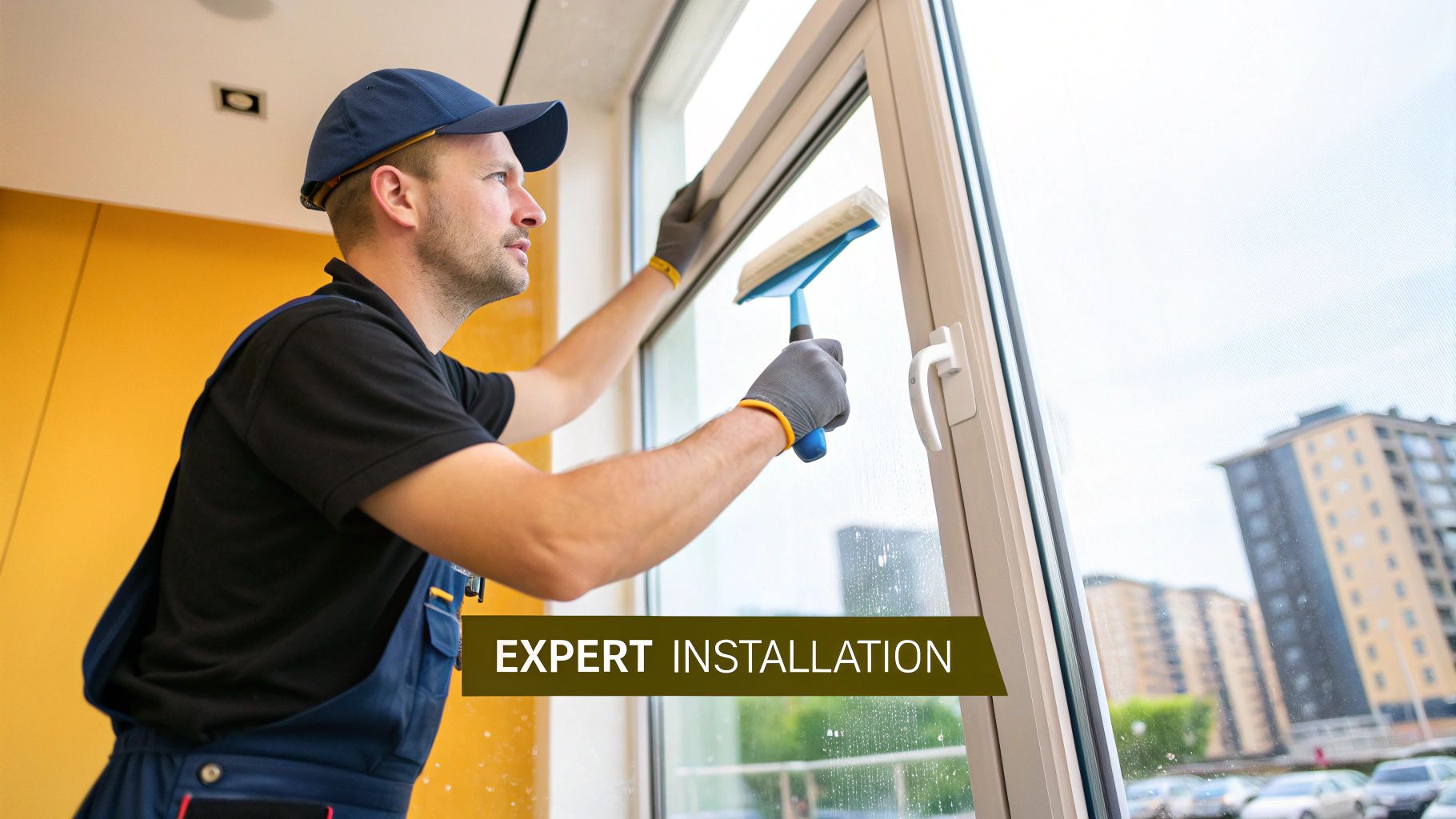
Picking a top-tier nano-ceramic film is a great first step, but its incredible heat-blocking power is only unlocked with a perfect installation. The truth is, the skill of the installer is every bit as important as the film itself. Without a professional touch, even the best window tint for heat reduction can fail, turning a smart investment into a bubbly, peeling mess.
DIY kits might look like a tempting way to save a few bucks, but they almost never deliver the clean, seamless results you're picturing. The process is unforgiving—one tiny mistake can lead to big problems that ruin both the look and the function of the film.
The Common Pitfalls of DIY Window Tinting
Trying to install window film without the right tools and years of practice usually ends in a few predictable ways. And these aren't just cosmetic issues; they actively stop the film from doing its job.
You’ve probably seen the classic DIY mistakes:
- Bubbling and Peeling: This is the most obvious sign of a botched job. Trapped air and moisture create pockets that look awful and will only get worse.
- Trapped Debris: A single speck of dust, a stray hair, or a bit of dirt caught underneath the film creates a permanent blemish and can weaken the adhesive.
- Creases and Wrinkles: Film has to be applied with perfectly even pressure. If not, you get creases that are impossible to smooth out, forever blurring your view.
These mistakes don't just look sloppy—they create weak spots where the film will inevitably lift, peel, and fail. Getting this right is critical. In fact, sun control films make up a massive 47.8% of the entire window film market in 2024, which shows just how much property owners value quality results. You can read more about the trends in the window film market to see why a perfect finish is a top priority.
The Solar Sentinel Advantage for Chattanooga Properties
This is where true expertise makes all the difference. At Solar Sentinel, we're Chattanooga locals through and through. We serve a dedicated 45-60 mile radius because we believe in providing focused, high-quality service to our community. We know that a flawless installation is non-negotiable for getting the best window tint for heat reduction.
Our promise is to deliver a perfect finish that unlocks every ounce of performance from your investment. We treat every single window like it's the most important one, because we know the film's long-term success depends entirely on our craftsmanship.
We achieve this by pairing world-class products with expert hands. Our installers are factory-trained and certified to work with premium XPEL products, guaranteeing every job meets the highest possible standards. That professional touch ensures your film will provide maximum heat rejection from the moment we leave.
Better yet, we stand behind our work with a lifetime residential warranty, giving you total peace of mind. When you choose Solar Sentinel, you’re not just buying a roll of film; you’re investing in a professionally installed, permanent solution for a more comfortable and energy-efficient property.
Answering Your Top Questions About Heat Reduction Window Film
Even after learning about the tech, most Chattanooga home and business owners we talk to have a few lingering questions. It's a big decision, and you want to get it right. We get it.
To help you feel confident, we've pulled together the most common questions we hear about choosing the best window tint for heat reduction and given you straight, practical answers based on our years of experience.
Will Window Tint Make My Rooms Feel Like a Cave?
Absolutely not. That’s a common misconception left over from the old, dark, bubbly films you used to see. Modern nano-ceramic films are way smarter—they're engineered to target and block the invisible infrared heat, not the beautiful visible light that makes your space feel open and bright.
You can pick a film that knocks out a massive amount of solar heat while still letting all that natural sunlight stream in. It’s no longer a choice between staying cool and having a bright, welcoming room. You get to have both.
How Long Will This Stuff Actually Last on My Windows?
When you have a high-quality film installed by a certified pro, you're looking at a durable, one-and-done upgrade for your property. Forget those cheap DIY films from the hardware store that peel, bubble, and turn purple in a couple of years. Premium brands like XPEL are built to perform perfectly for decades.
We stand behind that promise. That’s why we back every residential installation with a lifetime warranty. It’s our guarantee that your film will keep delivering comfort and savings year after year, without any defects.
Think of it this way: professional installation of a quality film isn't a temporary fix you'll have to deal with again. It’s a permanent upgrade that pays for itself over and over through energy savings and pure comfort.
Okay, But Does It Really Help With Winter Heating Bills?
Yes, it makes a real difference. The same amazing technology that blocks summer heat also helps keep your home warmer during Chattanooga's chilly winters. It’s all about the film’s low-emissivity (or "Low-E") properties, which create an insulating barrier on your glass.
This barrier works by reflecting the heat from your furnace back into the room instead of letting it escape through the cold windows. This simple trick can cut heat loss through your glass by up to 30%, leading to some very real, very welcome savings on your winter heating costs.
Is Window Film a Smart Move for a Commercial Building?
For a Chattanooga business owner, window film is one of the smartest, fastest-ROI investments you can make. Whether you run a downtown office, a retail shop, or a restaurant, the benefits hit on multiple fronts.
For commercial properties, it’s a no-brainer:
- Lower Energy Costs: You'll immediately reduce the strain on your HVAC system, which shows up as a healthier bottom line on your utility bills.
- Happier People: No more hot spots by the windows. This creates a more comfortable, productive environment for employees and a more pleasant one for customers.
- Less Annoying Glare: It cuts that frustrating glare on computer screens and displays, which helps with focus and reduces eye strain.
- Protects Your Assets: By blocking 99% of UV rays, the film acts as a shield for your valuable merchandise, furniture, and flooring, stopping sun damage in its tracks.
It’s a practical upgrade that boosts both your building's performance and the experience of everyone inside.
Ready to feel the difference that professional window tinting can make for your Chattanooga-area home or business? The team at Solar Sentinel Window Films & Tinting is here to provide a custom solution that delivers maximum comfort and energy savings. Contact us today for a free, no-obligation consultation!
